Hebrew University of Jerusalem: A Legacy of Research and Innovation
The Hebrew University of Jerusalem (HUJI) stands as a cornerstone of Israeli academia and a global hub for research. Co-founded in July 1918 by legendary figures Albert Einstein and Chaim Weizmann, it is the second-oldest institution of higher learning in Israel. Established three decades before the founding of the State of Israel, the university was born from a Zionist vision to create a center of Jewish scholarship and scientific advancement in the Land of Israel.
Today, HUJI is a sprawling public research university with a massive academic footprint, comprising seven faculties, over 100 research centers, and 315 academic departments. Its influence extends deep into the medical field through five affiliated teaching hospitals, including the renowned Hadassah Medical Center.
Key Facts
- Founded: July 24, 1918, by Albert Einstein and Chaim Weizmann.
- Student Body: Approximately 23,000 students, including 12,500 undergraduates and 5,000 postgraduates.
- Global Standing: Ranked as the top university in Israel by several major ranking systems, including ARWU and CWTS.
- Academic Excellence: Affiliated with 15 Nobel Prize winners and three Turing Award winners.
- Innovation: Operates Yissum, a technology transfer company that has launched over 80 spin-off companies like Mobileye.
Historical Evolution
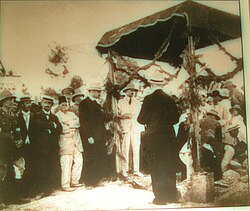
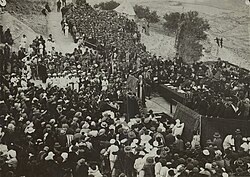
The dream of a Jewish university was discussed as early as 1884. After the cornerstone was laid in 1918, the Mount Scopus campus officially opened on April 1, 1925. The opening ceremony was a landmark event attended by global dignitaries, including Winston Churchill and the Earl of Balfour.

The university's growth was interrupted by the 1948 Arab–Israeli War. Following the Hadassah medical convoy massacre in April 1948, the Mount Scopus campus became inaccessible. This forced the university to operate out of 40 different buildings across Jerusalem until the Givat Ram campus was completed in 1958.
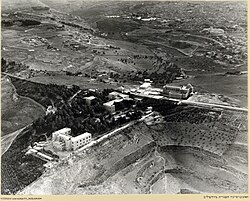
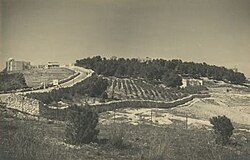
Following the Six-Day War in June 1967, the university regained access to Mount Scopus. The campus was rebuilt and officially became the main hub of the university again by 1981.
Tragedy and Resilience
The university has also faced periods of mourning. On July 31, 2002, a suicide bombing at the Frank Sinatra International Student Center cafeteria killed nine people and wounded over 70, drawing international condemnation from leaders such as George W. Bush and Kofi Annan.
Campus Infrastructure and Specializations
HUJI operates across multiple urban campuses to support its diverse academic offerings.
Mount Scopus and Givat Ram
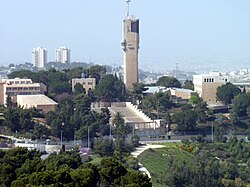
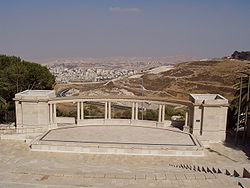
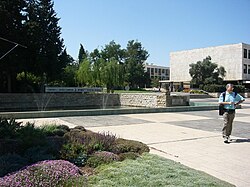
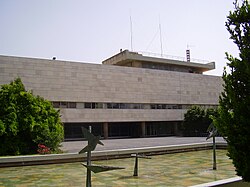
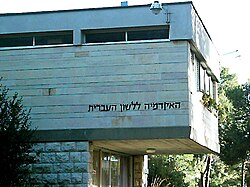
Mount Scopus serves as the primary campus and is home to the Rothberg amphitheater. Givat Ram is another central hub, which until 2023 housed the National Library of Israel—the world's largest library for Jewish studies. This campus also hosts the Academy of the Hebrew Language, which succeeded the Hebrew Language Committee of 1890.
Rehovot and Specialized Faculties
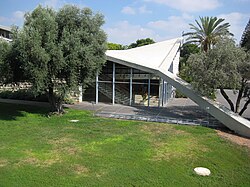
In the coastal plain of Rehovot, the university operates the Robert H. Smith Faculty of Agriculture, Food and Environment and the Koret School of Veterinary Medicine. These are the only institutions in Israel providing both teaching and research in these specific fields.
Social Work and Welfare
The Paul Baerwald School of Social Work and Social Welfare, established in 1958, was the first to offer a Bachelor of Social Work in Israel. It is recognized as the highest-rated school of social work in the country.
World-Class Libraries and Archives
The Jewish National and University Library is the university's oldest section, founded in 1892. It holds the world's largest collections of Hebraica and Judaica, with over five million books.
A crown jewel of the collection is the Albert Einstein Archives. Einstein bequeathed his personal papers and copyrights to the university. The archive contains roughly 55,000 items, including personal notes and letters, which the university has since digitized for global accessibility.
Academic Rankings and Global Impact
The Hebrew University consistently ranks as the premier institution in Israel. It is particularly renowned for its mathematics department, which has frequently placed among the top 25 institutions worldwide.
| Ranking Body | Global Rank | Year |
|---|---|---|
| ARWU World | 81 | 2024 |
| CWTS World | 219 | 2024 |
| QS World | =240 | 2025 |
| USNWR Global | 271 | 2025 |
| THE World | 301-350 | 2025 |
Technology Transfer and Yissum
Beyond traditional academia, HUJI drives economic growth through Yissum, its technology transfer company founded in 1964. Yissum manages patents and licenses, translating academic research into commercial success. This has led to the creation of over 80 spin-off companies, including industry leaders such as Mobileye, BriefCam, and OrCam.
Frequently Asked Questions
Who founded the Hebrew University of Jerusalem?
The university was co-founded in July 1918 by the physicist Albert Einstein and the chemist Chaim Weizmann.
Where are the university's campuses located?
The university has three campuses in Jerusalem (including Mount Scopus and Givat Ram) and three other locations across Israel in Rehovot, Rishon LeZion, and Eilat.
What is the significance of the Yissum company?
Yissum is the university's technology transfer arm. It handles licenses and patents for researchers, resulting in the launch of more than 80 commercial spin-off companies.
Which notable alumni have attended HUJI?
Notable alumni include four of Israel's prime ministers (such as Ehud Barak and Naftali Bennett), former Supreme Court President Aharon Barak, and historian Yuval Noah Harari.
What makes the Jewish National and University Library unique?
It possesses the largest collections of Hebraica and Judaica in the world and houses the digitized Albert Einstein Archives, containing approximately 55,000 items.