Head Anatomy and Evolution Across Species
The head is the primary anatomical region of an organism that typically houses the brain and the majority of sensory organs. From the complex skull of a human to the fused segments of a trilobite, the head serves as the central hub for sight, hearing, smell, and taste. While some simple animals lack a head entirely, most bilaterally symmetric organisms have evolved this structure to better process environmental information.
The biological process driving this development is known as cephalization. This evolutionary trend involves the concentration of nervous tissue and sensory organs at the anterior (front) end of the body, creating a specialized region for information processing and feeding.
Key Facts
- Cephalization is the evolutionary trend of concentrating nervous tissue and sense organs at the anterior end of an animal.
- The human skull consists of 22 bones: eight in the brain case and fourteen in the facial skeleton.
- Insects use specialized mouthparts, including the labrum (upper lip) and mandibles, tailored to their specific diets.
- The "new head hypothesis" suggests the vertebrate head emerged through the development of neural crests and cranial placodes.
- Cephalization in Bilateria began approximately 555 million years ago.
The Human Head
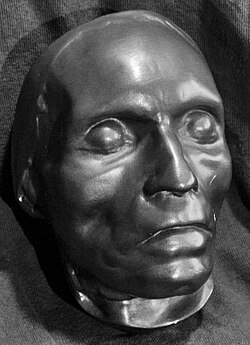
In humans, the head is a complex anatomical unit comprising the skull, the hyoid bone, and the cervical vertebrae. The skull is divided into two main sections: the brain case, which protects the cranial cavity, and the facial skeleton, which includes the mandible (jawbone).
Beyond physical anatomy, the head is a subject of philosophical debate. Proponents of identism, such as philosopher John Searle, argue that the mind is identical to the brain, asserting that the brain is the only entity within the human head. Other perspectives, like those of Dr. Henry Bennet-Clark, describe the head as a container for billions of "miniagents and microagents" rather than a single controlling entity.
Artistic Representation
Artists often use geometric frameworks to capture the proportions of the human head. For example, Jack Hamm suggests a six-step process starting with an egg shape, while female heads may be sketched using a double-circle design. Leonardo da Vinci famously utilized grid structures to achieve perfect anatomical proportions in his studies of the head and eyes.
Comparative Anatomy in Other Animals
The evolution of the head is closely tied to the emergence of Bilateria roughly 555 million years ago. Different phyla have developed distinct cephalic structures based on their environmental needs.
Arthropods and Insects
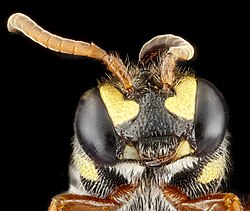
In arthropods, such as trilobites, the head region is called the cephalon, which consists of several fused segments. Insects possess a head equipped with antennae and eyes, which can be compound (multiple facets) or ocelli (single-faceted organs). Their mouthparts are highly specialized for feeding and include:
- Labrum: The exterior "upper lip."
- Mandibles: Paired structures used for biting or crushing.
- Maxillae: Paired structures with maxillary palps.
- Labium: The "lower lip."
- Hypopharynx: An additional part located between the maxillae in some species.
Vertebrates and the New Head Hypothesis
The transition from invertebrate chordates (like lancelets) to vertebrates involved the development of a bony skull. Early theories by Hyman (1979) suggested this occurred through the fusion of anterior segments. However, the "new head hypothesis" proposed in the 1980s suggests the vertebrate head is an evolutionary novelty resulting from neural crests and cranial placodes.
Recent research in 2014 supports this by showing that certain tissues in lancelet larvae are nearly identical to the cartilage derived from neural crests that forms the vertebrate skull.
Cultural and Societal Significance
The head holds significant meaning across various human disciplines, from culinary arts to heraldry.
Culinary Uses
Animal heads are often used as offal or variety meats. Common preparations include:
- Cabeza: Pit-roasted livestock heads in Mexican barbacoa.
- Tête de veau: A Western European calf head dish.
- Smalahove/Svið: Traditional sheep head dishes in Scandinavian cultures.
- Fish Head Curry: A popular delicacy in Southeast Asia.
Heraldry and Symbolism
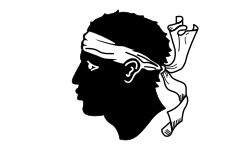
In heraldry, heads are frequent "charges" (symbols). These can range from generic descriptions like a "man's head" to specific identities, such as the head of Moses or St. John the Baptist. They are often used to denote nationality, race, or religious status, such as veiled nuns' heads.
Common Idioms
The head is central to many English figurative expressions:
- Big-headed: Overly conceited.
- Come to a head: Reach a critical point.
- Head and shoulders above: Significantly superior.
- Head in the clouds: Distracted or unrealistic.
Summary of Head Structures
| Group | Key Term/Structure | Defining Feature |
|---|---|---|
| Humans | Skull | Brain case (8 bones) and facial skeleton (14 bones) |
| Insects | Compound Eyes/Antennae | Specialized mouthparts (Labrum, Mandibles, Labium) |
| Arthropods | Cephalon | Collective of fused segments |
| Vertebrates | Neural Crest | Bony skull separated from the main body |
Frequently Asked Questions
What is cephalization?
Cephalization is the evolutionary process where nervous tissue and sensory organs concentrate at the anterior end of an organism, leading to the formation of a head.
How many bones are in the human head?
The human skull contains 22 bones in total: eight bones forming the brain case and fourteen bones making up the facial skeleton.
What is the "new head hypothesis"?
It is a theory suggesting that the vertebrate head is an evolutionary novelty created by the emergence of cranial placodes and the neural crest, rather than just the fusion of existing segments.
What are the primary mouthparts of an insect?
Typical insect mouthparts include the labrum (upper lip), mandibles, maxillae (with maxillary palps), and the labium (lower lip). Some also possess a hypopharynx.
How is the head used in heraldry?
Heads serve as charges in heraldic designs and can represent specific individuals, nationalities, or social roles, such as queens, nuns, or historical figures.