Hans Holbein the Younger: The 1542 Self-Portrait
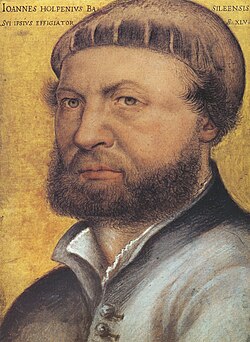
In the halls of the Uffizi in Florence resides a small but powerful testament to one of the most meticulous artists of the Northern Renaissance: the Self-portrait by Hans Holbein the Younger. Completed between 1542 and 1543, this work serves as a final glimpse into the life of the German artist and printmaker shortly before his death.
The drawing is characterized by the extreme precision for which Holbein was renowned. A striking example of this is the rendering of the hair, where individual strands were painted one-by-one to achieve a lifelike texture.
Key Facts
- Artist: Hans Holbein the Younger.
- Date: Created circa 1542–1543.
- Location: Uffizi, Florence.
- Medium: Coloured chalks and pen on paper.
- Dimensions: 32 x 26cm.
- Acquisition: Purchased in London in 1681 for Gran Duke Cosimo III de' Medici.
Artistic Analysis and Provenance
While the work is attributed to Holbein, it has undergone several changes over the centuries. Art historian John Rowlands notes that the drawing has been enlarged on all sides and heavily reworked. Despite these alterations, Rowlands asserts that enough of the original remains to confirm Holbein's authorship. Additionally, the gold background and the current inscription are later additions; the inscription specifically records an even earlier one that has since faded.
The composition offers a psychological insight into the artist. Art historian Stephanie Buck suggests that Holbein's direct, unwavering gaze indicates he was looking into a mirror while executing the piece. This intimacy is mirrored in contemporary copies, such as one by Lucas Horenbout, which depicts the left-handed Holbein holding a paintbrush.
Summary of Artwork Details
| Attribute | Detail |
|---|---|
| Artist | Hans Holbein the Younger |
| Period | German Renaissance |
| Materials | Coloured chalks and pen on paper |
| Current Home | Uffizi, Florence |
| Acquisition Date | 1681 |
The Final Years of the Artist
This self-portrait stands as one of the final works of Holbein's career. Not long after its completion, the artist passed away, likely as a victim of the plague, which was prevalent during the mid-16th century.
Frequently Asked Questions
Where is the Holbein self-portrait currently located?
The drawing is housed in the Uffizi gallery in Florence, Italy.
Was the entire drawing created by Hans Holbein?
While the original work is attributed to Holbein, it has been enlarged and reworked over time. The gold background and the inscription were added by a different artist later.
How did Holbein achieve such detail in the hair?
Holbein utilized a meticulous technique where he painted the strands of hair one-by-one.
What does the artist's gaze suggest about the creation of the piece?
According to art historian Stephanie Buck, the direct gaze suggests that Holbein was looking into a mirror while drawing himself.
When was the artwork acquired by the Medici family?
The work was acquired in London in 1681 for Gran Duke Cosimo III de' Medici.