Hans Maler zu Schwaz: The Master Portraitist of the Habsburg Court
Hans Maler zu Schwaz (1480/88 – 1526/29) was a distinguished German painter who carved a niche for himself as one of the most sought-after portraitists of the early 16th century. Born in Ulm, Maler spent much of his professional life in the village of Schwaz, located near Innsbruck. His career is defined by his ability to capture the likenesses of the era's most powerful figures, from imperial royalty to the wealthiest financiers in Europe.
It is believed that Maler received his early training under Bartholomäus Zeitblom, the chief master of the School of Ulm between 1484 and 1517. This foundation in the Ulm tradition likely prepared him for the high-stakes commissions he would later receive from the Habsburg dynasty and the merchant elite.
Key Facts
- Active Region: Primarily based in Schwaz, near Innsbruck.
- Primary Patrons: Ferdinand I of Austria and the Fugger family.
- Signature Style: Bust-format portraits characterized by a lack of eye contact and hidden hands.
- Notable Works: Portraits of the Habsburg family and the influential Fugger merchants.
- Legacy: His work "Portrait of A Beardless Man" appeared on the 500-German-mark banknote (1965–1995).
Patronage and the Habsburg Connection
Maler's rise to prominence was closely tied to his relationship with the Habsburgs. Early in his career, he received commissions from Maximilian I. By 1508, his talent was recognized with a commission to paint frescoes depicting the Habsburg family tree at Ambras Castle.
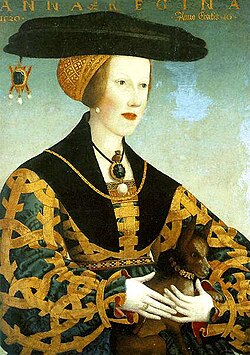
His most significant royal patron was Ferdinand I of Austria, who served as Archduke before becoming Emperor. Ferdinand commissioned at least three portraits of himself and four of his wife, Anna of Bohemia and Hungary. These works cemented Maler's status as a preferred artist for the imperial court at Innsbruck.
The Fuggers and the Merchant Class
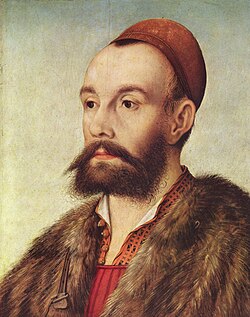
Beyond the nobility, Maler was the artist of choice for the Fuggers, a family of celebrated and wealthy merchants. His portraits of the Fugger dynasty provide a glimpse into the intersection of art and commerce during the Renaissance. In addition to the Fuggers, he captured the likenesses of other successful figures, such as Sebastian Andorfer, a prominent metal maker and merchant from Schwaz, in 1517.
Artistic Style and Technique
Maler developed a consistent and recognizable approach to portraiture. He rarely deviated from the bust format—a composition that focuses on the head and shoulders. In these works, the subject's hands are typically not shown, and the subjects avoid direct eye contact with the viewer, creating a sense of formal detachment and dignity.
Selected Works and Locations
Maler's portfolio is distributed across some of the world's most prestigious museums, reflecting the international reach of his patrons.
| Year | Work | Current Location |
|---|---|---|
| 1510 | Portrait of Mary of Burgundy | Vienna |
| 1515 | Christ Bearing the Cross | Art Institute of Chicago |
| 1517 | Portrait of Sebastian Andorfer | Metropolitan Museum of Art, New York |
| 1520 | Portrait of Queen Anne of Hungary | Museo Thyssen-Bornemisza, Madrid |
| 1521 | Portrait of A Beardless Man | Kunsthistorisches Museum, Vienna |
| 1524 | Portrait of Anton Fugger | Decín Castle, Czech Republic |
| 1525 | Portrait of Ulrich Fugger | Metropolitan Museum of Art, New York |
| 1526 | Portrait of Matthäus Schwarz | Musée du Louvre, Paris |
Frequently Asked Questions
Where was Hans Maler zu Schwaz active?
He was primarily active as a portraitist in the village of Schwaz, located near Innsbruck, though he was born in Ulm.
Who were his most important patrons?
His most significant patrons were Ferdinand I of Austria (later Emperor) and the wealthy Fugger merchant family.
What are the defining characteristics of his portrait style?
Maler typically used a bust format where the subject's hands are not visible and the subject does not make eye contact with the viewer.
Did he paint anything other than portraits?
Yes, he painted frescoes depicting the Habsburg family tree at Ambras Castle in 1508 and created religious works, such as "Christ Bearing the Cross" in 1515.
Which of his works appeared on German currency?
His 1521 "Portrait of A Beardless Man" was featured on the obverse of the 500-German-mark banknote from 1965 to 1995.