Hangul Jamo Extended-B: Unlocking Archaic Korean Syllables in Unicode
In the digital representation of the Korean writing system, standard modern Hangul is well-supported. However, for linguists, historians, and scholars studying ancient texts, modern character sets often fall short. This is where the Hangul Jamo Extended-B Unicode block becomes essential. This specialized block provides the necessary components to reconstruct archaic Korean syllables that are no longer used in contemporary daily life.
Foundational Concepts of Hangul Jamo
To understand this Unicode block, one must first understand the structure of a Hangul syllable. A syllable is composed of three primary elements: the initial consonant, the vowel, and the final consonant. In linguistic terms, these components are known as jungseong (vowels) and jongseong (final consonants).
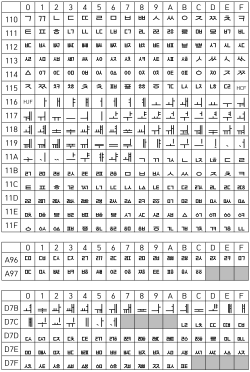
While standard Unicode includes many precomposed Hangul syllables, it cannot account for every possible historical combination. The Hangul Jamo Extended-B block solves this by providing positional forms of archaic vowel and consonant clusters. These characters allow for the dynamic composition of syllables, enabling the digital rendering of complex, historical phonetic structures that do not exist in modern Korean.
Technical Specifications of the Block
The Hangul Jamo Extended-B block is located within the Basic Multilingual Plane (BMP), which is the primary plane of the Unicode standard containing characters for most modern languages. It occupies a specific range of code points designed to facilitate the assembly of these rare linguistic forms.
Block Details at a Glance
The following table summarizes the technical parameters of the Hangul Jamo Extended-B block as defined by the Unicode Standard.
| Property | Value |
|---|---|
| Unicode Range | U+D7B0..U+D7FF |
| Total Code Points | 80 |
| Plane | BMP (Basic Multilingual Plane) |
| Assigned Characters | 72 |
| Reserved/Unused | 8 |
| Unicode Version Added | 5.2 (2009) |
Key Facts
- Purpose: Provides positional forms (jungseong and jongseong) for archaic Hangul clusters.
- Functionality: Enables the dynamic composition of syllables not found in standard modern Korean.
- Unicode Version: Introduced in version 5.2 in 2009.
- Capacity: Contains 80 code points, with 72 currently assigned and 8 reserved.
- Placement: Located in the Basic Multilingual Plane (BMP).
Frequently Asked Questions
What is the difference between modern Hangul and archaic Hangul?
Modern Hangul uses a standardized set of vowels and consonants used in contemporary Korean. Archaic Hangul includes historical vowel and consonant clusters that were used in older forms of the language but are not part of the modern writing system.
How are syllables formed using this block?
Instead of using a single precomposed character, the block provides the individual jungseong (vowel) and jongseong (final consonant) components. These can be combined dynamically to create specific historical syllables.
Is the entire block currently in use?
No. Out of the 80 available code points in the U+D7B0..U+D7FF range, 72 are assigned to specific characters, while 8 remain reserved and unused.
When was this block added to Unicode?
The Hangul Jamo Extended-B block was officially introduced with Unicode version 5.2 in 2009.
Where is this block located in the Unicode structure?
It is located in the Basic Multilingual Plane (BMP), which is the most commonly used plane in Unicode for global scripts.