McCune–Reischauer Romanization: The History and Mechanics of Transcribing Korean
Transcribing the Korean language into the Latin alphabet is a complex task that involves balancing phonetic accuracy with ease of use. For much of the 20th century, the McCune–Reischauer (MR) system served as the primary bridge between the Korean script, Hangul, and the Western world. Developed in the late 1930s, this system has shaped how Korean place names, personal names, and scholarly texts are read globally.
The system was first published in 1939 by George M. McCune and Edwin O. Reischauer. Their work was significantly supported by prominent Korean linguists, including Choe Hyeon-bae, Jeong In-seop, and Kim Seon-gi. McCune, the son of a Pyongyang-based missionary, conducted his research while studying at Chōsen Christian College in Seoul. During this period, Reischauer, a Japanologist, became stranded in the city due to the Second Sino-Japanese War, leading to the collaborative development of the system.
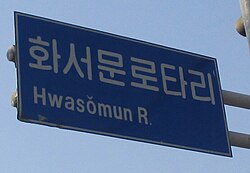
Key Facts
- Origin: First published in 1939 by George M. McCune and Edwin O. Reischauer.
- Primary Use: Historically the foundation for most Korean place name romanizations; currently used in North Korea and North American library catalogs.
- Core Feature: Uses diacritics (special marks like the breve ˘ or apostrophe ') to represent specific Korean sounds.
- South Korean Status: Replaced by the Revised Romanization of Korean in 2000.
- Controversy: The system's reliance on diacritics made it difficult to use on standard digital keyboards.
How the System Works
The McCune–Reischauer system is designed to reflect the phonetic structure of the Korean language. This means it often captures how words are actually pronounced, rather than providing a strict one-to-one letter mapping from Hangul.
Vowels and Consonants
The system employs specific characters to distinguish between similar sounds. For example, the vowel ㅓ is represented as ŏ, and ㅡ is represented as ŭ. Consonants also change based on their position within a word. A consonant that appears at the start of a word may be romanized differently than when it appears in the middle or at the end.
Handling Pronunciation Changes
One of the defining characteristics of MR is its ability to account for sound shifts. In Korean, certain consonants change their sound when they meet other letters. For instance, the word 독립 (pronounced [동닙]) is romanized as ngn ip rather than a literal transcription of the individual letters. This ensures the reader follows the natural flow of the spoken language.
The Evolution of Korean Romanization
The history of Korean romanization is marked by shifts in political and technological landscapes. While the MR system was adopted by the South Korean government in 1948, it faced ongoing criticism. Some argued it was more intuitive for foreigners than for Koreans, as it reflected pronunciation changes that many native speakers do not consciously notice.
In the 1980s, as South Korea prepared for major international events like the 1986 Asian Games and the 1988 Summer Olympics, the government sought a more "foreigner-friendly" system. This led to a modified version of MR being used officially from 1984 to 2000. However, the rise of the internet and computers in the 1990s highlighted a major flaw: the diacritics used in MR were difficult to type on standard keyboards. Consequently, South Korea transitioned to the Revised Romanization of Korean in 2000.
Comparison of Romanization Systems
| Hangul | McCune–Reischauer | South Korean Variant (1984-2000) | Meaning |
|---|---|---|---|
| 시장 | sijang | shijang | market |
| 연구 | yŏn'gu | yŏn-gu | research |
| 영어 | yŏngŏ | yŏng-ŏ | English language |
| 발해 | Parhae | Palhae | Parhae |
Potential for Confusion
The omission of diacritics can lead to significant ambiguity. For example, if the diacritics in the MR rendering of the city Ch'ŏngju (청주) are removed, it becomes Chongju. This is identical to the spelling of the North Korean city Chongju (정주). It has even been claimed that during the Korean War, the US Army nearly bombed the wrong city due to this phonetic overlap.
Frequently Asked Questions
Why did South Korea change its official romanization system in 2000?
The change was driven by the difficulty of using diacritics on digital keyboards and the desire for a system that was easier for both locals and foreigners to use in a digital age.
Is McCune–Reischauer still used today?
Yes. While no longer the official system in South Korea, a variant is still used as the official system in North Korea, and another variant is used for standard library catalogs in North America.
What is the difference between MR and Revised Romanization?
McCune–Reischauer focuses heavily on phonetic accuracy (how words sound), often using diacritics. Revised Romanization tends to prioritize a more direct mapping from the Hangul script to the Latin alphabet.
What are diacritics in the context of Korean romanization?
Diacritics are marks added to letters, such as the breve (˘) or the apostrophe ('), to indicate specific vowel sounds or aspirated consonants that are not easily represented by standard English letters alone.
How does the system handle personal names?
The system provides specific rules for names, such as Ch'oe Hyŏnbae, to ensure that the pronunciation of the surname and given name is as accurate as possible in the Latin script.