Bureau of Interpreters: The Linguistic Engine of Joseon Diplomacy
For centuries, the Korean peninsula existed as a diplomatic crossroads, surrounded by powerful neighbors with vastly different languages. To navigate this complex geopolitical landscape, the Joseon government relied on a specialized agency: the Bureau of Interpreters, known as the Sayeogwon. Operating from 1393 to 1894, this institution was not merely a school, but a strategic asset essential to Korea's national survival and foreign policy.
The bureau's primary mission was to support two core diplomatic pillars: sadae (serving the great), which governed relations with China, and gyorin (neighborly relations), which managed ties with other surrounding states. By training a professional class of linguists, the Joseon state ensured that its envoys could communicate precisely with foreign courts, preventing costly misunderstandings.
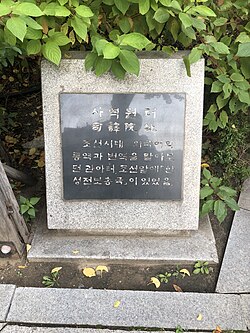
Key Facts
- Active Period: 1393 to 1894 (abolished during the Gabo Reforms).
- Primary Languages: Chinese, Mongolian, Japanese, and Jurchen (later Manchu).
- Core Purpose: Training official interpreters for diplomatic missions and border security.
- Educational Path: Students typically began at age 15, with a three-year course of study.
- Social Class: Eventually became a hereditary profession within the chungin (middle) class.
History and Evolution
The roots of official interpretation date back to 1276, when King Chungnyeol of Goryeo established the T'ongmun'gwan (Office of Interpretation) to handle Chinese and Mongolian. However, it was in 1393, during the early Joseon period, that the Bureau of Interpreters was formally established under the Ministry of Rites.
The bureau was centrally located in Hanyang (modern-day Seoul), situated west of the Six Ministries. While the physical buildings are gone, the site is currently marked by a plaque on Saemunan-ro 5-gil, located behind the Sejong Center for the Performing Arts.
![Local official interpreter schools and the route of official missions to China[15][16]](/images/e4/19/e419e33b0322895d9e6c6282f91369ec6e02fd5667b49cd42e42b52aadf00819.webp)
The Four Studies: Languages of the Bureau
The curriculum of the Sayeogwon evolved based on the shifting threats and alliances of the era. The most prestigious and heavily taught language was Chinese, reflecting the central importance of the sadae policy. Each year, approximately 20 interpreters accompanied three or four delegations to the Chinese court for immersive practice.
The Strategic Role of Other Languages
- Mongolian: Introduced during the Goryeo period when Korea was a vassal of the Yuan dynasty. Even after the Mongol empire collapsed, the skill was maintained as a strategic precaution.
- Japanese: Became a regular subject in 1414 to manage relations and trade in the south.
- Jurchen and Manchu: Jurchen was added in 1426. Following the rise of the Qing dynasty in 1644, Manchu (viewed as a later form of Jurchen) became the second most important language after Chinese.
To ensure regional coverage, the government established branch schools near the frontiers. Chinese instructors were stationed in Hwangju, Pyongyang, and Uiju; Japanese instructors were based in Busan and southeastern ports; and Jurchen/Manchu instructors were placed in northern border towns such as Wiwon and Manpo. A specialized school was also opened on Jeju Island in 1671.
Professional Life and Social Status
Entering the profession required passing the gwageo (civil service examinations). Specifically, interpretation fell under the "miscellaneous" category, which was considered lower in status than the literary or military tracks. The examination process was rigorous, involving a preliminary stage and a final re-examination, testing both oral/written fluency and the ability to translate the Gyeongguk daejeon (the Joseon legal code).
Despite their strategic importance, interpreters were often looked down upon by the yangban (aristocratic) class. While various kings attempted to elevate the status of interpreters or encourage yangban youths to join the field, these efforts largely failed. By the 17th century, the profession settled into the chungin class, becoming largely hereditary.
To maintain a steady supply of talent, the government allowed interpreters to supplement their low official salaries through private trade. Some became incredibly wealthy by acting as intermediaries between Qing China and Japan during periods when those two nations lacked direct diplomatic relations.
Publications and Linguistic Legacy
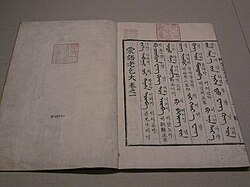
The Bureau of Interpreters produced a vast array of multilingual dictionaries, glossaries, and textbooks. These documents are now invaluable to historians because they captured the contemporary spoken language of the time rather than just formal, scholarly prose.
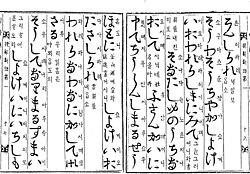
The bureau focused on fluency. After the invention of the Hangul alphabet in 1446, textbooks began including Hangul annotations to provide accurate pronunciations and colloquial Korean glosses. Key texts included the Nogŏltae (dialogues for merchants) and the Pak T'ongsa (a narrative on Chinese culture). For Japanese, the Ch'ŏphae Sinŏ (1676) became the definitive official text for two centuries.
| Language | Key Glossary | Primary Textbook(s) |
|---|---|---|
| Chinese | Yŏgŏ yuhae | Nogŏltae, Pak T'ongsa |
| Japanese | Waeŏ yuhae | Ch'ŏphae Sinŏ, Irop'a |
| Mongolian | Mongŏ yuhae | Mongŏ Nogŏltae, Ch'ŏphae Mongŏ |
| Manchu/Jurchen | Tongmun yuhae | Ch'ŏngŏ Nogŏltae, Samyŏk Ch'onghae |
Frequently Asked Questions
What was the Sayeogwon?
The Sayeogwon, or Bureau of Interpreters, was a Joseon government agency (1393–1894) responsible for training professional interpreters to facilitate diplomacy and trade with neighboring countries.
Which languages were taught at the bureau?
The bureau focused on the "four studies": Chinese, Mongolian, Japanese, and Jurchen (which was later replaced by Manchu).
Why was the study of Mongolian maintained after the Mongol Empire fell?
The Joseon government kept Mongolian language skills as a strategic measure in case the Mongols rose to power again and threatened Korean security.
What was the social status of the interpreters?
Interpreters were generally viewed as lower in status than the yangban aristocracy. They eventually formed part of the chungin (middle) class, and the profession became largely hereditary.
How did interpreters make money beyond their government salary?
Because official salaries were low, the government permitted interpreters to engage in private trade and act as intermediaries for other government offices, with some amassing great wealth through trade between China and Japan.