Korean Romanization: Evolution and Major Systems of Latin Transcription
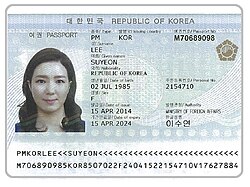
The romanization of Korean is the process of using the Latin script to transcribe the Korean language. Because Korean uses its own unique alphabet, Hangul, romanization is essential for international legibility, appearing on everything from passports and road signs to academic papers.
Establishing a single standard has proven difficult due to the complex phonetic properties of the Korean language and various geopolitical shifts. Over the decades, dozens of systems have emerged, leading to a diverse landscape of transcription methods used by scholars, governments, and international organizations.
Key Facts
- Revised Romanization (RR) is the official system of South Korea, adopted in 2000.
- McCune–Reischauer (MR) is the dominant system in Western academic Korean studies.
- North Korea has used a variant of the MR system as its official standard since 1992.
- The earliest known system was created in 1832 by Philipp Franz von Siebold.
- By 1997, over 40 different romanization systems had been developed.
Major Romanization Systems in Use
While many systems have existed, a few remain prominent today depending on the context of use.
Revised Romanization of Korean (RR)
Introduced in 2000, RR is the current official system of South Korea. It was designed to be more user-friendly for foreigners and more compatible with computer keyboards by avoiding special diacritics.
McCune–Reischauer (MR)
Developed by George McCune and Edwin Reischauer, this system is widely favored in academia. It focuses on phonetic accuracy but uses breves (small curved marks) over certain vowels, which can be difficult to type on standard keyboards.
ALA-LC Romanization
The American Library Association (ALA) and the Library of Congress (LC) developed this system as a modification of MR specifically for library cataloging. It was first published in 1997 and revised in 2009.
The History of Korean Transcription
The journey toward a standard began in the mid-19th century. The first recorded attempt was in 1832 by German physician Philipp Franz von Siebold while he resided in Japan.
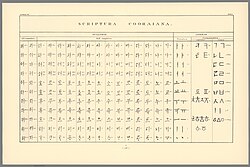
Other early efforts included an unpublished 1835 system by missionary Walter Henry Medhurst and the 1874 Dallet system, which was based on French phonology and introduced the first use of diacritics and digraphs like eo and eu. The Ross system, created by John Ross in 1882, became the first to see significant adoption, particularly among missionaries.
By 1933, the Korean Language Society promulgated the first system developed by Koreans. However, inconsistency remained rampant. By 1934, Japanese linguist Shinpei Ogura counted at least 27 extant systems, a stark contrast to the Japanese language, which had already standardized the Hepburn system.
Post-Liberation and the Cold War Era
Following the liberation and division of Korea in 1945, the two nations developed separate standards. South Korea adopted MR in 1948, which became the basis for many place names during the Korean War. North Korea designed its own official system in 1956, combining elements of the Dallet and 1933 Unified Orthography systems.
In 1959, South Korea's Ministry of Education (MOE) introduced a system that prioritized a one-to-one correspondence with Hangul. This was heavily criticized by foreigners for ignoring pronunciation changes and creating awkward English-like words, such as Dogribmun for the Independence Gate (Dongnimmun).
The Transition to the Digital Age
The rise of computers in the 1980s and 90s highlighted a major flaw in the McCune–Reischauer system: the breve. Because these symbols were not on standard keyboards, users often omitted them, leading to ambiguity and confusion.
Despite an attempt by the International Organization for Standardization (ISO) in 1986 to get North and South Korea to agree on a joint standard, the two nations failed to reach a consensus. This eventually led South Korea to launch the Revised Romanization (RR) system in 2000. The transition was a massive undertaking, costing an estimated US$500–600 million to update road signs and textbooks nationwide.
Soviet Latinization Efforts
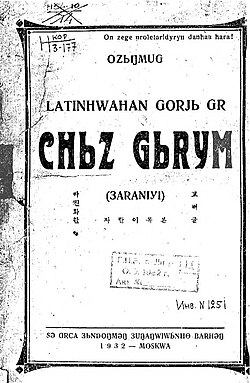
In the late 1920s and 1930s, the Soviet Union attempted to replace Hangul entirely with a Latin script as part of a broader Latinization movement. Various schemes were proposed by Russian scholars and Korean communists in Vladivostok, including the Primorsky Committee, Moscow, and Kholodovich systems, though these did not become the primary script for the Korean people.
Comparison of Major Systems
The following table illustrates how different systems handle specific Korean characters (Hangul) and their corresponding sounds (IPA).
| Hangul | IPA | RR (South Korea) | MR (Academic) | DPRK (North Korea) |
|---|---|---|---|---|
| ㄱ | /k/ /g/ | g/k | k/g | g |
| ㄴ | /n/ | n | n | n |
| ㄷ | /t/ /d/ | d/t | t/d | t |
| ㄹ | /l/ [l]~[ɾ] | r/l | l | r/l |
| ㅏ | /a/ | a | a | a |
| ㅓ | /ʌ/ | eo | ŏ | ŏ |
| ㅡ | /ɯ/ | eu | ŭ | ŭ |
Frequently Asked Questions
What is the difference between RR and MR?
Revised Romanization (RR) is the official South Korean standard and avoids diacritics for easier typing. McCune–Reischauer (MR) is used primarily in academia and uses diacritics (like the breve) to more precisely represent phonetic sounds.
Why are there so many different romanization systems for Korean?
The diversity is due to the unique phonetic structure of Hangul, the influence of different Western languages (English, French, German), and the geopolitical division between North and South Korea.
Which system should I use for official documents in South Korea?
You should use the Revised Romanization (RR) system, as it is the official standard for government documents, road signs, and textbooks in South Korea.
Did the Soviet Union ever successfully replace Hangul with Latin script?
No. While there was a strong movement in the 1920s and 30s to Latinize the Korean language within the Soviet Union, it did not supplant Hangul as the primary script.
Why was the Ministry of Education (MOE) system criticized?
The MOE system was criticized for prioritizing a literal character-to-letter mapping that ignored actual pronunciation, often resulting in romanized words that looked strange or humorous to English speakers.