Hangul Jamo: The Building Blocks of the Korean Script in Unicode
In the digital representation of the Korean writing system, the Hangul Jamo Unicode block serves as a fundamental component. While most users interact with precomposed Korean characters, the Jamo block provides the essential individual components—consonants and vowels—that allow for the dynamic construction of the script.
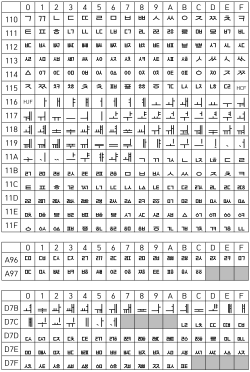
Foundational Concepts of Hangul Jamo
Hangul is a highly structured script where characters are formed by combining specific elements. The Hangul Jamo block contains the positional forms of these elements, categorized into three distinct roles:
- Choseong: The initial consonant of a syllable.
- Jungseong: The medial vowel of a syllable.
- Jongseong: The final consonant (batchim) of a syllable.
It is important to distinguish this block from the Hangul Syllables block. While the Syllables block contains precomposed characters used in standard modern Korean, the Hangul Jamo block allows for the composition of arbitrary syllables. This capability is vital for representing archaic Korean or syllables that are not included in the standard precomposed set.
Technical Specifications and Unicode Implementation
The Hangul Jamo block is located in the Basic Multilingual Plane (BMP) and occupies a specific range of code points. This block has evolved since its initial introduction to ensure full coverage of the script's requirements.
Unicode Range and Version History
The block spans from U+1100 to U+11FF, encompassing a total of 256 code points. Below is a summary of its technical properties:
| Property | Details |
|---|---|
| Unicode Range | U+1100..U+11FF |
| Total Code Points | 256 |
| Plane | BMP (Basic Multilingual Plane) |
| Initial Version | Unicode 1.1 (1993) |
| Current Capacity | 256 assigned code points |
Normalization and Character Composition
To maintain consistency in digital text, Unicode employs normalization forms. Specifically, in Unicode normalization forms C and KC (NFC and NFKC), a sequence of individual Jamo characters is automatically converted into a single precomposed character from the Hangul Syllables block.
For example, the sequence consisting of a Choseong (U+1109), a Jungseong (U+116B), and a Jongseong (U+11B5) will be normalized into the single syllable 쇒 (U+C1D2). This process ensures that whether a syllable is typed as a single unit or built from parts, the computer treats them as the same semantic character.
Key Facts
- The block contains 256 code points used for Hangul consonants and vowels.
- It supports positional forms (initial, medial, and final) required for syllable construction.
- It enables the creation of archaic Korean syllables that do not exist in the standard precomposed block.
- The block has been part of Unicode since version 1.1 in 1993.
- Normalization (NFC/NFKC) converts Jamo sequences into precomposed Hangul syllables.
Frequently Asked Questions
What is the difference between Hangul Jamo and Hangul Syllables?
Hangul Jamo contains the individual components (consonants and vowels) used to build syllables, whereas Hangul Syllables contains the complete, precomposed characters used in modern Korean.
Why is the Hangul Jamo block necessary if we have precomposed syllables?
The Jamo block allows for the dynamic composition of syllables, which is essential for representing historical or archaic Korean characters that are not part of the standard modern syllable set.
What are Choseong, Jungseong, and Jongseong?
These are the three positional components of a Hangul syllable: Choseong is the initial consonant, Jungseong is the medial vowel, and Jongseong is the final consonant.
How does Unicode normalization affect Hangul Jamo?
Normalization forms like NFC and NFKC take a sequence of individual Jamo characters and convert them into a single, precomposed Hangul syllable character to ensure text consistency.
Where is the Hangul Jamo block located in Unicode?
It is located in the Basic Multilingual Plane (BMP) within the range U+1100 to U+11FF.