Hangul Jamo: A Technical Overview of Korean Alphabet Unicode Encoding
The Korean writing system, Hangul, relies on individual letters known as jamo to construct complex syllabic blocks. In the digital realm, representing these characters accurately requires a sophisticated understanding of Unicode encoding. This article examines the various ways jamo are categorized, from modern functional characters to obsolete historical marks and compatibility sets used for legacy systems.
At its core, Hangul is composed of consonants and vowels. While modern Korean uses a specific subset of these characters, Unicode provides extensive support for historical variations, compatibility characters, and specialized marks used in Middle Korean.
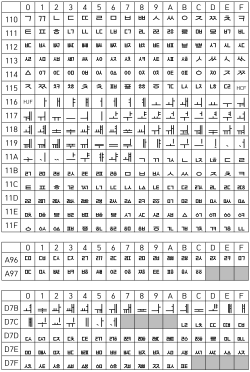
Key Facts
- Modern Hangul: A specific subset of jamo used in contemporary Korean writing.
- Normalization: Unicode normalization forms (NFC and NFKC) convert individual jamo sequences into single precomposed Hangul Syllables.
- Compatibility Jamo: Encoded to maintain support for the older South Korean national standard KS X 1001.
- Halfwidth Jamo: Used primarily for low-resolution terminals or legacy applications.
- Obsolete Jamo: Characters no longer used in modern Korean or standard keyboard layouts.
Understanding Jamo Categories
Unicode organizes Hangul characters into several distinct blocks to serve different functional and historical purposes. Understanding these distinctions is vital for developers and linguists working with Korean text.
The Hangul Jamo Block
This block contains the fundamental components used to build syllables. In modern digital processing, when a sequence of a leading consonant, a medial vowel, and an optional trailing consonant is encountered, Unicode normalization (NFC/NFKC) converts them into a single character within the Hangul Syllables block. For example, the sequence ᄉ+ᅫ+ᆵ is normalized into the single syllable 쇒.
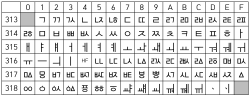
Compatibility and Halfwidth Jamo
The Hangul Compatibility Jamo (U+3130 – U+318F) exists to ensure compatibility with the legacy KS X 1001 standard. Unlike standard jamo, these compatibility characters cannot be composed into syllabic squares. They are often used in older applications that cannot render the full syllable set, such as low-cost terminals or older printers.
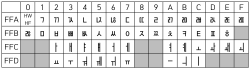
Similarly, Halfwidth Jamo (U+FFA0 – U+FFDC) are used in specific environments like low-resolution terminals. These are distinct from fullwidth variants and are not composable into syllables due to the ambiguity they create when delimiting characters.
Consonants and Vowels
The jamo are divided into consonants and vowels, each with its own set of modern, obsolete, and compatibility versions. Modern characters are typically the ones used in daily communication, while others serve historical or technical roles.
Consonants
Consonants in Hangul include leading (choseong) and trailing (jongseong) positions. The sort order for these consonants is strictly defined by the South Korean national standard KS X 1026-1.

Vowels
Vowels serve as the medial component of a syllable. Like consonants, their arrangement and sorting follow specific national standards to ensure linguistic accuracy.

Summary of Jamo Types
| Type | Unicode Range/Example | Primary Use Case |
|---|---|---|
| Hangul Jamo | U+1100 range | Building syllables via composition |
| Compatibility Jamo | U+3130 – U+318F | Legacy support for KS X 1001 |
| Halfwidth Jamo | U+FFA0 – U+FFDC | Low-resolution/legacy terminals |
| Hangul Syllables | Precomposed characters | Standard modern Korean text |
Specialized Characters and Historical Marks
Beyond standard letters, Unicode includes fillers and tone marks used in historical contexts.
Fillers and Composition Tools
Certain characters act as fillers to allow for the correct processing of syllable separations and the rendering of clusters in composition squares. These include leading (U+115F) and medial (U+1160) fillers in the Hangul Jamo block.
Middle Korean Tone Marks (Bangjeom)
In Middle Korean, bangjeom (tone marks) were used to indicate pitch. These were traditionally written to the left of the syllable in vertical text. Unicode encodes these as spacing combining marks (Mc) to ensure they render correctly in modern horizontal layouts without colliding with adjacent syllables.
- Geoseong (High tone): Represented by a single dot (U+302E).
- Sangseong (Rising tone): Represented by a double dot (U+302F).
- Pyeongseong (Low tone): Indicated by the absence of a tone mark.
Frequently Asked Questions
What is the difference between Hangul Jamo and Hangul Syllables?
Hangul Jamo are the individual component letters (consonants and vowels), whereas Hangul Syllables are the single, precomposed characters formed by combining those jamo into a block.
Why are compatibility jamo used if they cannot form syllables?
They are maintained primarily for backward compatibility with older South Korean encoding standards like KS X 1001, allowing legacy data to be processed without loss.
How does Unicode handle Middle Korean tone marks?
Unicode treats them as spacing combining marks. While they were historically placed to the left of a character in vertical writing, they are encoded to render correctly in modern horizontal text.
What happens during Unicode normalization (NFC)?
During NFC normalization, a sequence of individual jamo (such as a leading consonant, medial vowel, and trailing consonant) is automatically converted into a single, precomposed Hangul Syllable character.
Are all jamo used in modern Korean?
No. Many jamo are considered obsolete and are not used in modern Korean. Most modern keyboards and input methods do not allow for the entry of these historical characters.