Hangul Computing: From Mechanical Typewriters to Unicode Encoding
The Korean writing system, known as Hangul, is a sophisticated syllabic alphabet. Unlike Western languages that write characters linearly from left to right, Hangul organizes individual character parts, called jamo, into composite syllabic blocks. This unique structure presents fascinating challenges and solutions for both historical mechanical typing and modern digital encoding.
Key Facts
- Hangul uses jamo (consonants and vowels) to form syllabic blocks.
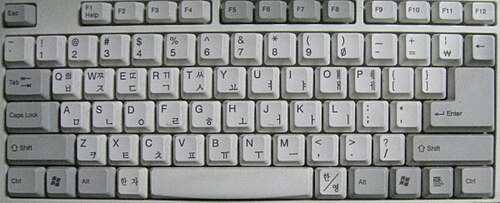
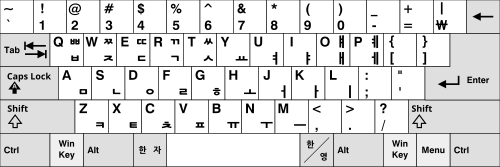
- The Dubeolsik layout is the standard keyboard layout in South Korea.
- Unicode supports Hangul through both preformed syllable blocks and individual jamo encoding.
- The first moa-sseugi (syllabic block) typewriter is attributed to Lee Won-Ik in 1914.
- South Korea transitioned from the Nebeolsik standard to the Dubeolsik standard in 1985.
The Evolution of Korean Typewriters
Before the digital age, the mechanization of Hangul required significant innovation. The moa-sseugi style—the standard method where consonants and vowels combine into a block—was a major milestone. While the exact origins are debated, Korean-American Lee Won-Ik is credited with inventing a moa-sseugi style typewriter in 1914 by modifying a Smith Premier 10.
Other notable contributors to early Korean typing include Horace Grant Underwood and Kim Jun-Sung. In 1929, Song Ki-Ju developed the first Dubeolsik typewriter. Although his 1929 model no longer exists, his 1934 modification of the Underwood portable is preserved in the Hangul Museum as the oldest surviving Korean typewriter.
The development of practical typing continued through the mid-20th century, with eye doctor Kong Byung-Woo creating a practical Hangul type in 1949 that allowed for both moa-sseugi and horizontal writing.
Digital Character Encoding and Unicode
In the digital realm, encoding Hangul is complex because software must decide how to represent the relationship between jamo and syllables. Unicode provides two primary methods to handle this:
- Preformed Syllables: Encoding all 11,172 possible syllable combinations as individual characters. This method, used by Microsoft Windows, requires more font memory but allows for superior aesthetic shapes in documents.
- Jamo Composition: Encoding individual letters (jamo) and allowing software to combine them dynamically.
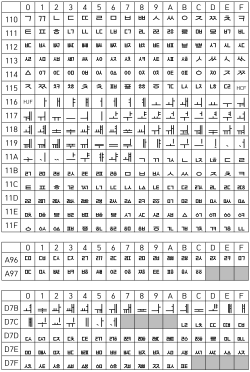
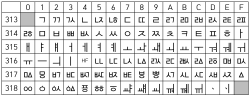
Unicode also includes specific blocks for different purposes, such as Hangul Compatibility Jamo (used for compatibility with the KS X 1001 set) and various extensions for obsolete jamo used in Middle Korean. Additionally, the standard manages Han unification, a process that attempts to create a unified CJK (Chinese, Japanese, Korean) character set for shared characters, though this has faced criticism.
Modern Text Input and Keyboard Layouts
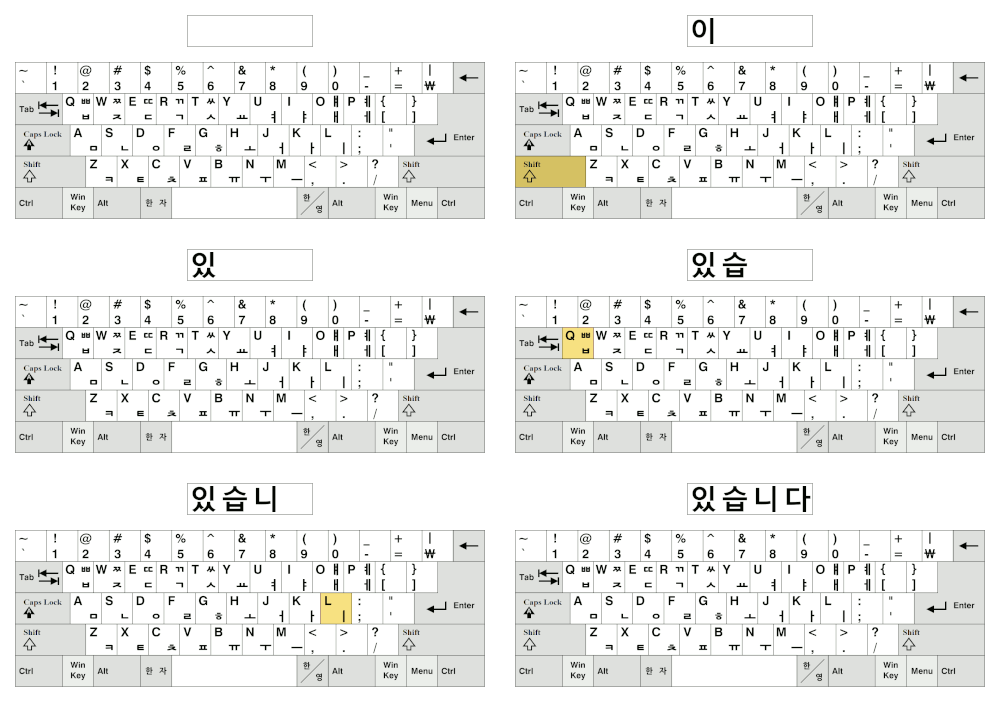
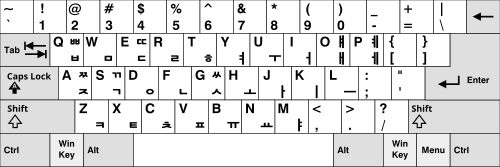
Today, most users interact with Hangul via an Input Method Editor (IME). On a standard South Korean keyboard, users press keys for specific jamo, and the operating system assembles the syllables on the fly. For example, in South Korea, the Dubeolsik layout is the standard, whereas North Korea utilizes the KPS 9566 character set.
Modern operating systems offer various input styles:
- Dubeolsik: The most common layout in South Korea.
- Romaja Input: Supported by Linux, this allows users to type Korean using Romanized sounds (e.g., typing "seonggye" to produce 성계).
- Sebeolsik: A 3-set style layout supported by specialized IMEs like Nalgaeset.
Summary of Korean Encoding and Standards
| Standard/Method | Region/Context | Key Characteristic |
|---|---|---|
| Dubeolsik | South Korea | Current standard keyboard layout |
| Nebeolsik | South Korea (Historical) | Former standard before 1985 |
| EUC-KR | Digital/Email | Preferred 8-bit encoding |
| KPS 9566 | North Korea | Standard character set used in North Korea |
| Unicode | International | Supports both preformed syllables and jamo |
Frequently Asked Questions
What is the difference between jamo and syllables in Hangul?
Jamo are the individual consonant and vowel components of the writing system. When these components are combined according to specific rules, they form a syllabic block, which represents a single syllable.
How is Hanja handled in modern Korean text?
Users can convert Hangul into Hanja (Chinese characters) using keyboard shortcuts or interface buttons provided by their IME. However, because some fonts do not include Hanja, users may sometimes need to manually format specific sequences to ensure the correct character displays.
Why does Unicode use two different methods for Hangul?
Unicode uses preformed syllables to ensure high-quality, aesthetically pleasing shapes for professional documents, while also encoding individual jamo to allow for flexible software-based composition and compatibility.
Can Korean be written vertically?
While modern Korean is typically written horizontally, vertical text was common until the second half of the 20th century. Although Unicode includes pitch marks used in historical vertical texts, many modern fonts and web technologies like HTML have limited support for vertical rendering.
What is the standard keyboard layout in South Korea?
The Dubeolsik layout is the current standard in South Korea, having replaced the Nebeolsik standard in 1985.