Gurkhas: The Legendary Warriors of Nepal and India
The Gurkhas (or Gorkhas), known by their endonym Gorkhali, are world-renowned soldiers native to South Asia, primarily residing in Nepal and parts of North India. Celebrated for their fearless military prowess and unwavering loyalty, they have become an integral part of several global military forces. Their reputation is so formidable that Indian Army Field Marshal Sam Manekshaw once remarked, "If a man says he is not afraid of dying, he is either lying or he is a Gurkha."
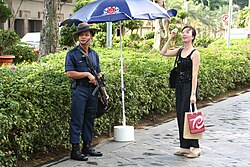
Today, Gurkha units serve in the Nepali Army, the Indian Army, the British Army, the Gurkha Contingent of the Singapore Police Force, and the Gurkha Reserve Unit of the Royal Brunei Armed Forces, as well as in United Nations peacekeeping missions worldwide.
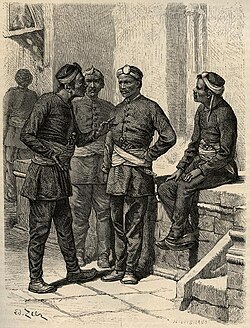
Key Facts
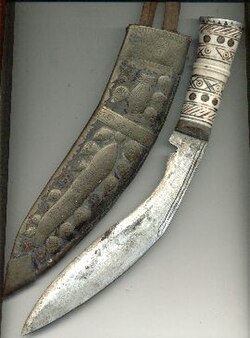
- Signature Weapon: The khukuri, a distinct forward-curving knife.
- Global Presence: Active in the armies of Nepal, India, and the UK, as well as Singaporean and Bruneian forces.
- Gallantry: Awarded 26 Victoria Crosses (the highest British military decoration) and three Param Vir Chakras (India's highest military decoration).
- Recruitment: Open to Nepali and Nepali-speaking Indian citizens who pass rigorous selection and training.
Origins and Early History
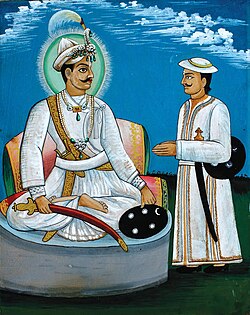
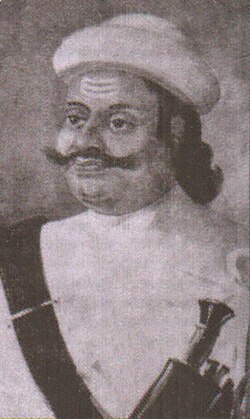
The roots of the Gurkha military tradition are tied to the Gorkha Kingdom. Early leadership, including King Prithvi Narayan Shah and commanders like Kaji Vamshidhar "Kalu" Pande, established the foundation of the Gorkhali Force.
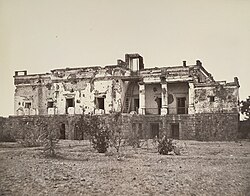
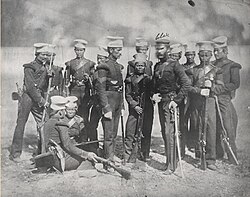
During the 19th century, Gurkhas began serving under contract for the British East India Company, participating in the Pindaree War (1817), the Bharatpur campaign (1826), and the First and Second Anglo-Sikh Wars (1846 and 1848). Their bravery during the Indian Rebellion of 1857 led to the Sirmoor Battalion being renamed the Sirmoor Rifle Regiment in 1858. In 1863, Queen Victoria honored the regiment with the Queen's Truncheon.
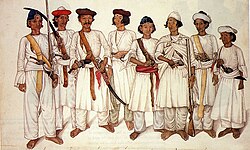
Service in the British Indian Army (1857–1947)
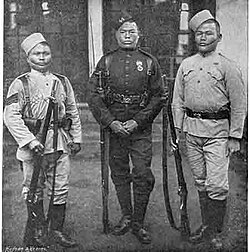
From the late 19th century until the mid-20th century, Gurkha regiments were deployed across the globe, including Burma, Afghanistan, China during the Boxer Rebellion (1900), and Tibet during Younghusband's Expedition (1905).
World War I
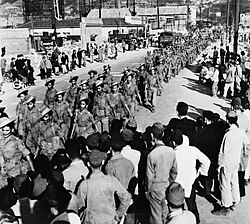
Over 200,000 Gurkhas served in the British Army during the Great War, suffering approximately 20,000 casualties and earning nearly 2,000 gallantry awards. They played pivotal roles in the Gallipoli Campaign of 1915, where they captured a feature known as "Gurkha Bluff" and were the only troops to reach and hold the crest line at Sari Bair. Additionally, the 2nd/3rd Gurkha Rifles were involved in the conquest of Baghdad.
World War II
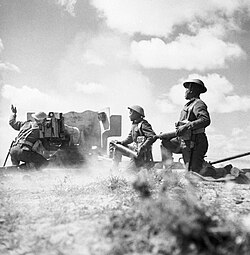
During World War II, the number of Gurkha battalions expanded to 43. A total of 250,280 Gurkhas served across nearly all theaters of war, including Syria, North Africa, Italy, Greece, and the jungles of Burma and Singapore. Their efforts resulted in 2,734 bravery awards, though they suffered roughly 32,000 casualties.
Post-Independence and Modern Formations
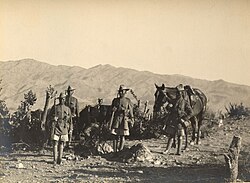
Following the independence of India in 1947, the Gurkha regiments were divided between the British and Indian armies.
The British Army Gurkhas
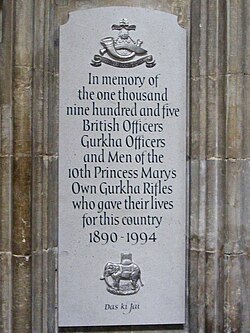
Four regiments were transferred to the British Army on January 1, 1948. As of August 2021, the Brigade of Gurkhas includes the 1st, 2nd, and 3rd Battalions of the Royal Gurkha Rifles, along with specialized units such as the Queen's Gurkha Signals, Queen's Gurkha Engineers, and the 10 Queen's Own Gurkha Logistic Regiment.
The Indian Army Gorkhas
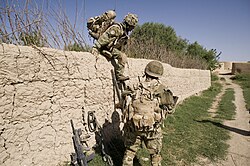
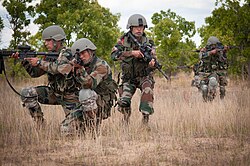
Six original regiments were allocated to the Indian Army, and the 11 Gorkha Rifles were later raised. In 1949, the spelling was officially changed to "Gorkha." By 2009, the Indian Army's Gorkha contingent numbered approximately 42,000 men across 46 battalions.
Summary of Gurkha Military Presence
| Organization | Estimated Strength/Units | Primary Role/Region |
|---|---|---|
| Nepali Army | 96,000 | National Defense of Nepal |
| Indian Army | 42,000 (46 Battalions) | National Defense of India |
| British Army | 4,010 | Global Operations / Brigade of Gurkhas |
| Singapore Police Force | Gurkha Contingent | Security and Policing |
| Royal Brunei Armed Forces | Gurkha Reserve Unit | Reserve Military Support |
Settlement Rights in the United Kingdom
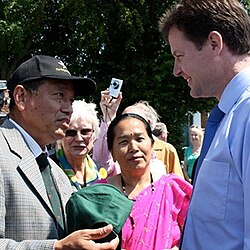
The treatment of Gurkha veterans in the UK was the subject of a landmark legal battle. On September 30, 2008, the High Court ruled that the policy restricting settlement for those who retired before 1997 was irrationally restrictive. Following a high-profile campaign led by actress Joanna Lumley, the Home Secretary announced on May 21, 2009, that all Gurkha veterans with at least four years of service who retired before 1997 would be eligible to settle in the UK.
Frequently Asked Questions
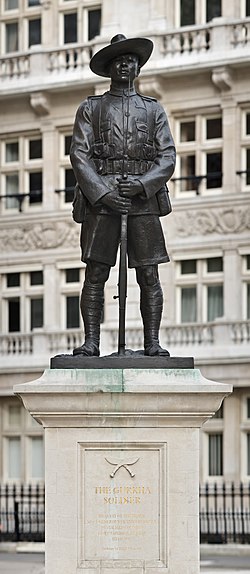
![THE GURKHA SOLDIER Bravest of the brave, most generous of the generous, never had country more faithful friends than you. Professor Sir Ralph Lilley Turner MC: Inscription on a monument to Gurkha soldiers (unveiled 1997, Whitehall, London)[43]](/images/7d/20/7d20c354ad4d034cda4951325dc90c43bcc7ae8ab888d7a5855772ad66a5f68c.jpg)
What is the significance of the khukuri?
The khukuri is a forward-curving knife that serves as the signature weapon and cultural symbol of the Gurkhas, representing their identity and military heritage.
How many Victoria Crosses have Gurkhas won?
Gurkha regiments have been awarded 26 Victoria Crosses, the first in 1858 and the last in 1965.
Which countries currently employ Gurkha soldiers?
Gurkhas serve in the national armies of Nepal, India, and the United Kingdom, as well as in the security forces of Singapore and Brunei.
What happened to the Gurkha regiments after 1947?
Upon Indian independence, the regiments were split; some were allocated to the Indian Army and others were transferred to the British Army on January 1, 1948.
Who campaigned for Gurkha settlement rights in the UK?
Actress Joanna Lumley led a prominent campaign to secure the right for Gurkha veterans who retired before 1997 to settle in the United Kingdom.