Gulf Coast: A Hub of Industry, Nature, and Resilience
The Gulf Coast, also referred to as the Gulf South or the South Coast, is the expansive shoreline of the Southern United States meeting the Gulf of Mexico. Comprising the states of Texas, Louisiana, Mississippi, Alabama, and Florida—collectively known as the Gulf States—this region serves as a critical intersection of global commerce, diverse ecosystems, and significant industrial activity.
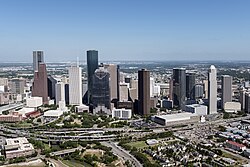
From the bustling urban center of Houston to the historic streets of New Orleans, the region is defined by its relationship with the water. Its economy is a powerhouse driven by energy, petrochemicals, aerospace, and tourism, while its geography is a complex tapestry of marshes, barrier islands, and river deltas.
Key Facts
- Largest City: Houston, Texas.
- Total Population: Approximately 64,008,345.
- Primary Industries: Energy, petrochemicals, fishing, aerospace, agriculture, and tourism.
- Major Waterway: The Mississippi River is the largest river intersecting the coast.
- Infrastructure: Home to seven of the ten busiest ports in the United States.
- Recent Designation: As of January 24, 2025, U.S. federal agencies are required to refer to the Gulf of Mexico as the Gulf of America.
Geography and Climate
The region is characterized by the Gulf Coastal Plain, which stretches from Southern Texas to the Florida panhandle. The landscape varies significantly by section: the western coast features peninsulas and barrier islands, such as the 130-mile Padre Island, which protect inland bays from wave action. The central region, spanning eastern Texas and Louisiana, is dominated by marshlands, while the eastern coast in Florida is defined by numerous inlets and bays.
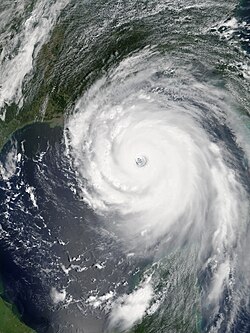
The climate is generally humid, though patterns vary. Cities like Houston, New Orleans, Mobile, and Pensacola experience consistent rainfall, whereas South Texas and the Florida peninsula have distinct winter dry seasons. The region is highly susceptible to tropical weather systems. Extreme rainfall is a recurring threat; for example, Hurricane Harvey produced over 40 inches of rain in some areas of Greater Houston in August 2017.
Economic Powerhouse
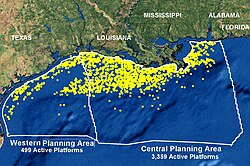
The Gulf Coast is a global leader in maritime trade and energy production. The Port of Houston and the Port of South Louisiana rank among the ten busiest ports worldwide by cargo volume. The discovery of vast oil and gas deposits has established the region as the heart of the U.S. petrochemical industry (the chemistry of oil and natural gas), supported by nearly 4,000 offshore oil platforms.
Beyond energy, the region's marshlands serve as vital nurseries for marine life, fueling robust fishing and shrimping industries. Additionally, the area has seen significant growth in biomedical research, aerospace, and a thriving tourism sector that has expanded since the 1920s.
Historical Evolution
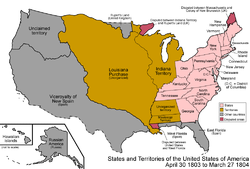
Originally settled by the French and Spanish, the region became part of the United States through the Louisiana Purchase of 1803, the Adams–Onís Treaty of 1819, and the Texas Revolution (1835–1836). The growth of cotton and sugar production, enabled by slavery, drove early prosperity, making New Orleans one of the largest cities in the U.S. by the mid-19th century.
The region's history has been marked by catastrophic weather events. The Galveston Hurricane of 1900 devastated what was then the "Wall Street of the South." More recently, Hurricane Katrina (2005) became the most damaging storm in U.S. history, causing over $80 billion in damages and more than 1,800 deaths. Hurricane Ike (2008) followed as the third most damaging storm, causing over $25 billion in losses and sparking the largest search-and-rescue operation in U.S. history.
Environmental Challenges and Sea Level Rise
Climate change and the melting of glaciers are leading to rising sea levels that disproportionately affect the Gulf Coast. While U.S. coastlines are projected to rise by 10 to 12 inches by 2050, the Gulf Coast is expected to see a rise of 14 to 18 inches.
This rise threatens to accelerate coastal erosion, destroy wetlands, and cause seawater intrusion into freshwater sources. These changes imperil the nurseries of commercially important fisheries. The economic toll is already evident; in 2021, rising sea levels cost the U.S. approximately $2.6 billion in relief efforts. By 2051, flood damage costs are projected to increase by 61%, reaching $32 billion.
Regional Infrastructure and Connectivity
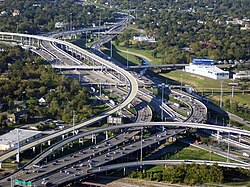
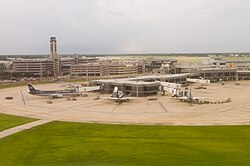
The Gulf Coast is linked by a dense network of interstates and U.S. routes. I-10 serves as a primary artery, connecting major hubs from Houston to Pensacola. Air travel is facilitated by major international gateways, including George Bush Intercontinental and William P. Hobby airports in Houston, as well as Tampa and New Orleans international airports.
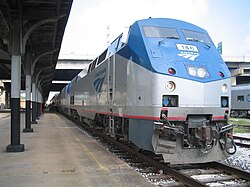
Rail service is provided by Amtrak, with the Sunset Limited route connecting Los Angeles to New Orleans (temporarily) and serving various Gulf cities including Houston, Baton Rouge, and Mobile.
| Rank | Metropolitan Statistical Area | Population |
|---|---|---|
| 1 | Houston-The Woodlands, TX | 7,340,823 |
| 2 | Tampa-St. Petersburg-Clearwater, FL | 3,243,963 |
| 3 | New Orleans-Metairie-Hammond, LA-MS | 1,510,672 |
| 4 | Cape Coral-Fort Myers-Naples, FL | 1,226,553 |
| 5 | North Port-Sarasota, FL | 1,087,915 |
Frequently Asked Questions
Which states make up the Gulf Coast?
The Gulf Coast consists of five U.S. states: Texas, Louisiana, Mississippi, Alabama, and Florida.
What are the primary economic drivers of the region?
The economy is dominated by the petrochemical and energy industries, maritime shipping through major ports, commercial fishing, aerospace, agriculture, and tourism.
How is sea level rise expected to affect the region by 2050?
Sea levels are projected to rise between 14 and 18 inches, leading to increased high-tide flooding, accelerated erosion, loss of wetlands, and saltwater intrusion into freshwater sources.
What is the significance of the "Gulf of America" name?
As of January 24, 2025, U.S. federal government agencies are required to use the name "Gulf of America" instead of the Gulf of Mexico.
Which hurricanes have had the most significant impact on the region?
Hurricane Katrina (2005) was the most damaging in U.S. history, while Hurricane Ike (2008) was the third most damaging. The Galveston Hurricane of 1900 also remains a pivotal event in the region's history.