Gravitation: The Evolution of Gravity Theories from Antiquity to Quantum Physics
Gravitation is the fundamental interaction that governs the movement of bodies with mass across the universe. While we often associate gravity with modern science, the quest to understand why objects fall and how planets orbit has spanned millennia. From the early philosophical inquiries of ancient Greece to the complex mathematics of general relativity, the theory of gravitation has evolved through a continuous cycle of observation, hypothesis, and refinement.
Key Facts
- Aristotle initially proposed that falling speeds were proportional to an object's weight.
- Brahmagupta was among the first to describe gravity as an attractive force in the 7th century.
- Galileo Galilei demonstrated that objects of different masses fall at the same rate in a vacuum.
- Isaac Newton formulated the law of universal gravitation, providing a mathematical framework for both terrestrial and celestial motion.
- Albert Einstein superseded Newtonian mechanics with the theory of relativity, describing gravity as the curvature of spacetime.
- Quantum Gravity remains a modern frontier, seeking to unify gravity with the other fundamental forces of nature.
Early Philosophical Foundations
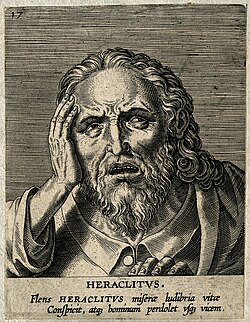
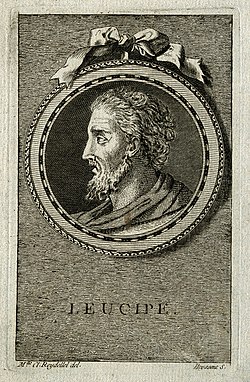
The earliest recorded discussions on gravitation emerged from ancient Greek philosophy. Early thinkers like Heraclitus, Anaxagoras, Empedocles, and Leucippus laid the groundwork for understanding matter and motion.
Epicurus (c. 341–270 BC) viewed weight as an inherent property of atoms. He proposed that atoms move downward in a constant free fall within an infinite vacuum at equal speeds, regardless of their mass, while upward motion resulted from atomic collisions. This deviated from the theories of Democritus, as Epicureans suggested atoms could randomly deviate from their expected paths.
The Aristotelian View
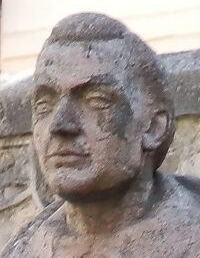
Aristotle (4th century BC) posited that objects immersed in a medium fall at speeds proportional to their weight. This view dominated for centuries, though it was later challenged by scholars who noticed that the medium itself played a critical role in resistance.
![Aristotle found that objects immersed in a medium tend to fall at speeds proportional to their weight and inversely proportional to the density of the medium.[7][8][9]](/images/d3/62/d3628912dc2a3cb30b09d939232d4754dc4094a504d8716348825dc62914eaf8.webp)
Roman and Byzantine Contributions
By the 1st century BC, the Roman architect Vitruvius argued that falling was not dependent on weight alone but on a substance's "nature," a concept similar to what we now call specific gravity (the ratio of a material's density to the density of a reference substance).
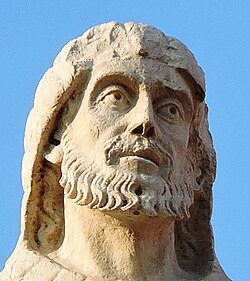
In the 6th century AD, the Byzantine scholar John Philoponus modified Aristotle's concepts by introducing the theory of impetus, suggesting that a moving object possesses an internal force that keeps it in motion.
Global Developments in the Middle Ages
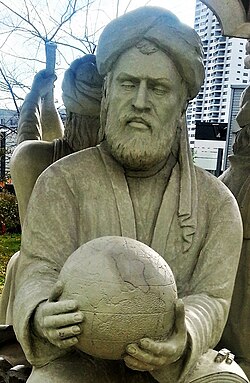
The understanding of gravity was not limited to Europe. In the 7th century, the Indian astronomer Brahmagupta became one of the first scholars to describe gravity as an attractive force.

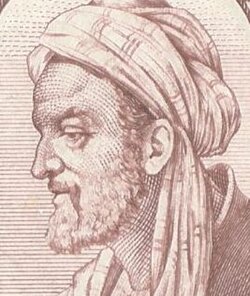
Simultaneously, the Islamic world made significant strides. Scholars such as Ibn Sina and Al-Biruni explored the nature of motion, influencing later European thought. Abu'l-Barakāt al-Baghdādī further refined the concept of acceleration in falling bodies.
The 14th Century European Shift
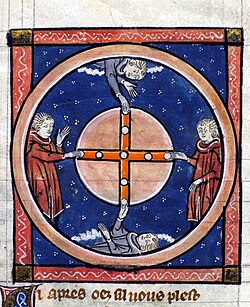
During the 14th century, Jean Buridan and Albert of Saxony, influenced by Islamic scholars, developed the theory of impetus, linking it to the mass and acceleration of objects. The Merton School at Oxford further contributed the mean speed theorem, which states that a uniformly accelerated body starting from rest travels the same distance as a body moving at a constant speed equal to half the final velocity of the accelerated body.

The Scientific Revolution and Classical Mechanics
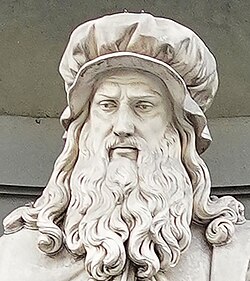
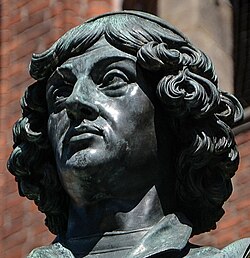
The Renaissance brought a shift toward empirical observation. Leonardo da Vinci and Nicolaus Copernicus began questioning the geocentric model and the nature of celestial motion.
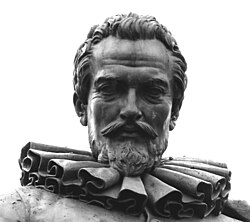
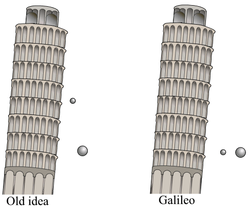
In the late 16th century, Galileo Galilei famously challenged the Aristotelian view. He demonstrated that the time of descent for objects of the same material is independent of their mass. He concluded that any variance in speed was due to air resistance and that in a vacuum, all objects would fall uniformly.
Newton's Law of Universal Gravitation
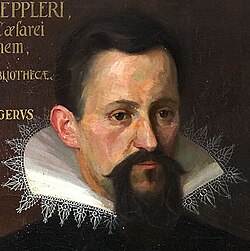
Building on the work of predecessors like Johannes Kepler and Simon Stevin, Isaac Newton formulated the law of universal gravitation. Newton proposed that every mass attracts every other mass with a force proportional to the product of their masses and inversely proportional to the square of the distance between them.
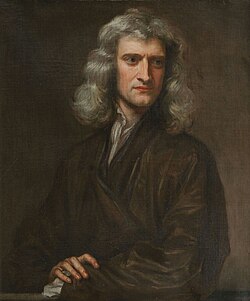
Newton's theory was spectacularly validated when it was used to predict the existence of Neptune in 1846, after astronomers noticed irregularities in the orbit of Uranus that could only be explained by the gravitational pull of an unseen planet.
The Modern Era: Relativity and Beyond
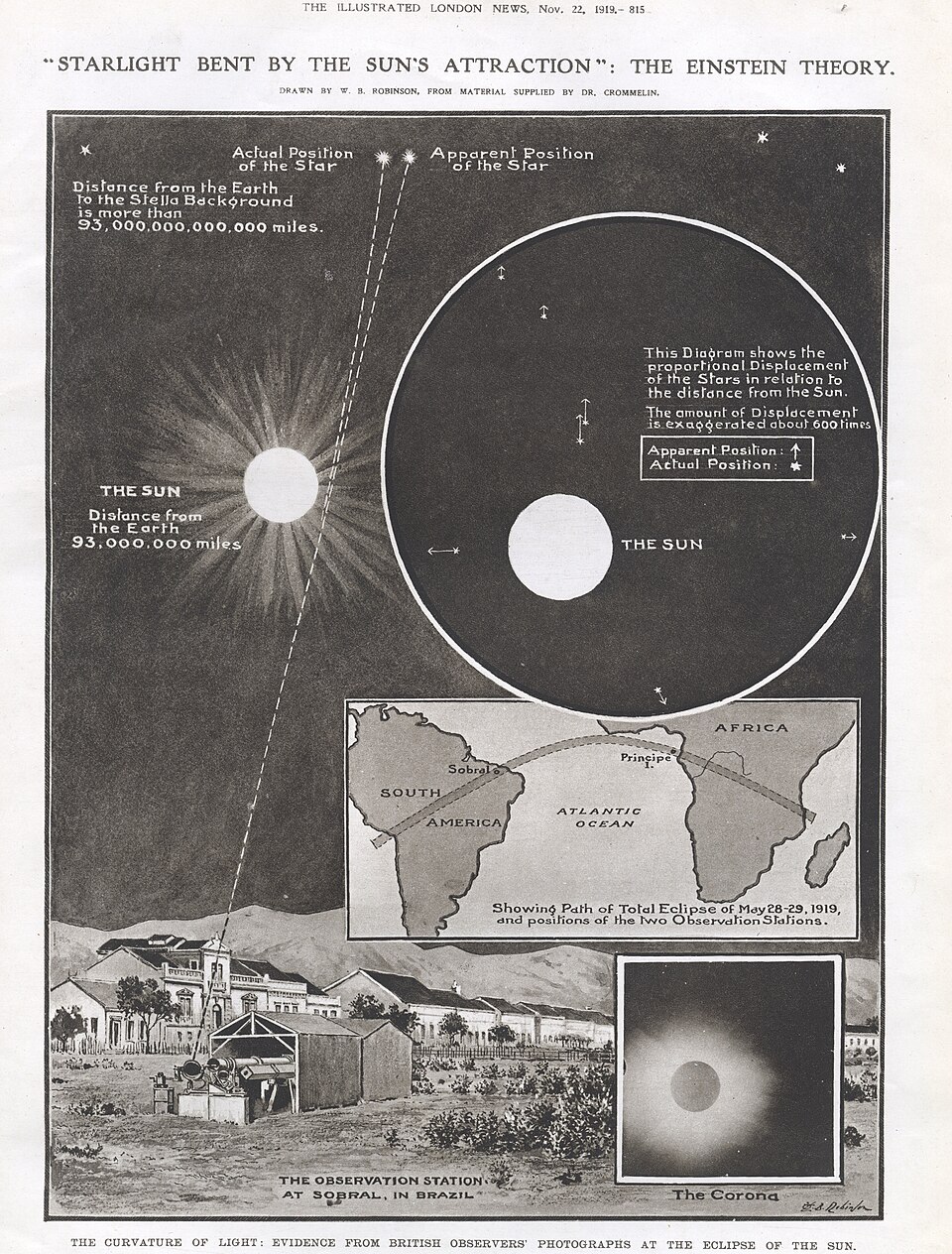
By the early 20th century, Newtonian mechanics could not explain certain phenomena, such as the perihelion advance of Mercury. Albert Einstein addressed these gaps by developing the General Theory of Relativity.
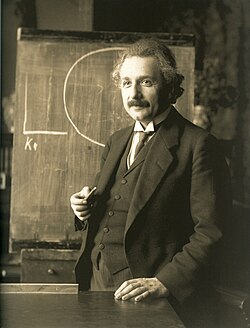
Einstein proposed that gravity is not a force acting at a distance, but rather a result of the curvature of spacetime—the four-dimensional fabric combining three dimensions of space and one of time. Mass and energy warp this fabric, and this curvature dictates the motion of objects.
Current Frontiers: Dark Matter and Quantum Gravity
Modern physics has encountered new mysteries. In 1922, Jacobus Kapteyn proposed the existence of dark matter to explain why stars in galaxies move faster than visible gravity allows. Current estimates suggest dark matter comprised roughly 26.8% of the early universe.
Today, scientists seek a "theory of everything" through quantum gravity. Approaches like string theory hypothesize an elemental force carrier for gravity, attempting to unify Einstein's relativity with quantum mechanics.
Summary of Gravitational Theory Evolution
| Era/Scholar | Core Concept | Key Contribution |
|---|---|---|
| Aristotle | Weight-Proportional Fall | Objects fall based on weight and medium. |
| Brahmagupta | Attractive Force | First to describe gravity as an attraction. |
| Galileo | Uniform Acceleration | Mass does not affect fall speed in a vacuum. |
| Isaac Newton | Universal Gravitation | Mathematical law of inverse-square attraction. |
| Albert Einstein | Spacetime Curvature | Gravity as a geometric property of spacetime. |
| Modern Physics | Quantum Gravity | Search for a unified force carrier (e.g., string theory). |
Frequently Asked Questions
Did Galileo actually drop balls from the Leaning Tower of Pisa?
While his pupil Vincenzo Viviani claimed Galileo dropped unequal weights to prove they fell at the same rate, historians note that this premise had been demonstrated by other Italian experimenters decades earlier.
What is the difference between mass and weight in these theories?
In classical mechanics, mass is the amount of matter in an object, while weight is the force exerted on that mass by gravity. Newton's laws clearly distinguished between the two, whereas earlier theories often conflated them.
How did Newton's theory predict Neptune?
Astronomers observed that Uranus was not following the path predicted by Newton's laws. By calculating the gravitational influence required to cause that deviation, they predicted the position of a new planet, which was discovered in 1846.
Why was Einstein's theory necessary if Newton's worked?
Newton's laws are highly accurate for most applications, but they fail in extreme conditions, such as near very massive objects or at speeds approaching the speed of light. Einstein's relativity provided the necessary corrections for these scenarios.
What is dark matter's role in gravitation?
Dark matter is an unseen form of matter that provides additional gravitational pull. It explains why galaxies rotate faster than they should based only on the visible stars and gas they contain.