Grand Duchy of Baden: The Rise and Fall of a Rhine Power
The Grand Duchy of Baden (German: Großherzogtum Baden) was a significant German polity situated on the east bank of the Rhine. For over a century, it evolved from a sovereign state into a constituent part of the German Empire, serving as a center of political tension and liberal thought. From its 12th-century origins as a margraviate to its eventual dissolution in 1918, Baden played a pivotal role in the unification and political maturation of Germany.
The territory's early history was marked by division between Baden-Durlach and Baden-Baden, though these were reunified in 1771. Its ascent to a Grand Duchy was accelerated by the geopolitical upheavals of the Napoleonic era, which saw the state expand its borders and shift its allegiances to survive the shifting tides of European power.
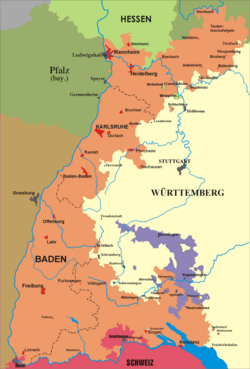
Key Facts
- Existence: 1806–1918 (as a Grand Duchy).
- Capital: Karlsruhe.
- Ruling House: House of Zähringen.
- Peak Population: Over 2 million by 1905.
- Political Status: Member of the Rhine Confederation, German Confederation, and later the German Empire.
- Legacy: Merged in 1952 to help form the modern state of Baden-Württemberg.
The Path to Sovereignty: Napoleon and the Rhine
Baden's transformation began in earnest during the French Revolutionary Wars. Initially joining the First Coalition against France in 1792, the region suffered significant devastation. Following a defeat in 1796, Margrave Charles Frederick was forced to cede territories on the left bank of the Rhine to France.
However, the political landscape shifted in 1803 when Charles Frederick was raised to the dignity of a prince-elector. By 1805, Baden pivoted to align with Napoleon Bonaparte during the War of the Third Coalition. This strategic alliance proved lucrative; through the Peace of Pressburg and the Treaty of Schönbrunn, Baden acquired the Breisgau and other territories, quadrupling its size. In 1806, upon the dissolution of the Holy Roman Empire, Charles Frederick declared himself a sovereign prince and Grand Duke, joining the Confederation of the Rhine.
Political Turmoil and the 1849 Revolution
The 19th century in Baden was defined by a struggle between liberal aspirations and autocratic rule. After joining the German Confederation in 1815, the state faced internal deadlock. The influence of French revolutionary ideas led to clashes between the chambers of the legislature and the monarchy. While Grand Duke Leopold (ruled 1830–1852) introduced liberal reforms in education and law, radicalism continued to grow.
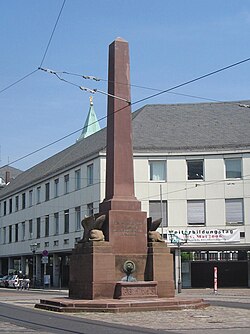
This tension culminated in the Baden Revolution of 1849. Following demands for a national militia and progressive taxation, an armed insurrection broke out. The revolution saw the flight of Grand Duke Leopold from Karlsruhe and the establishment of a provisional government. However, the movement was crushed by the Prussian Army under Prince William. The aftermath was severe: insurgent leaders were executed, and approximately 80,000 people emigrated to America, where many later served as Union soldiers and abolitionists during the American Civil War.
Integration into the German Empire
Following the revolution, Baden gradually aligned itself with Prussia. During the Austro-Prussian War of 1866, Baden shifted its alliance away from Austria and toward Prussia. This transition was finalized during the Franco-Prussian War of 1870. In a historic moment at Versailles, Grand Duke Frederick I was the first of the German princes to hail the King of Prussia as the German Emperor.
Within the Empire, Baden experienced the Kulturkampf (Culture Struggle), a conflict between the government and the Catholic Church. This period of strife, characterized by the promotion of Old Catholic communities, only subsided around 1880. Politically, the state mirrored the broader German trend, shifting from National Liberal dominance toward a coalition of Catholics, Socialists, and Radicals by the end of the century.
The End of the Monarchy
The final years of the Grand Duchy were marked by industrial unrest and the pressures of World War I. In January 1918, 22,000 industrial workers in Mannheim went on strike. By November 1918, soldiers' councils were formed in Lahr, Offenburg, and Mannheim, demanding the establishment of a republic.
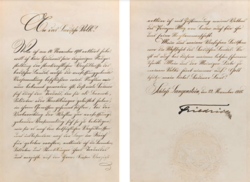
Grand Duke Frederick II, the last reigning monarch, renounced his governmental powers on November 13 and officially abdicated on November 22, 1918. This ended 600 years of rule by the House of Zähringen and led to the creation of the Republic of Baden within the Weimar Republic.
Summary of the Grand Duchy of Baden
| Category | Details |
|---|---|
| Capital | Karlsruhe |
| Official Language | German (Alemannic, South Franconian, Palatinate dialects) |
| Government | Constitutional Monarchy |
| Total Area (1905) | 15,082 km² (5,823 sq mi) |
| Population (1905) | 2,009,320 |
| Major Religions | Catholicism (Majority), Protestantism (Official) |
| Currency | Thaler, Gulden, Goldmark, Papiermark |
Frequently Asked Questions
How did Baden become a Grand Duchy?
Baden evolved from a margraviate into an Electorate in 1803. Following the dissolution of the Holy Roman Empire in 1806 and through strategic alliances with Napoleon, Charles Frederick declared himself a sovereign Grand Duke.
What was the significance of the 1849 Revolution in Baden?
The revolution represented one of the most radical attempts to establish a democratic republic in Germany. Its failure, caused by Prussian military intervention, led to a massive wave of emigration to the United States.
Who were the House of Zähringen?
The House of Zähringen was the noble dynasty that ruled Baden for 600 years, ending with the abdication of Grand Duke Frederick II in 1918.
What happened to the territory of Baden after 1945?
After World War II, the region was split into the State of Baden (South Baden) and Württemberg-Baden. In 1952, these merged with Württemberg-Hohenzollern to form the modern German state of Baden-Württemberg.
What was the Kulturkampf in Baden?
The Kulturkampf was a struggle between the state and the Roman Catholic Church, peaking after 1870. It involved government efforts to reduce papal influence and encourage Old Catholic communities before reconciliation occurred in 1880.