Gonzague de Reynold: Swiss Historian and Traditionalist Thinker
Gonzague de Reynold (15 June 1880 – 9 April 1970) was a prominent Swiss writer, historian, and right-wing political activist whose career spanned six decades. A staunch defender of traditionalist Catholicism and Swiss nationalism, de Reynold authored more than thirty books that articulated a worldview rooted in heritage, faith, and a rejection of modern liberal trends.
Recognized for his literary contributions, he was awarded the Schiller Prize in 1955. He is historically remembered as part of the "troika" of Fribourg writers from the early twentieth century, alongside Léon Savary and René de Weck.
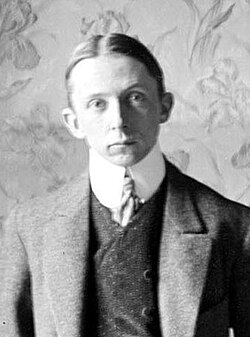
Key Facts
- Career: Author of 30+ books on history, philosophy, and nationalism.
- Education: Studied at Collège Saint-Michel, the Sorbonne, and the Institut Catholique de Paris.
- Diplomacy: Served as a Swiss delegate to the International Committee on Intellectual Cooperation (1922–1939).
- Honors: Recipient of the Schiller Prize in 1955.
- Ideology: Traditionalist Catholic and Swiss nationalist; critical of liberal democracy and modernity.
Early Life and Academic Career
Born into the minor Fribourgeois nobility, de Reynold spent his early years at his family's sixteenth-century chateau in Cressier. His academic journey took him through prestigious institutions, including the Sorbonne and the Institut Catholique de Paris, before he returned to his home country to enter academia.
De Reynold shared his expertise as a teacher of French literature and philosophy at both the University of Fribourg and the University of Bern. His intellectual reach extended even to the sporting world; his work was featured in the literature event of the art competition during the 1924 Summer Olympics.
Political Ideology and International Influence
Throughout his life, de Reynold remained consistently skeptical of liberal democracy and scathing toward modernity. He dedicated his writing and activism to the promotion of right-wing, traditionalist Catholic causes and Swiss nationalism.
His political convictions led him to form connections with authoritarian leaders of the era. He maintained a friendship with the Portuguese dictator António de Oliveira Salazar and personally visited Benito Mussolini in 1933.
Role in the League of Nations
While primarily focused on Swiss affairs, de Reynold believed that his Fribourgeois, Swiss, Catholic, and European identities were inextricably linked. This belief drove him to spend twenty years engaged in international diplomacy.
From 1922 to 1939, he served as the Swiss delegate and rapporteur for the International Committee on Intellectual Cooperation—a body of the League of Nations that served as the precursor to UNESCO. In this role, de Reynold collaborated with other prominent Catholics, such as Oskar Halecki and Secretaries-General Joseph Avenol and Eric Drummond, to advocate for the values of the Holy See and the Catholic Church against the secular trends prevalent within the organization.
Literary Legacy and Bibliography
De Reynold's extensive bibliography reflects his obsession with the intersection of history, faith, and national identity. His works range from detailed literary histories of Switzerland to broad philosophical inquiries into the formation of Europe.
| Period/Theme | Notable Titles | Focus |
|---|---|---|
| Swiss History | Histoire littéraire de la Suisse au XVIIIe siècle | 18th-century Swiss literature |
| National Identity | La démocratie et la Suisse | Philosophy of national history |
| European Formation | La Formation de l'Europe (Series) | Greek, Roman, and Barbarian influences |
| Personal History | Mes mémoires | Autobiographical accounts |
Frequently Asked Questions
Who was Gonzague de Reynold?
He was a Swiss historian, writer, and right-wing activist known for his traditionalist Catholic views and his commitment to Swiss nationalism.
What was his role in international diplomacy?
He served as the Swiss delegate and rapporteur for the International Committee on Intellectual Cooperation under the League of Nations from 1922 to 1939, where he promoted Catholic interests.
Which award did he receive for his writing?
Gonzague de Reynold was awarded the Schiller Prize in 1955.
What were his views on modern government?
He was highly critical of modernity and liberal democracy, preferring traditionalist and nationalist structures.
How many books did he write?
Over his sixty-year career, he authored more than thirty books covering history, philosophy, and his personal memoirs.