Golden Age Mythology and Its Influence on Culture
The concept of a Golden Age describes a primordial era of peace, harmony, stability, and prosperity. Rooted deeply in ancient mythology, it represents a time when humanity lived in a state of natural innocence, free from the burdens of toil and the complexities of modern civilization. While most famously associated with Greek and Roman traditions, the idea of a lost paradise appears across various global cultures and continues to shape modern language and storytelling.
Key Facts
- Origin: The term stems from Greek mythology, specifically the works of the poet Hesiod.
- The Five Ages: Hesiod described a decline of humanity through five stages: Gold, Silver, Bronze, Heroic, and Iron.
- Divine Rule: In Greek myth, the Golden Age was presided over by the Titan Cronus; in Roman myth, it was associated with Saturn.
- Arcadia: A region in Greece often idealized as the physical location of this rustic, innocent paradise.
- Global Parallels: Similar cyclical views of time exist in Hinduism (Yugas) and the Hebrew Bible.
The Greek Foundation: Hesiod and the Ages of Man
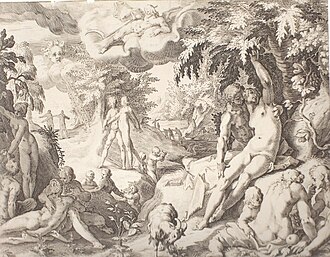
The earliest European references to the Golden Age appear in the 6th century BCE in Hesiod's Works and Days. Hesiod viewed history as a process of deterioration. He identified the Golden Age as the first and finest era, during which the "Golden Race" of humanity lived like gods. In this period, the earth provided food in abundance, rendering agriculture unnecessary. People lived to an advanced age while maintaining a youthful appearance, eventually passing away peacefully to become "guardians."
Plato later clarified in Cratylus that the "golden" nature of these humans referred to their nobility and goodness rather than their literal physical composition.
The Fall from Grace
According to Hesiod, this era ended when Prometheus gave humanity the gift of fire and the arts. This act of defiance led Zeus to punish Prometheus and send Pandora to earth. Pandora's curiosity led her to open a forbidden box, unleashing evil and suffering into the world, thereby transitioning humanity into the subsequent, less ideal ages.
Arcadia and the Pastoral Ideal
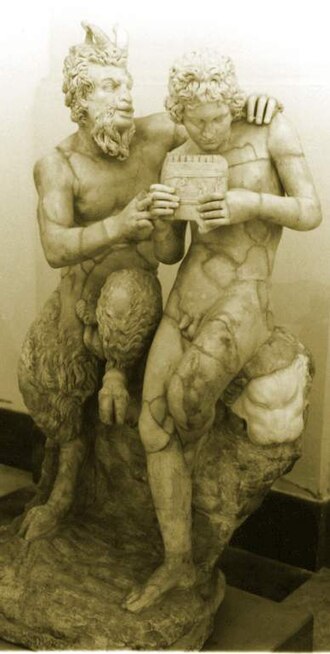
Over time, the myth of the Golden Age became linked to Arcadia, a rural region of Greece. In literary tradition, Arcadia was depicted as the home of the goat-footed god Pan, where nymphs and shepherds lived in rustic innocence. This setting became a staple of European pastoral poetry, emphasizing a life of simplicity and harmony with nature.
Soft vs. Hard Primitivism
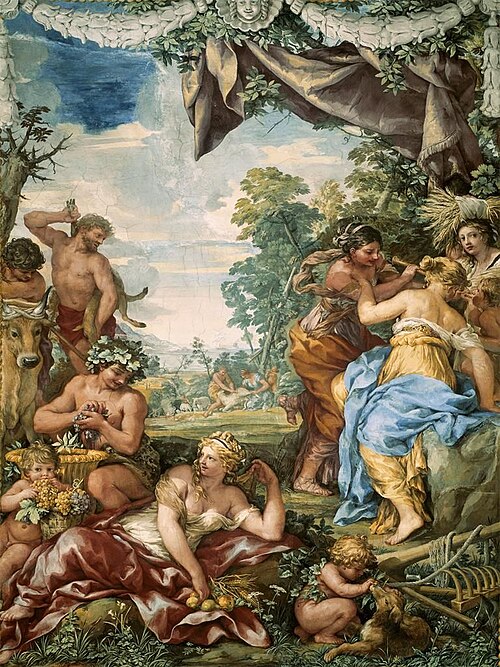
Scholars Lovejoy and Boas identified two contrasting views of the natural state of man: "soft" and "hard" primitivism. Soft primitivism views primitive life as a golden age of happiness and innocence—essentially civilization without its vices. Conversely, hard primitivism views early human existence as a brutal struggle for survival, devoid of comfort. The popular image of Arcadia is a prime example of soft primitivism.
The Roman Interpretation: Virgil and Ovid
Roman poets adapted the Greek myths to fit their own cultural and political contexts. Virgil used the concept of Arcadia as a political allegory, suggesting in his Fourth Eclogue that a new Golden Age of justice was returning. In his Georgics, he explored the relationship between man's alteration of nature and the quality of government.
Ovid further simplified the timeline in Metamorphoses, reducing the sequence to four ages: Gold, Silver, Bronze, and Iron. He depicted the Golden Age as a time when reason and nature were aligned, and laws were unnecessary because humans were naturally good.
Global Parallels of the Golden Age
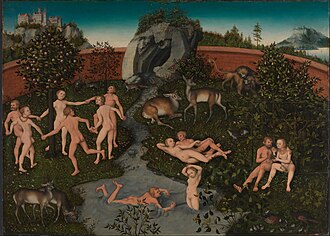
The idea of a declining or cyclical era of perfection is not exclusive to Europe. Many other traditions share similar frameworks:
- Hinduism: History is seen as a cycle of four yugas (ages). The Satya Yuga is the Golden Age of maximum virtue, followed by Treta Yuga (Silver), Dvapara Yuga (Bronze), and the current Kali Yuga (Iron/Dark Age).
- Hebrew Bible: In the Book of Daniel, Nebuchadnezzar's dream features a statue made of gold, silver, bronze, and iron, representing a succession of kingdoms in decreasing order of value.
- Norse Mythology: The Gullaldr (Age of Gold) describes the period immediately following the creation of the world.
- Chinese Mythology: The culture hero Shennong is credited with maintaining a Golden Age by discovering edible plants for humanity.
| Tradition | First Age (Golden) | Subsequent Ages | Current/Final Age |
|---|---|---|---|
| Greek (Hesiod) | Gold | Silver, Bronze, Heroic | Iron |
| Roman (Ovid) | Gold | Silver, Bronze | Iron |
| Hinduism | Satya Yuga | Treta, Dvapara | Kali Yuga |
| Hebrew Bible | Gold | Silver, Bronze | Iron/Clay |
Modern Legacy and Popular Culture
In modern fantasy, the Golden Age often appears as a prehistoric era of perfection. J.R.R. Tolkien's The Silmarillion describes "Arda Unmarred," a symmetrical and perfect world that existed before the wars of the gods. Similarly, the concept appears in gaming and literature to denote a time of peace before a great cataclysm.
Psychologically, the term has been used to describe early childhood. Authors like Kenneth Grahame and J.M. Barrie (creator of Peter Pan) depicted childhood as a pre-civilized state of happiness that is eventually eroded by education and societal expectations.
Today, "Golden Age" is most commonly used retroactively to describe the peak of a specific field or nation, such as the Dutch Golden Age, the Golden Age of Hollywood, or the Golden Age of Piracy.
Frequently Asked Questions
Who first described the Golden Age?
The Greek poet Hesiod is credited with the earliest attested reference in his work Works and Days, where he detailed the decline of humanity through five distinct ages.
What is the difference between soft and hard primitivism?
Soft primitivism views early human life as an idyllic paradise of innocence and plenty, while hard primitivism views it as a harsh, subhuman struggle for survival.
How does the Hindu Yuga system compare to the Greek Ages?
Both systems describe a cyclical or linear decline in quality over four stages. While the Greeks used metals (Gold, Silver, etc.) as markers, the Hindu system focuses on the decline of dharmic qualities or virtues.
Why is the Golden Age associated with the god Saturn?
In Latin authors' versions of the myth, the reign of the god Saturn (the Roman equivalent of the Titan Cronus) was seen as the era of primordial peace and harmony.
What does "Golden Age" mean in modern historical terms?
In a modern context, it refers to a period of peak achievement, prosperity, or influence within a specific culture, country, or professional field, usually identified after the period has ended.