Gleaning: The History and Tradition of Gathering Leftovers
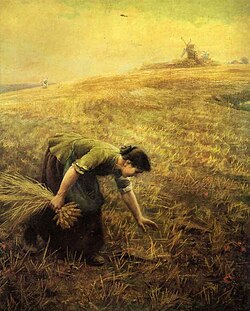
The practice of gleaning—the act of collecting leftover crops from a field after the main harvest—is a tradition that spans millennia. While the term is used today to describe the gradual gathering of information, its origins are deeply rooted in the soil. From ancient biblical mandates to the legal rights of the rural poor in Europe, gleaning served as a vital social safety net for those without land or resources.
Key Facts
- Etymology: Derived from Middle English glenen, Anglo-French glener, and Late Latin glen(n)ō.
- Economic Impact: In the 18th and 19th centuries, gleaning provided up to one-eighth of the annual earnings for some labor-based households.
- Biblical Basis: Mandated in the books of Leviticus and Deuteronomy to support the poor, widows, and strangers.
- Legal Status: Once a legally enforceable right for landless "cottagers" in England until the late 18th century.
- Decline: The rise of mid-19th-century agricultural technology significantly reduced the practice globally.
The Origins and Evolution of Gleaning
The English word "glean" first appeared in the 14th century. At its inception, it carried a dual meaning: the physical act of gathering grain or produce left behind by reapers, and the metaphorical act of collecting information bit by bit. This practice was a cornerstone of the agricultural calendar, particularly during the 16th and 17th centuries when it was widely practiced by the rural poor.
For many families in the 18th and 19th centuries, gleaning was not merely a supplement but a critical source of income, contributing as much as one-eighth of the total annual earnings for labor-based households. However, the industrialization of farming in the mid-19th century introduced technologies that left far less waste, effectively ending the era of widespread gleaning.
Biblical Mandates and the Concept of Pe'ah
Much of the historical framework for gleaning stems from the biblical books of Leviticus and Deuteronomy. These texts outline specific requirements for farmers to ensure the vulnerable in society had access to food. Farmers were instructed to leave the edges of their fields unharvested, a practice known as pe'ah.
According to these scriptures, farmers were forbidden from picking up dropped produce or harvesting overlooked crops. These rules extended to vineyards, where some grapes were to be left ungathered, and olive trees, which were not to be beaten multiple times; whatever remained after the first beating was to be left behind.
The purpose of these laws was humanitarian. Leviticus specifies that these leftovers were for the poor and strangers, while Deuteronomy extends this right to include widows and paternal orphans. A prominent example of this practice is found in the Book of Ruth, which describes the widow Ruth gleaning to provide for herself and her mother-in-law, Naomi.
Rabbinical Interpretations
Classical rabbinic literature further refined these biblical regulations. Scholars argued that these laws applied specifically to grain fields, orchards, and vineyards. To maintain the integrity of the charity, the farmer was prohibited from benefiting from the gleanings themselves.
Furthermore, farmers were forbidden from discriminating among the poor or using intimidation—such as dogs or lions—to frighten gleaners away. Interestingly, the farmer was not even permitted to assist the poor in gathering the leftovers, ensuring the act remained a right of the needy. While some argued these laws only applied within Canaan, many writers in Babylon applied them there as well. While primarily intended for Jewish paupers, poor gentiles were often allowed to benefit to maintain civil peace.
Gleaning in European History
The biblical tradition of gleaning influenced legal systems across Europe, particularly in France and England. In these regions, the right to glean was often reserved for the poor and was enforceable by law well into modern times.
In 18th-century England, this was a recognized legal right for cottagers (landless residents). The process was often highly organized; in some small villages, the sexton would ring a church bell at 8:00 AM to signal the start of gleaning and again at 7:00 PM to signal its end. This legal protection for the landless largely came to an end following the Steel v Houghton court decision in 1788.
| Perspective/Region | Key Regulations/Practices | Primary Beneficiaries |
|---|---|---|
| Biblical (Leviticus/Deuteronomy) | Leave field edges (pe'ah) and dropped produce; no second beating of olives. | Poor, strangers, widows, and paternal orphans. |
| Rabbinical View | Farmer cannot benefit or interfere; applies to grains, orchards, and vineyards. | Jewish paupers and poor gentiles (for civil peace). |
| 18th Century England | Legal right for landless residents; timed by church bells. | Cottagers. |
Frequently Asked Questions
What does the term "gleaning" mean?
Originally, gleaning referred to the act of gathering leftover grain or produce from a field after the primary harvest. In a modern context, it can also mean gathering information or material slowly and bit by bit.
What is pe'ah?
Pe'ah is the biblical practice of leaving the edges of a field unharvested so that the poor and marginalized could gather food for themselves.
Who was legally allowed to glean in 18th-century England?
The legal right to glean was reserved for "cottagers," who were residents of the village that did not own their own land.
Why did the practice of gleaning decline in the 19th century?
The decline was primarily driven by the introduction of new agricultural technologies in the mid-19th century, which made harvesting more efficient and left significantly fewer leftovers in the fields.
Were farmers allowed to help the poor gather gleanings?
According to classical rabbinic literature, the farmer was not permitted to help the poor gather the leftovers, nor were they allowed to discriminate among those who came to glean.