The Comprehensive Guide to Bananas: History, Cultivation, and Global Impact
Bananas are among the most recognized and consumed fruits worldwide, but they are far more than just a convenient snack. From their origins in the rainforests of Southeast Asia and New Guinea to their role as a global commodity, bananas have a complex biological and cultural history. Whether grown on massive industrial plantations or in small-scale family gardens, these fruits are central to the food security and economies of many tropical nations.
Understanding the Banana Plant
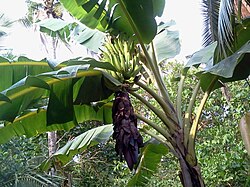
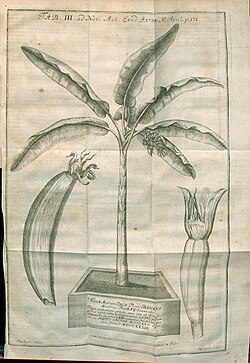
Botanically, bananas belong to the genus Musa. While often referred to as "banana trees," they are actually giant herbaceous plants. The plant grows from a corm—a rounded underground storage stem—which supports the leaves and the fruit-bearing stalk.
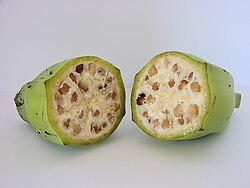
The plant's reproductive structure is known as an inflorescence, a cluster of flowers that eventually develops into the familiar fruit. In nature, wild bananas are very different from the ones found in supermarkets; they contain numerous large, hard seeds that make them difficult to eat.
The Evolution and Domestication of Bananas
The journey of the edible banana began with the domestication of parthenocarpic (seedless) individuals of Musa banksii in New Guinea. This process was carried out by Papuan populations long before the arrival of Austronesian-speakers.
Archaeological evidence, specifically phytoliths (microscopic silica structures found in plant tissues), recovered from the Kuk Swamp site suggests that cultivation began between 10,000 and 6,500 years ago. By the early to middle Holocene, the domestication process was largely complete, utilizing early transplantation and cultivation methods.
![Original native ranges of the ancestors of modern edible bananas.[32]](/images/18/28/1828706fa15e4b08c92501d0e42611f2607c5e788eace4262916c5706129f7b0.webp)
Ancient Spread and Global Diffusion
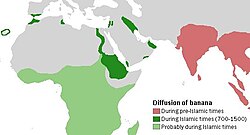
Following their origin in New Guinea, bananas spread across the Indo-Pacific through the dispersal of Austronesian peoples. Later, during the Arab Agricultural Revolution (700–1500 CE), bananas were further diffused across various regions, expanding their reach into Africa and the Middle East.
![Chronological dispersal of Austronesian peoples across the Indo-Pacific[39]](/images/32/93/329368f0022ed65cec13f02c0a78d5ea4bc82c4178b582966a49d26a5bdda15a.png)
Modern Production and Cultivation
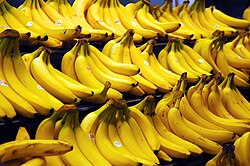
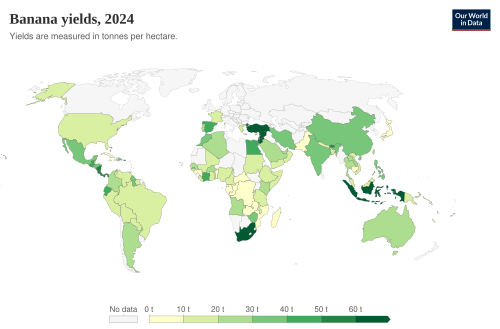
Today, banana cultivation varies from massive industrial plantations to small-scale production. In the modern global market, the Cavendish group of cultivars dominates, prized for its suitability for export and transport.
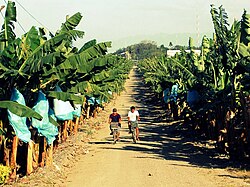
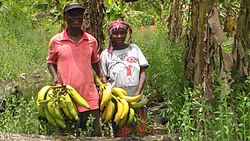
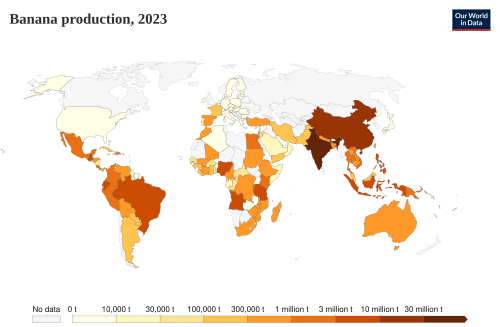
Production is concentrated in tropical regions. India is the world's leading producer, followed by China, Uganda, and Indonesia. While large plantations are common in places like the Philippines, many regions, such as Liberia, still rely on small-scale production for local consumption and trade.
Ripening and Logistics
Because bananas are harvested while green to survive long-distance transport, they undergo a controlled ripening process. This involves the use of ethylene, a natural plant hormone that triggers the fruit to ripen uniformly before reaching the consumer.
Key Facts
- Leading Producer: India is the top global producer of bananas.
- Market Dominance: The Cavendish cultivar is the primary variety used in the global export market.
- Botanical Status: Bananas are not trees but giant herbaceous plants growing from a corm.
- Origin: First domesticated in New Guinea from seedless Musa banksii.
- Nutritional Powerhouse: High in potassium, manganese, and vitamin B6.
Pests and Diseases: Threats to Sustainability
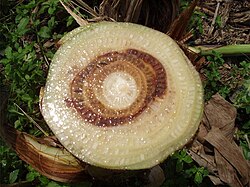
The lack of genetic diversity in commercial bananas, particularly the Cavendish, makes them highly susceptible to pests and diseases. Because these cultivars are sterile and cannot spread without human help, a single pathogen can devastate entire regions.
Fungal and Bacterial Threats
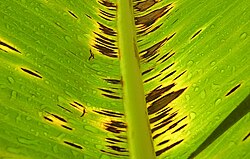
One of the most severe threats is Panama disease, caused by the Fusarium fungus, which climbs through the plant's stem to block nutrient flow. Another critical issue is Black sigatoka, a fungal leaf spot disease caused by Mycosphaerella fijiensis. This disease blackens leaves, impeding photosynthesis and reducing fruit production by 50% or more.
Other significant threats include:
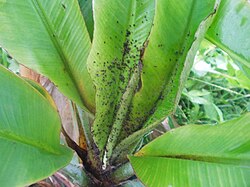
- Banana bunchy top virus: Spread by colonies of banana aphids.
- Banana bacterial wilt: A destructive disease affecting plant health.
- Nematodes: Microscopic worms that cause root rot.
- Banana borer: An insect pest that tunnels inside the plant.
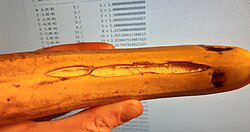
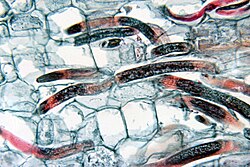
![The banana borer is a destructive pest that tunnels inside the plant.[91]](/images/80/b1/80b1e4382f5815aa91e79102090cf561cc850cf4eea4667b29048cfb5061c320.jpg)
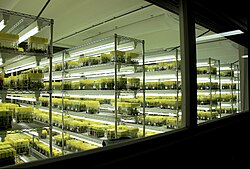
To combat these threats, scientists utilize cold storage for germplasm (genetic material) to preserve diversity and develop resistant transgenic varieties.
Nutrition and Versatile Uses
Bananas are a dense source of energy and essential minerals. A 100g serving provides approximately 89 kcal and is particularly rich in potassium, which is vital for bodily functions.
| Nutrient | Amount | % Daily Value (%DV) |
|---|---|---|
| Energy | 89 kcal | - |
| Carbohydrates | 22.84 g | - |
| Potassium | - | 12% |
| Manganese | - | 12% |
| Copper | - | 11% |
| Vitamin B6 | - | 7% |
| Vitamin C | - | 2% |
Culinary and Industrial Applications
Beyond the fruit, almost every part of the banana plant is utilized:
- Flowers and Trunk: Used in traditional curries and salads in Thailand, India, and the Philippines.
- Leaves: Used as disposable plates in Java or for steaming foods like Nicaraguan Nacatamales.
- Textiles: The abacá species of banana, endemic to the Philippines, provides fibers for high-quality paper and textiles, such as the ancient Banton Burial Cloth.
![The Banton Burial Cloth (c. 1200–1300 AD) of the Philippines, the oldest surviving example of banana textile (and the oldest example of warp ikat weaving in Southeast Asia). It is made from abacá,[149] a species of banana endemic to the Philippines.](/images/c8/2b/c82b5ae1c8db2a78ea71170e8ce236643c22d0d479260d4bfa7964cd956a5979.jpg)
Environmental and Scientific Uses
Banana peels have shown the capability to extract heavy metal contamination from river water. Additionally, the potassium-40 (K-40) isotope naturally present in bananas makes them slightly radioactive. This led to the creation of the "banana equivalent dose" in 1995, a tool used to educate the public about natural background radiation.
Cultural Significance
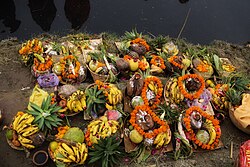
Bananas hold deep meaning in various cultures. In Northern India, they are used in puja (religious offerings) during the festival of Chhath. In Thai folklore, the Nang Tani is a female ghost said to haunt banana plants.

Frequently Asked Questions
Why are most supermarket bananas the same variety?
The Cavendish cultivar dominates the world market because it is highly suitable for large-scale production, transport, and storage, making it the most commercially viable option for global export.
What is Black sigatoka and why is it dangerous?
Black sigatoka is a fungal disease that causes black spots on leaves. It is dangerous because it destroys the plant's ability to perform photosynthesis, which can slash fruit yields by half and cause premature ripening.
Can all parts of the banana plant be eaten?
Yes, in many cultures, the fruit, flowers, and the core of the trunk are used in cooking. For example, banana flowers are used in Filipino dishes, and the trunk is used in northern Thai curries.
Are bananas actually radioactive?
Yes, but at very low, naturally occurring levels. This is due to the presence of the potassium-40 isotope. This natural radioactivity is harmless and is used by scientists as a teaching tool to explain background radiation.
What is abacá?
Abacá is a specific species of banana endemic to the Philippines. Unlike the edible varieties, it is primarily grown for its strong fibers, which are used to create Manila hemp fabric and traditional textiles.