Understanding Subshrubs and Chamaephytes: Nature's Low-Growing Specialists
In the diverse world of botany, plants do not always fit into neat, tidy categories. While we often distinguish clearly between a soft, green herb and a woody, structural shrub, many plants exist in the "in-between." These plants, known as subshrubs, occupy a unique middle ground that allows them to thrive in environments where larger plants might struggle.
A subshrub (also referred to as a shrublet or undershrub) is a plant that blurs the line between a shrub and a perennial herb. These plants may be small, prostrate (meaning they grow close to the ground), or they may be primarily herbaceous—meaning they have soft, non-woody stems—while remaining slightly woody at their base. Because the distinction is often based on the degree of height rather than a fundamental difference in kind, the term is frequently used interchangeably with "bush."
Subshrubs exhibit various growth habits. Some are only weakly woody and may only persist for a few years. Others, such as Oldenburgia paradoxa, are incredibly resilient, living indefinitely by rooting themselves into rocky cracks. Many subshrubs feature overwintering woody growth that remains much lower to the ground than their lush, deciduous summer growth. Common examples include lavender, periwinkle, thyme, and various members of the Ericaceae family, such as cranberries and small Erica species.
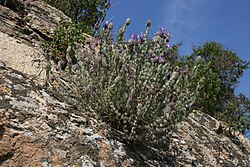
The Chamaephyte: A Specialized Survival Strategy
Within the study of plant life-forms, specifically the Raunkiær plant life-form classification, a more specialized category exists: the chamaephyte. A chamaephyte is a type of dwarf-shrub characterized by having its hibernating buds located on persistent shoots very close to the ground—typically less than 25 centimetres (9.8 inches) above the soil surface.
This low-profile growth is not accidental; it is a sophisticated survival mechanism. By keeping their perennating buds (the buds that allow the plant to survive through dormant seasons) near the soil surface, these plants stay protected from harsh external elements. This habit is particularly prevalent in several stressful ecosystems:
- Nutrient-poor environments: Areas with rocky or low-nutrient soils.
- Alpine and Arctic ecosystems: Regions where seasonal winds and freezing temperatures would otherwise kill vulnerable growing shoots.
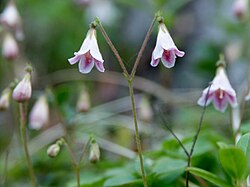
- Fire-prone ecosystems: In areas subject to frequent burning, many species, such as Banksia or Eucalyptus, can regrow from a lignotuber (a woody swelling at the base of the stem) or a caudex (a thickened, woody stem base).
- Heavily grazed areas: Ecosystems like "tortoise turf" where constant grazing pressure forces plants to stay low.
Examples of Chamaephytes
Chamaephytes are common in many of the world's most rugged landscapes. You can find them in the maquis shrublands of submediterranean dry ecosystems, including species like thyme (Thymus vulgaris) and rosemary (Salvia rosmarinus). Other notable examples include various heather species (such as Calluna vulgaris), the African wild olive (Olea europaea subsp. cuspidata), edelweiss (Leontopodium alpinum), and various cushion plants.
Key Facts
- Subshrubs are plants that are either small shrubs or perennials that are woody at the base.
- The term chamaephyte refers to plants with dormant buds located less than 25 cm above the ground.
- Low growth helps plants survive extreme wind, freezing temperatures, and heavy grazing.
- Some subshrubs, like Oldenburgia paradoxa, can live indefinitely in rocky environments.
- Plants in fire-prone areas often use a lignotuber or caudex to regrow after a burn.
Summary of Plant Characteristics
| Feature | Subshrub (Shrublet) | Chamaephyte (Dwarf-shrub) |
|---|---|---|
| Primary Definition | Small shrub or partially woody perennial. | Plant with buds near the ground (<25cm). |
| Growth Habit | Can be prostrate or upright. | Consistently low-growing. |
| Survival Strategy | Varies; some are short-lived, some indefinite. | Protection of buds from wind, cold, and fire. |
| Common Examples | Lavender, Thyme, Garden Pink. | Edelweiss, Rosemary, Heather. |
Frequently Asked Questions
What is the main difference between a shrub and a subshrub?
The difference is often a matter of degree rather than a different type of plant. Subshrubs are generally smaller, may have more herbaceous (non-woody) parts, or may have a lower growth habit compared to standard shrubs.
Why do chamaephytes grow so close to the ground?
Growing close to the ground protects their dormant buds from harsh environmental stressors, such as freezing temperatures, high winds, and heavy grazing, by keeping them within the more stable soil surface layer.
How do plants like Eucalyptus survive frequent fires?
Many plants in fire-prone ecosystems have evolved to regrow from specialized structures like a lignotuber (a woody swelling at the base) or a caudex (a thickened stem base), allowing them to recover quickly after the surface vegetation has burned.
Are all subshrubs considered woody plants?
While they are often classified as woody, many subshrubs are largely herbaceous, meaning they have soft stems, and only exhibit woody characteristics at their base or during certain parts of their life cycle.
What is the Raunkiær classification?
The Raunkiær system is a formal method used to classify plant life-forms based on the position of their perennating (surviving) buds during unfavorable seasons.