Giyeok (ㄱ): Mastering the Korean Hangul Letter
In the intricate and logical system of Hangul, the Korean alphabet, every character plays a specific role in shaping the language's unique soundscape. One of the most fundamental characters is Giyeok (represented by the symbol ㄱ). Whether you are a beginner learning to read your first Korean words or a linguist studying phonetic shifts, understanding how this letter functions is essential for mastering Korean pronunciation.
While the letter is widely recognized, its name and specific usage can vary slightly depending on regional linguistic standards between South and North Korea.
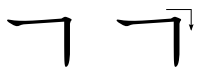
Phonetic Variations and Pronunciation
The pronunciation of Giyeok is highly dependent on its position within a word. In linguistics, this is often referred to as its phonetic realization. The International Phonetic Alphabet (IPA) identifies its primary sound as [k].
Position-Based Sounds
To speak Korean naturally, you must adjust the sound of ㄱ based on where it appears:
- At the beginning or end of a word: It is usually pronounced as a voiceless [k] sound.
- After a vowel: It typically shifts to a voiced [ɡ] sound.
Regional Differences: South vs. North Korea
Linguistic evolution has led to different naming conventions for this character in the two Koreas. While the symbol remains the same, the way it is written in Hangul and its official name differs.
South Korean Standard
In South Korea, the letter is known as Giyeok (기역). This is the standard used in most international Korean language curricula.
North Korean Standard
In North Korea, the letter is referred to as Gieuk (기윽). This distinction is a key aspect of the divergent linguistic paths taken by the two regions.
Technical Specifications and Computing Codes
For developers and digital linguists, Giyeok is represented through various Unicode encodings. Because the letter can function as an initial consonant (Choseong) or a final consonant (Jongseong), it has multiple distinct codes in the Unicode standard.
| Unicode Name | Decimal | Hexadecimal | UTF-8 |
|---|---|---|---|
| HANGUL LETTER KIYEOK | 12593 | U+3131 | 227 132 177 |
| HANGUL CHOSEONG KIYEOK | 4352 | U+1100 | E3 84 B1 |
| HANGUL JONGSEONG KIYEOK | 4520 | U+11A8 | 225 132 128 |
Key Facts
- Symbol: ㄱ
- Primary IPA Sound: [k]
- South Korean Name: Giyeok (기역)
- North Korean Name: Gieuk (기윽)
- Phonetic Shift: Sounds like [k] at word boundaries and [ɡ] after vowels.
Frequently Asked Questions
How do I pronounce ㄱ in the middle of a word?
If the letter ㄱ follows a vowel, it is generally pronounced as a voiced [ɡ] sound.
What is the difference between Giyeok and Gieuk?
The difference is regional: Giyeok is the South Korean name, while Gieuk is the North Korean name.
Is ㄱ always pronounced as 'k'?
No. While its IPA is [k], its sound shifts to [ɡ] when it appears after a vowel.
Does ㄱ have different Unicode values?
Yes, there are different Unicode values depending on whether the letter is used as a standalone character, an initial consonant (Choseong), or a final consonant (Jongseong).