Gills: The Specialized Respiratory Organs of Aquatic Life
In the diverse world of aquatic biology, the ability to extract oxygen from water is a fundamental challenge. While humans rely on lungs to breathe air, many aquatic animals utilize gills—specialized respiratory organs designed for aquatic gas exchange. These organs allow animals to absorb dissolved oxygen from their environment and excrete carbon dioxide, ensuring survival in habitats where air is unavailable.
Zoologists refer to gills by the academic name branchia (from the Ancient Greek βράγχια). While most commonly associated with fish, gills appear in a wide array of species, including molluscs, crustaceans, aquatic insects, and amphibian larvae. Some semi-aquatic species, such as crabs and mudskippers, have even evolved gill chambers to store water, allowing them to survive temporarily on land.
Key Facts
- Primary Function: Extracting dissolved oxygen from water and removing carbon dioxide.
- Structure: Composed of filaments and lamellae (folds) to maximize surface area for diffusion.
- Efficiency: Many fish use a countercurrent exchange system to recover up to 90% of dissolved oxygen.
- Adaptability: Some species use gills for filter feeding (via gill rakers) or have evolved them into book lungs for land breathing.
- Environmental Support: Water provides the physical support that prevents delicate gill structures from collapsing.
How Gills Work: The Science of Gas Exchange
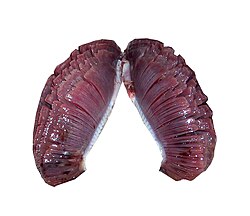
The primary goal of a gill is to maximize the surface area in contact with water. Because water is 777 times denser and 100 times more viscous than air, and because oxygen diffuses 10,000 times slower in water, aquatic animals cannot rely on sac-like lungs. Instead, they use highly vascularized filaments and lamellae (thin plates or folds) that allow gases to move easily between the water and the animal's blood or hemolymph.

The Countercurrent Exchange Mechanism
To overcome the low concentration of oxygen in water, many fish and molluscs employ a countercurrent exchange mechanism. In this system, blood flows through the gill lamellae in the opposite direction to the water flowing over them. This maintains a favorable diffusion gradient along the entire length of the gill, allowing the animal to extract as much as 90% of the available oxygen.
Water Movement and Ventilation
Water must constantly move across the gills to ensure a fresh supply of oxygen. This is achieved through several methods:
- Ram Ventilation: Forcing water over the gills by swimming forward rapidly (common in sharks).
- Pumping Mechanisms: Using the mouth and throat muscles to push water through gill slits.
- Cilia: Using microscopic hair-like structures to create a current (common in invertebrates).
Gills Across Different Species
Vertebrates: Fish and Amphibians
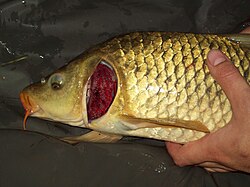
In vertebrates, gills typically develop in the walls of the pharynx. Bony fish possess a bony cover called an operculum, which helps adjust water pressure for ventilation, meaning they do not always need to swim to breathe. In contrast, cartilaginous fish like sharks often have five to seven pairs of gill slits that open directly to the exterior.
Some sharks also possess a spiracle, a small opening behind the first gill slit that can suck in water, which is particularly useful for bottom-dwelling species.
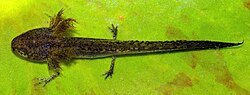
Amphibians, such as tadpoles, often start life with external gills—feathery structures that grow from the outer surface of the gill arches. While these usually disappear during metamorphosis, some species like the olm and mudpuppy retain them into adulthood.
Invertebrates and Unique Adaptations
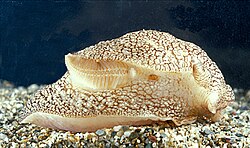
Invertebrates exhibit a vast array of gill designs. Bivalve molluscs use their gills not only for breathing but also as filter-feeding organs to trap food particles in mucus. Crustaceans often have modified appendages that serve as gills, some of which are protected in chambers.
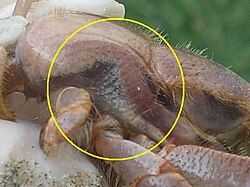
Certain Caribbean hermit crabs have modified gills that allow them to breathe in humid air, provided the organs remain moist. Other arthropods, like horseshoe crabs, utilize book gills, which consist of external flaps with leaf-like membranes.
Plastrons: The "Non-Organ" Gill
Some aquatic insects use a plastron, a structural adaptation consisting of hydrophobic (water-repellent) hairs or scales. This creates a thin film of atmospheric oxygen against the body. This film acts as a physical gill, allowing oxygen to diffuse in from the water and carbon dioxide to diffuse out, enabling the insect to remain submerged indefinitely.
Summary of Respiratory Adaptations
| Animal Group | Gill Type / Structure | Key Feature |
|---|---|---|
| Bony Fish | Internal Lamellae | Protected by a bony operculum |
| Cartilaginous Fish | Gill Slits | Often rely on ram ventilation |
| Amphibian Larvae | External Gills | Feathery structures on the head |
| Bivalve Molluscs | Ciliated Gills | Dual use for respiration and feeding |
| Aquatic Insects | Tracheal Gills / Plastrons | Use of air tubes or hydrophobic films |
| Horseshoe Crabs | Book Gills | Leaf-like external membranes |
Frequently Asked Questions
Why do fish suffocate when taken out of water?
Gills rely on the density of water to stay spread apart. In the air, the delicate lamellae collapse and stick together, drastically reducing the surface area available for oxygen absorption, which leads to suffocation.
What are gill rakers used for?
Gill rakers are comb-like projections that protect the delicate gill filaments from debris. In some planktivorous fish, such as silver and bighead carps, they are also used as filter-feeding organs to capture food.
How do marine fish handle salt through their gills?
Marine teleosts use specialized cells called ionocytes (Na/K-ATPase ionocytes) to actively excrete excess salts (like sodium and chloride) from their blood into the seawater to maintain internal osmotic balance.
What is the difference between a gill and a book lung?
Gills are designed to extract oxygen from water. Book lungs are an evolutionary adaptation found in terrestrial chelicerates (like spiders) where ancestral gills evolved into internal air-breathing organs.
Can any animals breathe through their entire body?
Yes, many microscopic aquatic animals and some larger, inactive organisms can absorb sufficient oxygen directly through their skin or body surface, bypassing the need for specialized gills.