Germany's National Flag: History, Design, and Symbolism
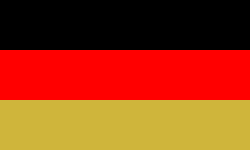
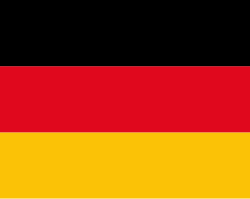
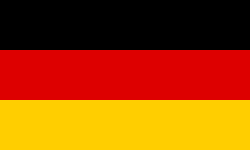
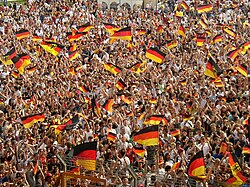
The national flag of Germany is a striking horizontal tricolour of black, red, and gold (known in German as Schwarz-Rot-Gold). More than just a piece of fabric, this flag represents a long and complex journey toward national unity, democracy, and freedom. From its early appearances in the 19th century to its role as the symbol of a reunified nation, the flag remains a central pillar of German identity.
The current design consists of three equal horizontal bands. While it is widely recognized today, the flag has evolved through various proportions and meanings, reflecting the turbulent political shifts of the last two centuries.
Key Facts
- Official Colours: Black, Red, and Gold.
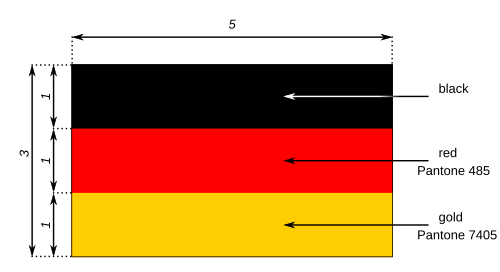
- Proportions: The standard civil flag has a 3:5 ratio.
- Legal Basis: The flag is established under Article 22 of the Basic Law for the Federal Republic of Germany.
- Reunification: The current flag was officially reinstated for the reunified Germany on 3 October 1990.
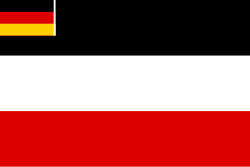
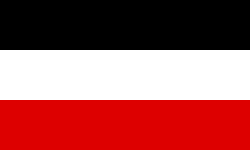
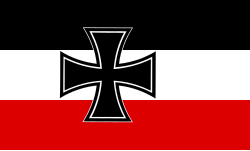
- Competing Traditions: Historically, Germany saw a rivalry between the black-red-gold colours (associated with democracy) and black-white-red (associated with the Empire).
Design and Technical Specifications
The German flag is described in heraldic terms as "Tierced in fess sable, gules and or." To ensure consistency across government and official use, specific colour standards are maintained.
| Colour | RAL | Hexadecimal | Decimal RGB | CMYK |
|---|---|---|---|---|
| Black | 9005 (Jet black) | #000000 | 0, 0, 0 | 0, 0, 0, 100 |
| Red | 3020 (Traffic red) | #FF0000 | 255, 0, 0 | 0, 100, 100, 0 |
| Gold | 1021 (Colza yellow) | #FFCC00 | 255, 204, 0 | 0, 12, 100, 5 |
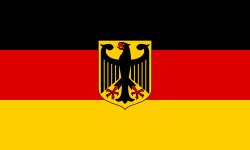
While the standard flag is a plain tricolour, there are several official variants used for specific purposes.
Civil and State Flags
The plain black-red-gold tricolour serves as the civil flag and civil ensign, used by the general public and for state purposes.
Government and Military Flags
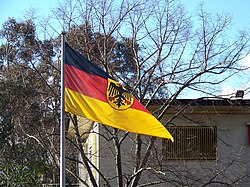
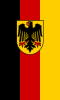
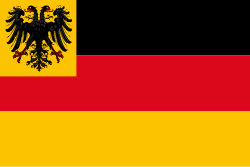
The Bundesdienstflagge (Federal Service Flag) is the state flag and ensign used by government authorities. It differs from the civil flag by featuring the federal coat of arms. This flag is strictly reserved for official use.
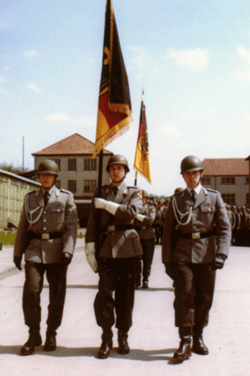
The military also employs specific flags, including the Dienstflagge der Landstreitkräfte der Bundeswehr (Army service flag) and the Dienstflagge der Seestreitkräfte der Bundeswehr (Naval ensign), both adopted in the mid-20th century.
Historical Evolution
Medieval and Early Origins
During the era of the Holy Roman Empire, there was no single national flag. However, black and gold were the colours of the Emperor, often depicted as a black eagle on a golden background. By the 15th century, a double-headed eagle became common.
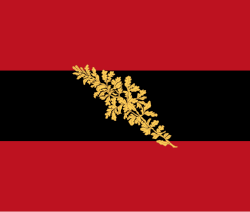
The first appearance of the black-red-gold tricolour in a sovereign state occurred in 1778 under Prince Heinrich XI of the Principality of Reuss-Greiz, though it used a nearly square 4:5 ratio.
The Path to Democracy (1848–1933)
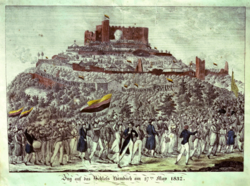
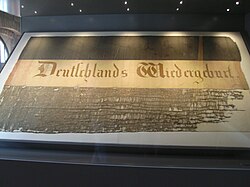
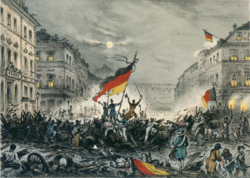
The colours became symbols of liberal and democratic movements during the 1848–1849 Revolutions and were used by the Frankfurt Parliament. They represented the desire for a unified, democratic German state.
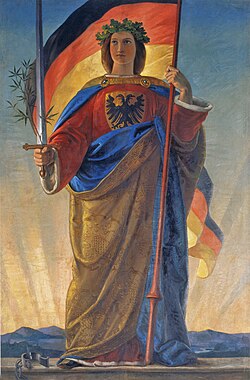
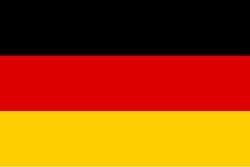
Following World War I, the Weimar Republic officially adopted the black-red-gold tricolour in 1919, cementing its association with republicanism.
The Nazi Era and Division (1933–1990)
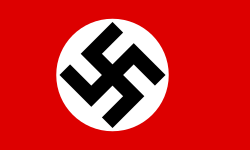
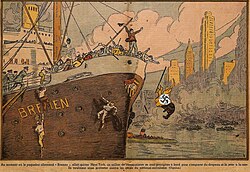
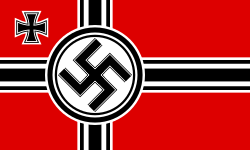
From 1933 to 1945, the Nazi regime replaced the republican colours with the swastika flag, although the tricolour was briefly used alongside it between 1933 and 1935.
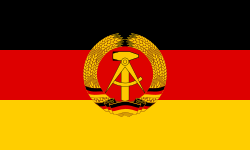
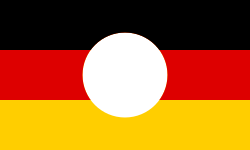
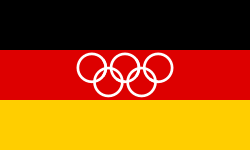
After World War II, Germany was divided. Both West Germany (Federal Republic) and East Germany (Democratic Republic) initially used the black-red-gold colours. However, in 1959, East Germany added its state emblem to the flag to distinguish itself.
Reunification and Modern Use
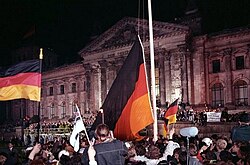
As the Berlin Wall fell in 1989, many East Germans symbolically cut the emblem out of their flags to signal their desire for a united, democratic Germany. On 3 October 1990, the plain black-red-gold tricolour was officially raised as the flag of the reunified nation.
Flag-Flying Days
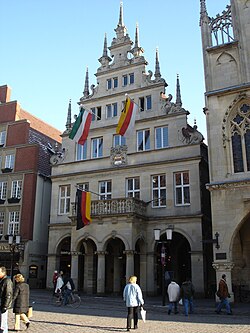
The German government recognizes several significant dates where the national flag is flown to commemorate historical events or values:
- 27 January: Commemoration Day for the Victims of National Socialism.
- 1 May: Day of Labour.
- 9 May: Europe Day (Anniversary of the Schuman Declaration).
- 23 May: Constitution Day (Anniversary of the Basic Law).
- 17 June: Anniversary of the 1953 East German uprising.
- 20 July: Anniversary of the 1944 plot to assassinate Adolf Hitler.
- 3 October: German Unity Day.
- 2nd Sunday before Advent: People's Mourning Day (flown at half-staff).
Frequently Asked Questions
What is the difference between the civil flag and the Bundesdienstflagge?
The civil flag is a plain black-red-gold tricolour available for all citizens. The Bundesdienstflagge includes the federal coat of arms and may only be used by government authorities.
Why is the colour called "gold" but looks yellow?
While the official name of the colour is gold (Gold), it is represented visually by a golden-yellow hue (RAL 1021 Colza yellow) for practical printing and manufacturing purposes.
When was the current flag officially adopted?
The original proportions were adopted in 1919, the current proportions in 1949, and it was reaffirmed as the flag of the reunified Germany on 3 October 1990.
What do the colours black, red, and gold symbolize?
Historically, these colours are associated with the 1848 revolutions and the Weimar Republic, representing the democratic and liberal aspirations of the German people.
Is the flag flown at half-staff on any specific days?
Yes, the flag is flown at half-staff on the People's Mourning Day (Volkstrauertag), which takes place on the second Sunday before Advent, to remember those killed during wartime.