German Nationalism: Evolution, Ideology, and Historical Impact
German nationalism is an ideological movement promoting the unity of Germans and the broader Germanosphere into a single, unified nation-state. Rooted in a deep sense of patriotism and shared national identity, this movement emerged in the late 18th century, eventually evolving into the broader concept of Pan-Germanism. While it began as a cultural and political response to external pressures, its trajectory has shifted from romantic idealism to aggressive expansionism, and finally to a complex, often cautious, modern identity.
The drive toward a unified German state gained significant momentum as a reaction to the Napoleonic invasions of German territories. This period sparked a fundamental debate known as the "German question": whether the new state should be a Lesser Germany (excluding the Austrian Empire) or a Greater Germany (including Austria or its German-speaking regions). Ultimately, the vision of a Lesser Germany prevailed through the political maneuvering of Prussian Chancellor Otto von Bismarck.
![This map published in Zürich in 1548 defines "the German Nation" based on its traditions, customs and language.[8]](/images/90/80/9080fed6e6f20d6370b5e2bb894a3b14e026ca99f5ae90626beadf7ac44c100c.jpg)
Key Facts
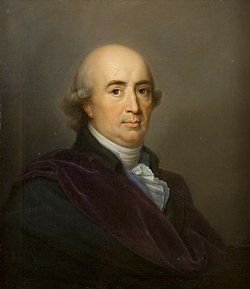
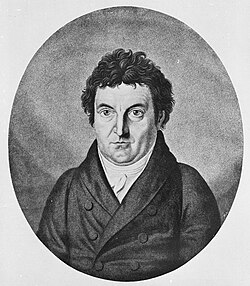
- Origins: Emerged in the late 18th century, influenced by thinkers like Johann Gottfried Herder and Johann Gottlieb Fichte.
- Unification: Achieved in 1871 under Prussian leadership, establishing the German Empire as a "Lesser Germany."
- Extreme Ideology: The Nazi era (1933–1945) weaponized nationalism into a racial ideology, leading to the Holocaust.
- Cold War Division: Following WWII, Germany was split into East and West Germany until reunification in 1990.
- Modern Status: Post-1945, overt nationalism is often viewed as taboo, though national pride persists in cultural contexts.
The Path to Unification (18th Century – 1871)
Before the 19th century, the concept of "German land" existed in cultural and legal texts, such as the 13th-century Deutschenspiegel. However, the formalization of nationalism was driven by Romanticism. Figures such as Johann Gottfried Herder, the founder of the concept of nationalism, and philosopher Johann Gottlieb Fichte helped shape the idea of a distinct German people.
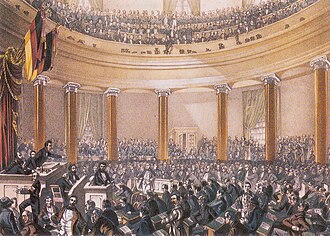
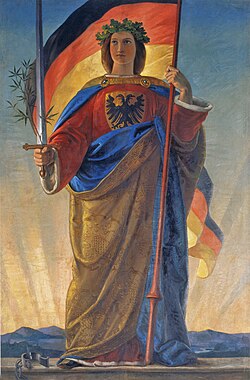
The mid-19th century saw a surge in revolutionary fervor, culminating in the 1848 Frankfurt Parliament, which attempted to create a unified state. Although these early efforts failed, Prussia eventually achieved hegemony through a series of "wars of unification": the Second Schleswig War (1864), the Austro-Prussian War (1866), and the Franco-Prussian War (1870–1871). This resulted in the founding of the German Empire in 1871, with the King of Prussia as Emperor.
Imperialism and the Rise of Extremism
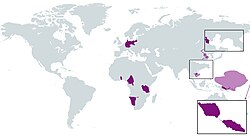
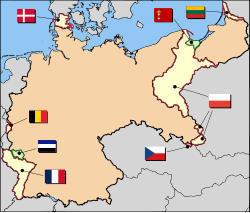
By the turn of the 20th century, Germany had established itself as a global power, creating the third-largest colonial empire after Britain and France. However, the aftermath of World War I and the constraints of the Treaty of Versailles created a fertile ground for aggressive nationalism.
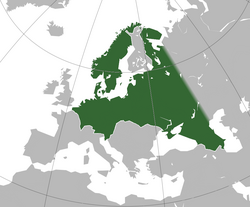
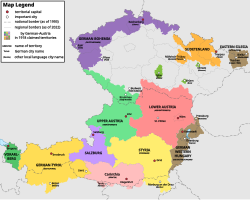
In the 1930s, the National Socialist German Workers' Party (NSDAP), led by Adolf Hitler, introduced an extreme form of nationalism. This ideology combined patriotism with racial pseudo-science, codified in the 1935 Nuremberg Laws to define "Germanness" by genetics. Hitler sought a "Greater German Reich," which led to the Anschluss (annexation) of Austria and the Sudetenland. This aggressive expansionism and the belief in Untermenschen (subhumans) resulted in the Holocaust and the devastation of World War II.
Post-War Recovery and Reunification
Following the defeat of Nazi Germany in 1945, the nation was divided into East and West Germany. While both states maintained a desire for reunification, they did so within the opposing frameworks of the Cold War. West Germany experienced an "economic miracle," which necessitated the Gastarbeiter (guest worker) program. This brought many immigrants, particularly from Turkey, into the country, eventually sparking debates over cultural identity.
Reunification was finally achieved in 1990 following Die Wende (the turning point), a period of massive social and political change in East Germany. This transition required the new government to redefine citizenship. The law shifted from jus sanguinis (right of blood/heredity) to jus soli (right of soil/birthplace) around the year 2000 to better reflect a modern, diverse society.
Modern German Identity and the European Union
In the contemporary era, the creation of the European Union has served as a mechanism to integrate German identity into a broader European framework. However, tensions have resurfaced during the European debt and migrant crises. The rise of the Alternative for Germany (AfD) party in 2013 reflects a backlash against European integration and a desire to reclaim national pride, rejecting the historical guilt associated with the Nazi era.

| Period | Key Focus | Primary Outcome |
|---|---|---|
| Late 18th - Mid 19th C. | Romantic Nationalism | Cultural identity and desire for unity |
| 1871 | Prussian Hegemony | Formation of the German Empire (Lesser Germany) |
| 1933 - 1945 | Racial Nationalism | Holocaust and World War II |
| 1945 - 1990 | Cold War Division | Split into East and West Germany |
| 1990 - Present | Reunification & Integration | EU membership and redefined citizenship |
Frequently Asked Questions
What is the difference between a "Lesser Germany" and a "Greater Germany"?
A "Lesser Germany" (Kleindeutschland) refers to a unified German state that excludes the Austrian Empire, a vision realized by Otto von Bismarck in 1871. A "Greater Germany" (Großdeutschland) would have included Austria or its German-speaking territories.
What was the significance of the Nuremberg Laws?
The 1935 Nuremberg Laws were used by the Nazi regime to define German citizenship based on racial and genetic criteria, stripping Jews and others of their rights and facilitating the Holocaust.
What is the difference between jus soli and jus sanguinis?
Jus sanguinis is the principle that citizenship is determined by the nationality of one's parents (bloodline). Jus soli is the principle that citizenship is determined by the place of birth (soil).
How did the guest worker program affect German identity?
The Gastarbeiter program brought millions of foreign workers, particularly from Turkey, to support West Germany's economic growth. As many stayed permanently, it shifted Germany from a homogenous society to a more multicultural one, leading to ongoing debates about national and cultural identity.
Is nationalism still common in modern Germany?
Due to the atrocities of the Nazi regime, overt nationalism is generally considered taboo. However, national pride occasionally surfaces, such as during major sporting events like the 2006 FIFA World Cup, and through the activities of right-wing populist parties.