German Mediatisation: The Great Territorial Reshaping of the Holy Roman Empire
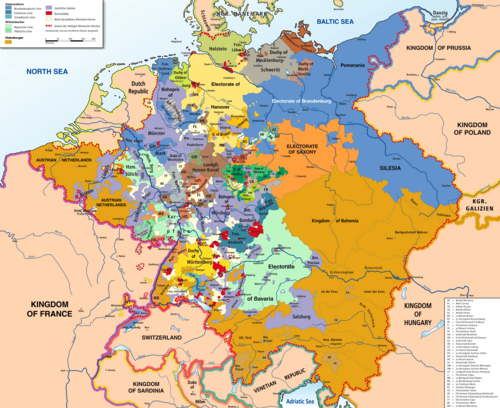
Between 1802 and 1814, the map of Central Europe underwent a seismic shift known as German mediatisation. This process involved the massive redistribution of land and power, effectively dismantling the fragmented structure of the Holy Roman Empire. By absorbing hundreds of small, independent entities into larger states, mediatisation reduced the number of German states from nearly 300 to just 39.
At its core, mediatisation is the process where an immediate state (one that reports directly to the Emperor) is subsumed into another state, thereby becoming mediate. While the dispossessed rulers often retained their private estates and certain feudal rights, such as low justice, they lost their sovereign independence. This era also saw the concurrent secularisation of ecclesiastical states—the transfer of church-owned territories to secular rulers.
Key Facts
- Scale: The most extensive redistribution of property in German history prior to 1945.
- Reduction: The number of sovereign entities dropped from approximately 300 to 39.
- Territorial Shift: Roughly 73,000 square kilometers of ecclesiastical land were transferred.
- Population Impact: Approximately 2.36 million people were moved under new jurisdictions.
- Key Document: The Final Recess of February 1803 served as the legal basis for these changes.
The Path to Secularisation
The drive toward mediatisation was heavily influenced by the French Revolution and the subsequent Napoleonic Wars. The annexation of the left bank of the Rhine by the French Republic acted as a catalyst, forcing a need for compensation for German princes who lost lands to France.
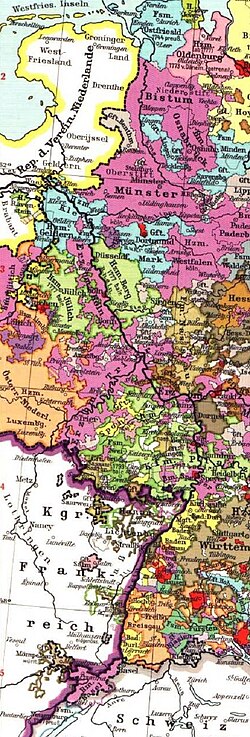
This led to intense debates over how to compensate these rulers. The solution was to seize the lands of the church (secularisation) and the territories of free imperial cities to pay off the territorial debts of the secular princes.
The Final Recess of February 1803
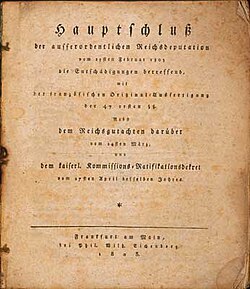
After several drafts and modifications, the Final Recess was issued on February 25, 1803. This document outlined the general compensation plan. While the Imperial Diet approved it in March and the Emperor ratified it in April, the Emperor remained concerned about the shift in power. Specifically, he objected to the new College of Princes, which now held a strong Protestant majority (77 Protestant votes versus 53 Catholic votes), threatening the traditional influence of the Emperor.
Consequences of the Redistribution
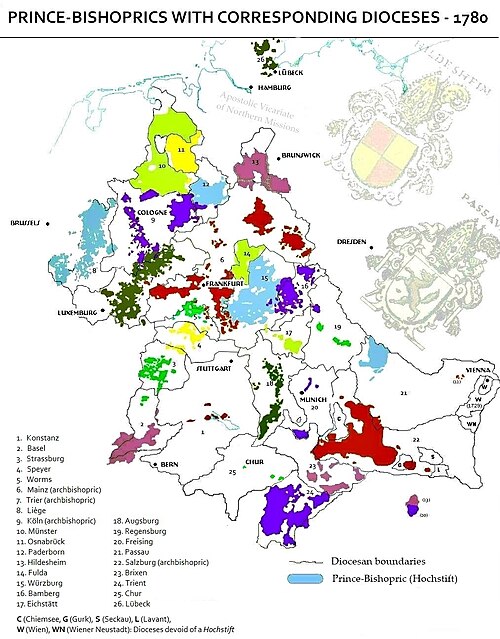
The End of Ecclesiastical Principalities
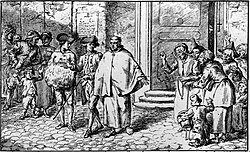
The impact on religious institutions was devastating. In Bavaria alone, Elector Max Joseph dissolved 77 monasteries and 14 nunneries in early 1802. Following the Final Recess, another 70 Prälatenklöster (monasteries represented at territorial Estates) were secularized. These wealthy institutions controlled about 28% of all peasant holdings in Bavaria.
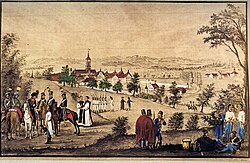
The sudden flood of monastic buildings and lands onto the market led to a saturation that diminished expected financial gains and resulted in the widespread destruction of cultural assets. By 1812, only about 400 religious houses remained in South Germany.
The Fall of Free Imperial Cities
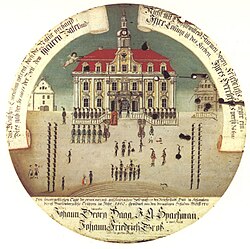
The 51 free imperial cities, though smaller in territory (7,365 sq km) and population (815,000) than the church states, were equally targeted. Secular princes had long resented these independent enclaves within their borders, often citing mismanagement or decay as justification for their absorption.
Territorial Gains and Losses
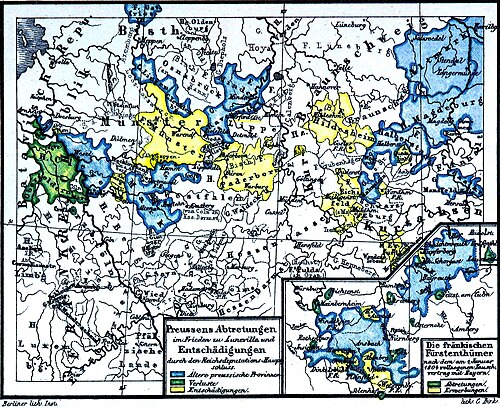
The redistribution of property was staggering, involving 12.72 million guildens in annual revenue. Major powers like Prussia and Bavaria emerged as the primary beneficiaries.
| State | Losses (km²/People) | Gains (km²/People) | Net Gain (km²/People) |
|---|---|---|---|
| Prussia | 2,000 / 140,000 | 12,000 / 600,000 | 10,000 / 460,000 |
| Bavaria | 10,000 / 600,000 | 14,000 / 850,000 | 4,000 / 250,000 |
| Baden | 450 / 30,000 | 2,000 / 240,000 | 1,550 / 210,000 |
| Württemberg | 400 / 30,000 | 1,500 / 120,000 | 1,100 / 90,000 |
The Aftermath and the Congress of Vienna
Following Napoleon's first abdication in 1814, the Great Powers met at the Congress of Vienna to redraw European borders. A pivotal decision was made: the mediatised principalities and secularised states would not be restored. Instead, former rulers who had held votes in the Imperial Diet were granted an improved aristocratic status, making them equal to reigning monarchs for marriage purposes.
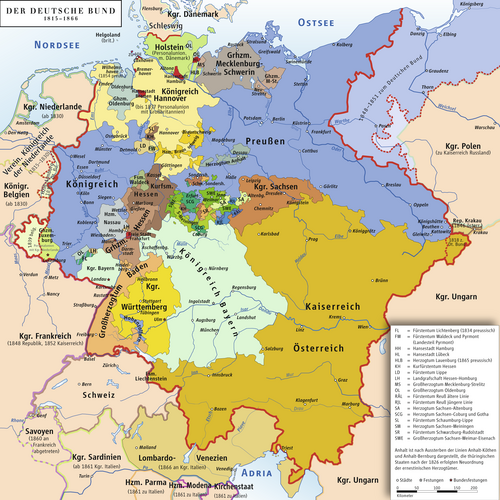
However, the responsibility for financial compensation was left to the annexing states. This meant that many mediatised dynasties had no international legal recourse if they were dissatisfied with the reimbursement they received from their new overlords.
Frequently Asked Questions
What is the difference between mediatisation and secularisation?
Mediatisation is the general process of a small independent state losing its sovereignty and becoming subject to a larger state. Secularisation is a specific type of mediatisation where the state being absorbed is an ecclesiastical (church-run) territory, and its assets are transferred to a secular ruler.
Why did the number of German states decrease so drastically?
The process was driven by the need to compensate German princes for territories lost to Napoleon's France. To provide this land, the Holy Roman Empire eliminated the independence of hundreds of small ecclesiastical states, free cities, and minor principalities, merging them into a few larger, more powerful states.
What was the Final Recess of 1803?
The Final Recess was the legal decree issued by the Deputation of the Imperial Diet that formalized the redistribution of territories. It served as the blueprint for which states would be secularised and which princes would receive compensation.
Did the former rulers lose everything during mediatisation?
Not entirely. While they lost their sovereign political power, most were allowed to keep their private estates and certain feudal privileges. After the Congress of Vienna, some were granted a high aristocratic status that allowed them to marry into reigning royal families.
How did the mediatisation affect the church?
It resulted in the mass dissolution of monasteries and the end of prince-bishoprics. This led to a significant loss of church power and the destruction of many cultural and religious assets as monastic properties were sold off quickly to generate revenue.