George IV: The Life of the Prince Regent and King
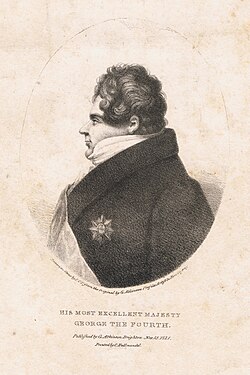
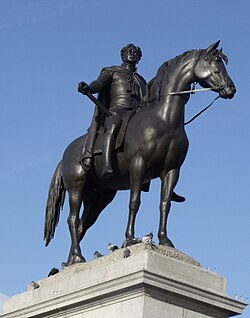
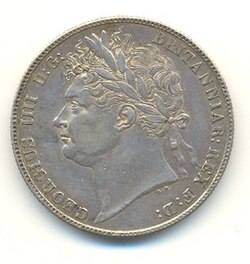
George IV, born George Augustus Frederick, served as the King of the United Kingdom of Great Britain and Ireland and the King of Hanover from 1820 until his death in 1830. Long before his formal accession, he was a figure of immense public fascination and controversy, serving as Prince Regent—a monarch's proxy who exercises royal powers during the original sovereign's incapacity—from 1811 to 1820 during the final mental illness of his father, George III.
Known for his extravagant tastes, complex romantic life, and tumultuous relationship with his father, George IV's legacy is a blend of artistic patronage and personal excess.
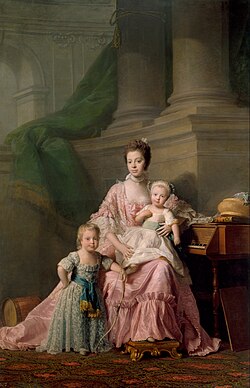
Key Facts
- Reign: 29 January 1820 – 26 June 1830.
- Regency: 5 February 1811 – 29 January 1820.
- House: Hanover.
- Spouse: Caroline of Brunswick (married 1795).
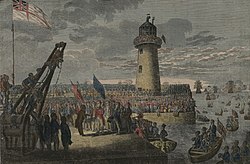
- Notable Event: The first reigning monarch to visit Scotland since the mid-17th century (1822).
- Major Legislation: The Catholic Relief Act of 1829.
Early Life and Extravagance
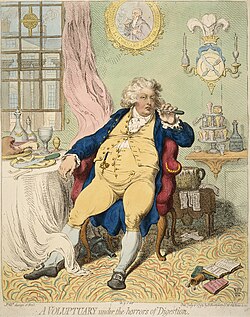
From the age of 18, Prince George established a lifestyle that stood in stark contrast to the frugal and scandal-free nature of his father. He embraced a life of dissipation, characterized by heavy drinking, numerous mistresses, and an appetite for luxury. His taste in interior decoration was refined but prohibitively expensive.
Financial instability plagued his early adulthood. Despite receiving a grant of £60,000 and an annual income of £50,000 from his father upon turning 21 in 1783, George's spending far exceeded his means. His stables alone cost £31,000 per year. This profligacy led to deep animosity between the Prince and King George III, who favored conservative values and was alienated by the Prince's alignment with radically inclined politicians like Charles James Fox.
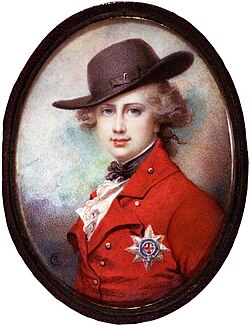
The Secret Marriage to Maria Fitzherbert
Shortly after turning 21, George became infatuated with Maria Fitzherbert, a twice-widowed Roman Catholic commoner. Despite the Act of Settlement 1701, which barred the spouse of a Catholic from succeeding to the throne, and the Royal Marriages Act 1772, which required the King's consent, the couple secretly married on 15 December 1785.
The union was legally void because the King's consent was never requested or granted. While Fitzherbert viewed the marriage as canonical and true, the couple kept it secret for political reasons. When rumors leaked in 1886, the Prince's political allies, including Charles James Fox, publicly denied the marriage to protect the Prince's eligibility for parliamentary financial aid.
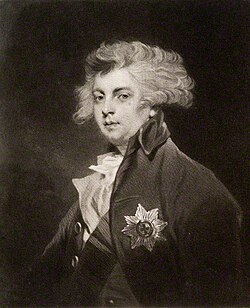
Marriage, Debt, and the Regency
To resolve his mounting debts, which reached £630,000 by 1795, George IV agreed to marry his cousin, Princess Caroline of Brunswick, on 8 April 1795. The marriage was disastrous and the couple formally separated after the birth of their only child, Princess Charlotte, in 1796. George remained emotionally attached to Maria Fitzherbert for the rest of his life.
Parliament eventually intervened to manage his finances through the Prince of Wales Act 1795 and the Annuity to Prince of Wales, etc. Act 1803, which provided annual sums to clear his debts. By 1806, his 1795 debts were settled, though he continued to incur new ones.
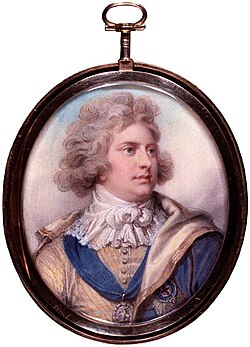
The Transition to Prince Regent
In late 1810, following the death of Princess Amelia, King George III's mental health collapsed. This led to the Regency Act 1811, which officially named the Prince of Wales as Prince Regent on 5 February 1811. This period allowed him to exercise the powers of the monarchy while his father remained the nominal sovereign.
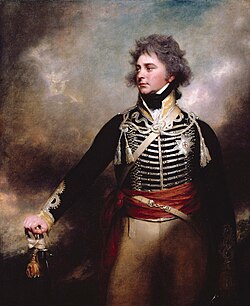
The Reign of King George IV
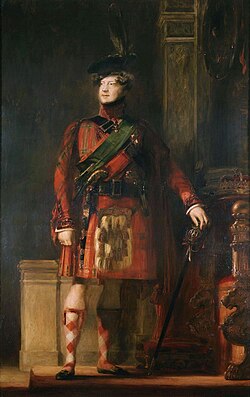
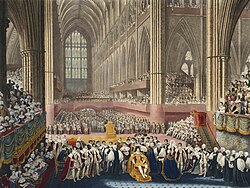
Upon his father's death in 1820, George IV ascended the throne. His coronation on 19 July 1821 was a lavish event costing approximately £243,000—a staggering sum compared to the £10,000 spent on his father's coronation. His reign was marked by several historic firsts, including a state visit to Ireland in 1821 and a 21-day visit to Edinburgh in 1822, organized by Sir Walter Scott.
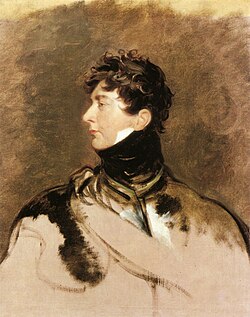
Political Struggles and Catholic Emancipation
George IV's later years were defined by his struggle with Catholic emancipation. Although he had proposed a Catholic Emancipation Bill for Ireland in 1797, he later became a staunch opponent, arguing that his coronation oath bound him to uphold the Protestant faith. This created significant tension with his ministers, including George Canning and the Duke of Wellington.
Under intense political pressure and the threat of a cabinet resignation, the King reluctantly gave his consent to the Catholic Relief Bill. The Catholic Relief Act finally received royal assent on 13 April 1829.
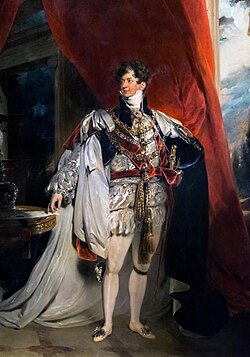
Health Decline and Death
The King's indulgent lifestyle led to severe health complications. He struggled with obesity, gout, arteriosclerosis, and peripheral edema (dropsy). By 1824, his waist measured 50 inches. In his final years, he suffered from cataracts that left him nearly blind and severe bladder pain that he treated with laudanum, an opium-based tincture, which often left him in a drugged state.
George IV died on 26 June 1830, at the age of 67, at Windsor Castle. He was buried on 15 July 1830, in the Royal Vault of St George's Chapel.
Summary of George IV's Life
| Category | Details |
|---|---|
| Full Name | George Augustus Frederick |
| Born | 12 August 1762, St James's Palace, London |
| Died | 26 June 1830, Windsor Castle, Berkshire |
| Reign | 1820–1830 (King); 1811–1820 (Regent) |
| Spouse | Caroline of Brunswick |
| Issue | Princess Charlotte of Wales |
| Religion | Protestant |
Frequently Asked Questions
Why was George IV known as the Prince Regent?
He was named Prince Regent in 1811 because his father, King George III, suffered from a severe mental illness that rendered him unable to perform his royal duties.
Was George IV's marriage to Maria Fitzherbert legal?
No. The marriage was legally void because it lacked the King's consent, as required by the Royal Marriages Act 1772, and violated the Act of Settlement 1701 due to Fitzherbert's Roman Catholic faith.
How did George IV impact Catholic rights in the UK?
Despite his personal and public opposition to Catholic emancipation, George IV eventually granted royal assent to the Catholic Relief Act in 1829 after intense political pressure and the resignation of his cabinet.
What were the primary causes of George IV's health decline?
His health was severely impacted by obesity, heavy alcohol consumption, and chronic conditions including gout, arteriosclerosis, and cataracts.
How expensive was George IV's coronation?
His coronation in 1821 cost approximately £243,000, which was vastly more expensive than his father's coronation, which cost about £10,000.