George Gamow: The Polymath Who Shaped Modern Cosmology and Genetics
George Gamow was a rare breed of scientist: a true polymath whose intellectual curiosity spanned the smallest subatomic particles and the vastest reaches of the universe. A Soviet-born American theoretical physicist and cosmologist, Gamow is remembered not only for his rigorous mathematical contributions but also for his playful spirit and ability to communicate complex science to the general public.
From predicting the afterglow of the Big Bang to proposing the first models of how DNA codes for proteins, Gamow's work laid the groundwork for several modern scientific disciplines. His career was marked by a transition from the study of nuclear physics to the origins of the cosmos, and finally to the mysteries of molecular biology.
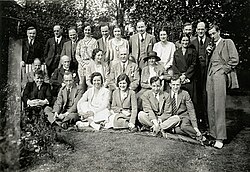
Key Facts
- Quantum Tunneling: Provided the first theoretical explanation for alpha decay.
- Cosmology: An early developer of the Big Bang theory and predictor of the cosmic microwave background radiation.
- Nuclear Physics: Invented the liquid drop model, the first mathematical model of the atomic nucleus.
- Genetics: Proposed a model for the genetic code, linking DNA bases to amino acids.
- Science Communication: Awarded the Kalinga Prize in 1956 for popularizing science.
Early Life and Academic Foundations
Born Georgiy Antonovich Gamov in Odessa, Russian Empire, Gamow was educated at the Institute of Physics and Mathematics in Odessa and later at Leningrad State University. Under the guidance of Alexander Friedmann, Gamow developed a deep interest in theoretical physics. During his university years, he formed a close-knit study group known as the "Three Musketeers" with fellow students Lev Landau, Dmitri Ivanenko, and Matvey Bronshtein to analyze the emerging field of quantum mechanics.
Gamow's rise in the scientific community was rapid. By age 28, he was elected a corresponding member of the Academy of Sciences of the USSR. Between 1931 and 1933, he worked at the Radium Institute in Leningrad, where he played a key role in designing Europe's first cyclotron—a particle accelerator used to accelerate charged particles to high energies.
Revolutionizing Nuclear Physics
Gamow's early career was defined by his work on radioactive decay. He discovered that alpha decay—the process by which an atomic nucleus emits an alpha particle—could be explained by quantum tunneling. This is a phenomenon where a particle passes through a potential energy barrier that it classically should not be able to cross.
He further advanced nuclear theory by inventing the liquid drop model, which treated the atomic nucleus as a drop of incompressible nuclear fluid. This provided the first mathematical framework for understanding nuclear structure and stability.
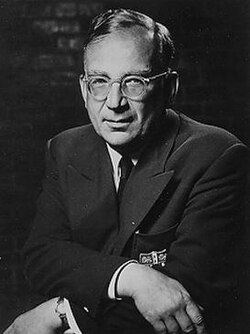
The Move to America and the Big Bang
In 1934, Gamow moved to the United States, joining George Washington University (GWU). It was here that he collaborated with Edward Teller to establish the "Gamow–Teller selection rule" for beta decay. However, by the late 1930s, Gamow's focus shifted toward the origins of the universe.
Gamow became a champion of the Big Bang theory. He proposed the concept of nucleocosmogenesis, the process by which elements were created in the early, hot, and dense universe. In 1948, alongside his student Ralph Alpher, he published the Alpher–Bethe–Gamow paper. Though Hans Bethe was not an actual author, Gamow included his name as a scientific joke to represent the first three letters of the Greek alphabet (Alpha, Beta, Gamma).
Gamow's most prophetic contribution was predicting the existence of the cosmic microwave background radiation—the thermal remnant of the Big Bang. He predicted a temperature of 7 K, which was remarkably close to the value later discovered by Penzias and Wilson in 1965.
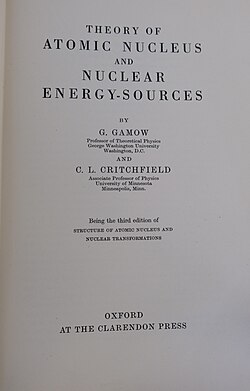
From Stars to DNA
In the 1950s, Gamow turned his attention to the newly discovered double helix structure of DNA. He sought to understand how four DNA bases (adenine, cytosine, thymine, and guanine) could code for the twenty amino acids that make up proteins. He proposed that if the bases were taken in groups of three (triplets), the possible combinations could account for the necessary amino acids, contributing to the concept of biological degeneracy.
Throughout his later years, Gamow taught at the University of California, Berkeley, and finally at the University of Colorado Boulder. He remained a passionate advocate for science education, helping found the Physical Science Study Committee (PSSC) to modernize high school physics teaching.

Legacy and Popular Science
Beyond his research, Gamow was a prolific writer. He authored the beloved Mr. Tompkins series, which used whimsical narratives to explain relativity and quantum mechanics, and the comprehensive One, Two, Three... Infinity. His ability to make the abstract accessible earned him the UNESCO Kalinga Prize in 1956.
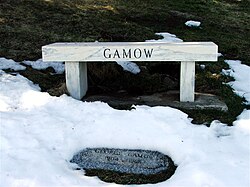
Gamow passed away on August 19, 1968, in Boulder, Colorado. His legacy lives on through the George Gamow Tower at the University of Colorado Boulder and his enduring contributions to our understanding of the universe's birth.
| Field | Key Contribution | Scientific Impact |
|---|---|---|
| Nuclear Physics | Quantum Tunneling | Explained the mechanism of alpha decay. |
| Nuclear Physics | Liquid Drop Model | First mathematical model of the atomic nucleus. |
| Cosmology | Big Bang Nucleosynthesis | Explained the origin of light elements in the early universe. |
| Cosmology | CMB Prediction | Predicted the cosmic microwave background radiation. |
| Biology | Genetic Coding Model | Proposed how DNA base triplets code for amino acids. |
Frequently Asked Questions
What is the Gamow factor?
The Gamow factor is a mathematical term related to the probability of a particle tunneling through a potential barrier, which Gamow used to explain the rate of alpha decay in radioactive nuclei.
Why is the Alpher–Bethe–Gamow paper famous?
It is famous for proposing that the chemical elements were created during the early stages of the Big Bang and for the scientific joke of including Hans Bethe's name to complete the Greek alphabet sequence.
How did Gamow contribute to the study of DNA?
Gamow proposed that the four bases of DNA were organized into triplets, creating enough combinations to code for the twenty different amino acids required to build proteins.
What was the "Three Musketeers" group?
The Three Musketeers was a study group formed by Gamow, Lev Landau, Dmitri Ivanenko, and Matvey Bronshtein at Leningrad University to analyze groundbreaking papers on quantum mechanics.
What is the significance of the Mr. Tompkins books?
The Mr. Tompkins series served as a bridge between complex theoretical physics and the general public, using storytelling to explain concepts like relativity and atomic structure.