George F. Kennan: The Architect of Cold War Containment
George Frost Kennan (1904–2005) was a towering figure in American diplomacy, a distinguished historian, and a political scientist whose intellectual contributions shaped the trajectory of the 20th century. He is most renowned as the primary advocate for the policy of containment—the strategic effort to prevent the expansion of Soviet influence during the Cold War.
Beyond his role as a strategist, Kennan was a member of the elite group of foreign policy advisors known as "The Wise Men." His career spanned decades of geopolitical tension, serving as a bridge between the operational world of diplomacy and the scholarly world of historical analysis.
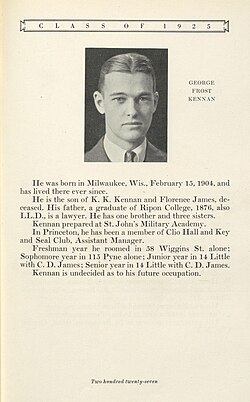
Key Facts
- Primary Contribution: Developed the concept of containment to limit Soviet expansion.
- Key Documents: Authored the "Long Telegram" (1946) and the "X Article" (1947).
- Diplomatic Roles: Served as U.S. Ambassador to the Soviet Union (1952) and Yugoslavia (1961–1963).
- Academic Legacy: Faculty member at the Institute for Advanced Study from 1956 until his death.
- Major Awards: Two-time winner of the Pulitzer Prize and the National Book Award.
Early Life and Education
Born on February 16, 1904, in Milwaukee, Wisconsin, George Frost Kennan was the son of Kossuth Kent Kennan, a tax lawyer, and Florence James Kennan. His early life was marked by personal loss; his mother died of peritonitis from a ruptured appendix just two months after his birth. This loss left a lasting emotional impact on Kennan, who remained close to his sisters but felt distant from his father and stepmother.
Kennan pursued his higher education at Princeton University, where he earned his AB degree, laying the academic foundation for his future as a historian and diplomat.
The Strategy of Containment
In the wake of World War II, Kennan became the leading voice in analyzing the behavior of the Soviet Union. In 1946, while serving in Moscow, he sent the "Long Telegram," a detailed analysis arguing that the Soviet regime was inherently expansionist. He posited that the USSR's influence must be "contained" in areas of vital strategic importance to the United States.
This thesis was further popularized in 1947 through an article in Foreign Affairs written under the pseudonym "X," titled "The Sources of Soviet Conduct." Together, these works provided the intellectual justification for the Truman Doctrine and the development of the Marshall Plan, which aimed to rebuild Western Europe to prevent the spread of communism.
Diplomatic Career and Government Service
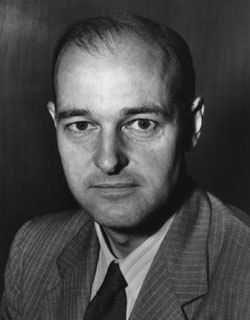
Kennan's career in the State Department was characterized by high-level appointments and a recurring sense of being an outsider. He served as the first Director of Policy Planning (1947–1949) and as the 8th Counselor of the State Department. His diplomatic service included brief but critical roles as the U.S. Ambassador to the Soviet Union in 1952 and a longer tenure as the U.S. Ambassador to Yugoslavia from 1961 to 1963 under President John F. Kennedy.
Despite his influence, Kennan often clashed with other officials. W. Averell Harriman once noted that Kennan "understood Russia but not the United States." By 1951, in his book American Diplomacy, 1900–1950, Kennan began to criticize the U.S. reliance on multilateral and moralistic organizations like the United Nations, advocating instead for a more realist approach to foreign policy.
Later Life and Intellectual Evolution
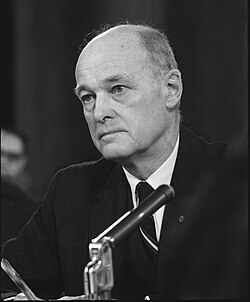
From 1956 until his death at age 101, Kennan served as a faculty member at the Institute for Advanced Study. During this period, he evolved into a critic of the very policy he helped inspire. He clarified that containment was intended as a political and economic defense of Western Europe, not a justification for a militarized arms race or the use of "counterforce."
Kennan became a vocal opponent of the Vietnam War and the renewed arms race of the 1970s and 1980s, particularly during the Reagan administration. He also opposed the enlargement of NATO, arguing that it could destabilize international relations.
Literary Contributions and Legacy
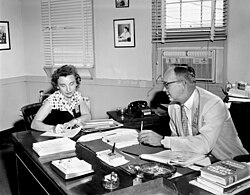
Kennan was a prolific writer, producing seventeen books and numerous articles. His scholarly work included a comprehensive six-volume history of relations between Russia and the West. His memoirs, published in two volumes, earned him significant acclaim, including a Pulitzer Prize and a National Book Award in 1968.
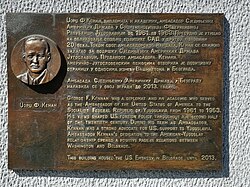
His legacy is preserved through the George F. Kennan Chair in National Security Strategy at the National War College and the George F. Kennan Professorship at the Institute for Advanced Study. In 2022, a memorial plaque was unveiled in Belgrade, Serbia, commemorating his service in Yugoslavia.
| Category | Details |
|---|---|
| Key Policy | Containment of Soviet expansion |
| Major Publications | The Long Telegram, "X Article," Memoirs (1925–1963) |
| Ambassadorial Posts | Soviet Union (1952), Yugoslavia (1961–1963) |
| Academic Affiliation | Institute for Advanced Study (1956–2005) |
| Top Honors | Pulitzer Prize for History, National Book Award |
Frequently Asked Questions
What was the "Long Telegram"?
The Long Telegram was a detailed 1946 communication sent by George Kennan from Moscow to Washington. It analyzed the Soviet Union's perceived inherent expansionism and suggested that the U.S. should adopt a policy of containment to limit Soviet influence.
Did George Kennan support the Cold War arms race?
No. While his theories of containment provided the framework for Cold War policy, Kennan later argued that containment should be political and economic rather than militarized. He was a major critic of the arms build-up and the nuclear arms race.
What was the "X Article"?
The "X Article," titled "The Sources of Soviet Conduct," was a 1947 piece published in Foreign Affairs under the pseudonym "X." It expanded on the ideas of the Long Telegram and helped shape the Truman Doctrine.
Which countries did Kennan serve as Ambassador to?
George Kennan served as the United States Ambassador to the Soviet Union in 1952 and as the United States Ambassador to Yugoslavia from 1961 to 1963.
What were Kennan's views on the United Nations?
In his 1951 book American Diplomacy, 1900–1950, Kennan expressed skepticism toward the United Nations, warning against U.S. reliance on multilateral, legalistic, and moralistic international organizations.