Genetic Dominance: How Alleles Shape Physical Traits
In the complex world of biology, dominance is the phenomenon where one variant of a gene—known as an allele—masks or overrides the effect of a different variant on the same chromosome. When an organism possesses two different alleles for a specific gene, the allele that expresses its trait is considered dominant, while the one being hidden is termed recessive.
This state of having different alleles is often the result of a mutation, which can be inherited from parents or occur anew (de novo). To understand how these variations manifest in living beings, we must look at the distinction between genotype (the genetic makeup) and phenotype (the observable physical characteristics).
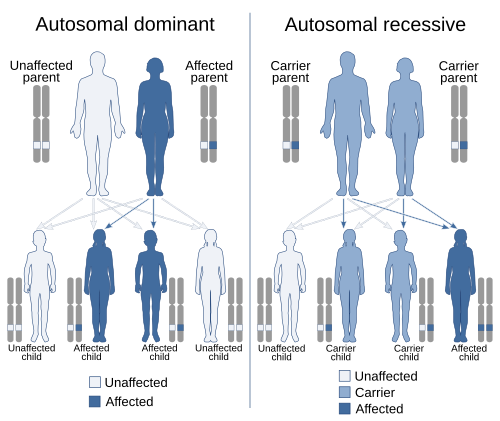
Key Facts
- Dominant alleles are typically represented by upper-case letters (e.g., R).
- Recessive alleles are typically represented by lower-case letters (e.g., r).
- Autosomal traits occur on non-sex chromosomes, while X-linked or Y-linked traits are tied to sex chromosomes.
- Complete dominance results in the dominant phenotype masking the recessive one entirely in heterozygotes.
- Co-dominance occurs when both alleles are expressed equally in the phenotype.
The Foundations of Mendelian Inheritance
The principles of dominance were famously established by Gregor Johann Mendel in the 1860s. By studying garden peas, Mendel observed that certain traits, such as seed shape or plant height, appeared in discrete forms. He discovered that when pure-breeding plants with different traits were crossed, the offspring often showed only one of the parental phenotypes.
Mendel's work revealed that when these hybrid offspring were bred further, the original traits reappeared in a predictable 3:1 ratio. This led to the understanding of monohybrid inheritance, which tracks a single trait.
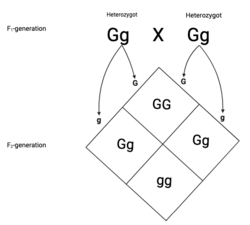
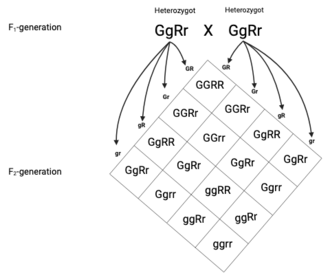
When studying two different traits simultaneously, such as seed color and shape, we refer to dihybrid inheritance. If the genes are located on different chromosomes and inherited independently, the offspring in the second generation (F2) typically follow a 9:3:3:1 phenotypic ratio.
Beyond Complete Dominance
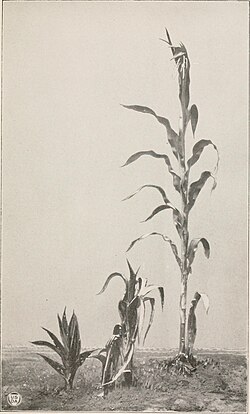
While Mendel's classical model describes complete dominance, many genetic interactions are more nuanced. Two significant non-Mendelian patterns are incomplete dominance and co-dominance.
Incomplete Dominance
In incomplete dominance, the dominant allele does not completely mask the recessive one. Instead, the heterozygous genotype results in an intermediate phenotype. For example, if a red flower allele and a white flower allele interact through incomplete dominance, the resulting offspring may have pink flowers.
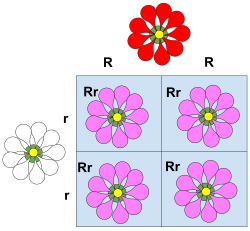
Co-dominance
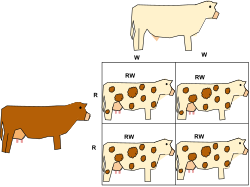
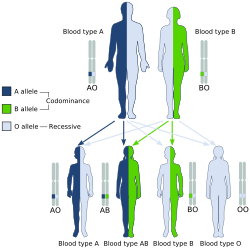
Co-dominance occurs when both alleles are fully and simultaneously expressed in the phenotype. A classic human example is the ABO blood group system. The A and B alleles are co-dominant; an individual with both alleles (genotype AB) will express both A and B antigens on their red blood cells. Similarly, in some animals, co-dominance can result in spotted patterns, such as a red and white cow producing offspring with both red and white hairs.
Complex Genetic Interactions
Genetics is rarely limited to a single gene acting in isolation. Several other factors can influence how traits are expressed:
- Multiple Alleles: While an individual only carries two alleles, a population may have many different versions of a gene (polymorphism), such as the A, B, and O alleles in blood types.
- Epistasis: This occurs when one gene masks or interferes with the expression of a different gene at a separate locus. An example is the coat color in Labrador retrievers, where one gene determines color and another determines if that color is actually deposited in the hair.
- Pleiotropy: This is when a single gene influences multiple, seemingly unrelated phenotypic traits, such as the FBN1 gene mutation in Marfan Syndrome.
- Polygenic Characteristics: Many traits, such as human height, are controlled by the additive effect of multiple genes, resulting in a continuous spectrum of phenotypes.
Summary of Inheritance Patterns
| Pattern Type | Allelic Interaction | Phenotypic Result |
|---|---|---|
| Complete Dominance | One allele masks the other | Only the dominant trait is visible |
| Incomplete Dominance | Alleles produce a blended effect | An intermediate phenotype (e.g., pink) |
| Co-dominance | Both alleles are expressed equally | Both traits appear (e.g., spots or AB blood) |
Frequently Asked Questions
What is the difference between a genotype and a phenotype?
A genotype refers to the specific genetic makeup or set of alleles an organism carries (e.g., Rr). A phenotype is the physical expression or observable trait resulting from that genotype (e.g., round peas).
How does epistasis differ from dominance?
Dominance describes the interaction between two alleles of the same gene. Epistasis describes the interaction between alleles of different genes.
What are autosomal vs. sex-linked traits?
Autosomal traits are located on non-sex chromosomes (autosomes). Sex-linked traits are located on the sex chromosomes (X or Y) and their inheritance patterns depend on the sex of the parents and offspring.
Can an allele be dominant for one trait but recessive for another?
Yes, dominance is a relative effect between alleles of a specific gene. An allele's dominance is not an inherent property but depends on how it interacts with other alleles at that specific locus.
What is a polygenic trait?
A polygenic trait is a characteristic that is influenced by the interaction of multiple genes at different loci, often resulting in a wide range of continuous variations, such as human height or skin color.