Understanding Alleles: The Building Blocks of Genetic Variation
Have you ever wondered why siblings can look so different despite having the same parents, or why certain traits, like blood type, follow specific patterns of inheritance? The answer lies in alleles. At its simplest, an allele is a variant of a DNA sequence at a specific location, known as a locus. While many alleles cause no noticeable change in an organism, others are responsible for the vast diversity of life, from the color of a pea plant to human genetic health.
Alleles can differ by just a single nucleotide—a tiny variation called a single-nucleotide polymorphism—or they can involve much larger changes, such as the insertion or deletion of thousands of base pairs. These variations are the engine of biological diversity.
Key Facts
- Definition: An allele is a variant form of a gene located at a specific position (locus) on a DNA molecule.
- Diploidy: Most multicellular organisms are diploid, meaning they possess two sets of chromosomes.
- Homozygous vs. Heterozygous: Organisms are homozygous if they have two identical alleles at a locus, and heterozygous if the alleles differ.
- Dominance: A dominant allele can mask the expression of a recessive allele in a heterozygous individual.
- Polymorphism: Many gene loci are highly polymorphic, meaning they contain multiple different alleles within a population.
How Alleles Determine Traits
Dominant and Recessive Relationships
In many genetic interactions, alleles are categorized as dominant or recessive. This classification is based on how a heterozygous individual (one with two different alleles) appears. If the heterozygote looks exactly like one of the homozygous parents, the allele responsible for that look is considered dominant, while the other is recessive. The recessive trait only becomes visible when an organism is homozygous recessive, meaning it carries two copies of the recessive allele.
However, genetics is not always this simple. Some traits follow patterns of co-dominance or polygenic inheritance, where multiple alleles or genes interact to create a more complex phenotype (the observable physical characteristic).
Wild Type and Mutant Alleles
Scientists often use the term wild type to describe the allele that produces the most common or "typical" phenotype found in natural populations. Historically, wild type alleles were thought to be dominant and "normal," while mutant alleles were viewed as rare, recessive, and often harmful. We now know that most gene loci are highly polymorphic, with many different alleles existing in a population that may not produce obvious physical differences.
Multiple Alleles and the ABO Blood System
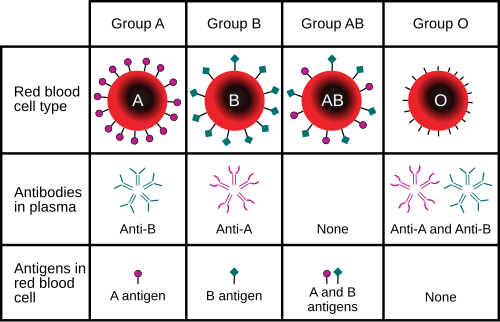
While an individual only inherits two alleles (one from each parent), a population can have many different alleles for a single gene. This is known as multiple alleles. A classic example is the ABO blood group system in humans.
The ABO gene is controlled by several alleles that determine the presence of carbohydrate antigens on red blood cells. While classical genetics often focuses on three main alleles (A, B, and i), it is now known that there are actually more than 70 different alleles at this locus. These variations determine whether a person has Type A, Type B, Type AB, or Type O blood.
| Phenotype (Blood Type) | Possible Genotypes | Antigens Displayed |
|---|---|---|
| Type A | IAIA or IAi | A-antigens |
| Type B | IBIB or IBi | B-antigens |
| Type AB | IAIB | Both A and B antigens |
| Type O | ii | Neither antigen |
Alleles and Genetic Disorders
Variations in alleles can sometimes lead to health challenges. Many genetic disorders occur when an individual inherits two recessive alleles. Examples include cystic fibrosis, albinism, and Tay–Sachs disease. Some disorders are X-linked, meaning the gene is located on the X chromosome; because males have only one X chromosome, they are more frequently affected by conditions like red-green color blindness.
Conversely, some disorders, such as Huntington's disease, are caused by inheriting just one dominant allele. This highlights how the specific combination of alleles can profoundly impact biological function.
Advanced Genetic Concepts
Epialleles
Beyond the DNA sequence itself, there is a layer of regulation called epigenetics. Epialleles are heritable marks—such as DNA methylation—that affect how genes are expressed without changing the underlying nucleotide sequence. Some of these, known as metastable epialleles, can be passed down through generations via epigenetic inheritance.
Idiomorphs
In specialized fields like mycology (the study of fungi), researchers use the term idiomorph. This refers to sequences at the same locus in different strains that have no sequence similarity and likely do not share a common evolutionary relationship.
Frequently Asked Questions
What is the difference between a genotype and a phenotype?
A genotype is the actual genetic makeup or the specific set of alleles an organism carries (e.g., IAi). A phenotype is the observable physical trait or characteristic resulting from that genotype (e.g., Type A blood).
What does it mean to be a "carrier" of a genetic trait?
A carrier is an individual who is heterozygous for a recessive allele. They carry the allele and can pass it on to their offspring, but because they also possess a dominant allele, the recessive trait is not visible in their own phenotype.
Can an allele be "silent"?
Yes. A null allele is a variant that lacks the gene's normal function, either because the gene is not expressed at all or because the resulting protein is inactive.
How are allele frequencies used in science?
In population genetics, the frequency of alleles can be used to predict how often certain genotypes will appear in a population, often using mathematical models like the Hardy–Weinberg principle.
Why are some genetic diseases more common in males?
This often occurs with X-linked disorders. Because males have only one X chromosome, they are hemizygous for genes on that chromosome. If they inherit a single recessive mutant allele, they will express the disorder, whereas females would need two copies to show the same trait.