B Chromosomes: The Genetic Enigma of Supernumerary DNA
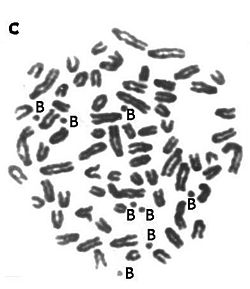
In the standard blueprint of life, most organisms rely on a stable set of chromosomes, known as the A chromosomes, to carry essential genetic information. However, nature often presents exceptions. In many wild populations of animals, plants, and fungi, scientists have identified an additional set of genetic material known as B chromosomes. Also referred to as supernumerary, accessory, or conditionally dispensable chromosomes, these elements exist outside the normal karyotype.
Unlike standard chromosomes, B chromosomes are not essential for the survival of a species. Their presence varies significantly between individuals within a single population; one individual might possess zero, while another might carry one, two, or more. This distinguishes them from trisomies, which are additional copies of existing normal chromosomes.
Key Facts
- Non-essential: B chromosomes are not required for the basic life functions of a species.
- Variable Presence: The number of B chromosomes fluctuates between individuals in the same population.
- Diverse Origins: They can arise from rearrangements of A chromosomes or through horizontal gene transfer.
- Genetic Behavior: They often do not follow standard Mendelian laws of inheritance.
- Functional Range: They can act as "selfish" genetic elements or provide adaptive advantages in specific environments.
The Evolutionary Origins of Supernumerary DNA
The exact evolutionary history of B chromosomes remains a subject of scientific inquiry. It is generally believed that they may have originated from heterochromatic segments—regions of DNA that are tightly packed and largely non-coding—of normal chromosomes in the distant past.
Recent advancements in next-generation sequencing have provided clearer insights into their development. For instance, research indicates that B chromosomes in rye are amalgamations of the standard rye A chromosomes. Similarly, in the cichlid fish Haplochromis latifasciatus, these chromosomes appear to result from the rearrangement of normal A chromosomes. In contrast, some fungal B chromosomes show limited similarity to A chromosomes, suggesting they may have originated via horizontal gene transfer—the movement of genetic material between unicellular and/or multicellular organisms rather than through vertical descent.
Function and Biological Impact
B chromosomes are primarily heterochromatic, meaning they consist mostly of non-coding DNA. However, some species, such as maize, possess B chromosomes with significant euchromatic segments (regions of DNA that are loosely packed and contain active genes).
The biological role of these chromosomes is complex and can be categorized into two main behaviors:
- Selfish Genetic Elements: Some B chromosomes tend to accumulate in meiotic cell products (cells involved in reproduction), increasing their numbers across generations. This drive to replicate can sometimes lead to deleterious effects, such as reduced pollen fertility.
- Adaptive Advantages: In certain environments, B chromosomes may offer a survival benefit. For example, the British grasshopper Myrmeleotettix maculatus possesses B chromosomes containing satellite DNA that are found in warm, dry environments but are absent in cooler, humid areas.
B Chromosomes in Fungi and Plants
Fungal Polymorphism
In the fungal kingdom, chromosome polymorphism is highly prevalent. Many fungal isolates possess extra chromosomes that are "conditionally dispensable," meaning they are unnecessary for standard growth in a lab culture but may provide a selective edge in the wild. A notable example is the pathogen Fusarium solani, whose supernumerary chromosome carries genes that allow it to metabolize phytoalexins—toxins produced by a plant's immune system to fight infection.
The wheat-infecting pathogen Zymoseptoria tritici holds a record among fungi, possessing 13 normal chromosomes and 8 dispensable B chromosomes. These B chromosomes are characterized by higher repeat content and lower gene content compared to the essential set.
Diversity in Plants
In plants, particularly flowering plants (angiosperms) that reproduce through outcrossing, B chromosomes serve as a significant marker of genetic diversity. Their appearance is often irregular; for example, in the species Aegilops speltoides and Aegilops mutica, B chromosomes may be present in aerial tissues but entirely absent from the roots.
Morphologically, B chromosomes in plants are typically smaller and non-homologous compared to the smallest A chromosomes.
Summary of Chromosome Types
| Feature | A Chromosomes | B Chromosomes |
|---|---|---|
| Essentiality | Required for life | Non-essential (dispensable) |
| Inheritance | Mendelian laws | Non-Mendelian patterns |
| Consistency | Stable across individuals | Variable numbers per individual |
| Primary Composition | Coding and non-coding DNA | Often predominantly heterochromatic |
Frequently Asked Questions
How do B chromosomes differ from trisomy?
Trisomy involves an extra copy of a specific, existing normal chromosome. B chromosomes, however, are distinct, supernumerary elements that are not part of the standard chromosomal set.
Are B chromosomes harmful to an organism?
Not necessarily. While they can sometimes cause negative effects like reduced fertility, they can also provide adaptive advantages that help a species survive in specific environmental conditions.
What is the difference between heterochromatin and euchromatin?
Heterochromatin refers to tightly packed, largely non-coding DNA, which is common in B chromosomes. Euchromatin is more loosely packed and contains the active genes necessary for protein production.
Can B chromosomes be passed down to offspring?
Yes, but they do not follow the standard Mendelian laws of inheritance. They often show a tendency to accumulate in reproductive cells, which can lead to an increase in their number over generations.
Where do B chromosomes come from?
Their origins are diverse. They may arise from the rearrangement of existing A chromosomes or through horizontal gene transfer from other organisms.