Polyploidy: The Biological Phenomenon of Extra Chromosome Sets
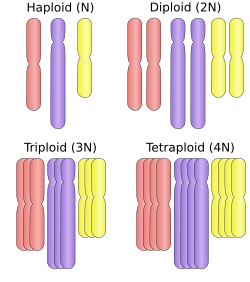
In the standard blueprint of life, most organisms operate with a specific number of paired chromosomes. However, nature occasionally breaks this rule through a fascinating condition known as polyploidy. While most eukaryotes (complex organisms with nucleus-containing cells) are diploid, meaning they possess two complete sets of chromosomes, polyploid organisms carry more than two paired sets of homologous chromosomes.
Homologous chromosomes are pairs of chromosomes that are similar in shape, size, and genetic content. In a typical diploid organism, one set is inherited from each parent. Polyploidy disrupts this balance, leading to a massive increase in genetic material that can drive evolution and speciation.
Key Facts
- Polyploidy occurs when an organism has more than two sets of chromosomes.
- It is exceptionally common in plants and multicellular algae.
- The condition results from whole-genome duplication during evolution.
- Causes include abnormal cell division during mitosis or failures during meiosis.
- Chemicals like colchicine and oryzalin can induce chromosome doubling in laboratory settings.
How Polyploidy Occurs
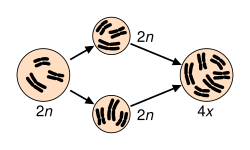
Polyploidy is often the result of errors during the reproductive or cellular division processes. One common cause is the failure of chromosomes to separate properly during meiosis—the specialized cell division that produces gametes (eggs and sperm). If chromosomes do not segregate correctly, it can lead to gametes with extra sets of DNA. When these gametes fertilize, they create a polyploid zygote.
Another mechanism involves the fertilization of a single egg by more than one sperm. Additionally, polyploidy can occur during mitosis, the process of regular cell division, leading to increased chromosome counts within specific tissues or throughout the entire organism.
Life Cycle Variations
The impact of ploidy levels often depends on the organism's life cycle. In animals, most somatic cells (body cells) are diploid, while gametes are haploid (containing a single set of chromosomes). In contrast, plants and multicellular algae often feature alternating generations: a haploid gametophyte generation and a diploid sporophyte generation.
Classifying Chromosome Sets
Scientists use specific terminology to describe the number of chromosome sets an organism possesses. This classification ranges from a single set to dozens of sets in extreme cases.
| Term | Chromosome Sets | Example Organism |
|---|---|---|
| Monoploid | 1x | Male European fire ants |
| Diploid | 2x | Humans |
| Tetraploid | 4x | Plains viscacha rat, Cotton (Gossypium hirsutum) |
| Hexaploid | 6x | Bread wheat, Kiwifruit |
| Octaploid | 8x | Dahlias, Sturgeon (Acipenser) |
| Decaploid | 10x | Certain strawberries |
| Tetratetracontaploid | 44x | Black mulberry |
Polyploidy in the Natural World
While polyploidy is a significant driver of evolution in plants—often leading to the creation of new species—it is less common in animals. However, it is not unheard of. For instance, certain fish and amphibians exhibit polyploid traits, and even some bacteria and archaea show evidence of extreme genome amplification.
Evolutionary Significance
The history of life is deeply intertwined with genome duplication. Paleopolyploidy refers to ancient duplication events that occurred long ago in the evolutionary lineage of a species. These events can reshape the entire genetic landscape, providing new genetic material that can be repurposed for new functions.
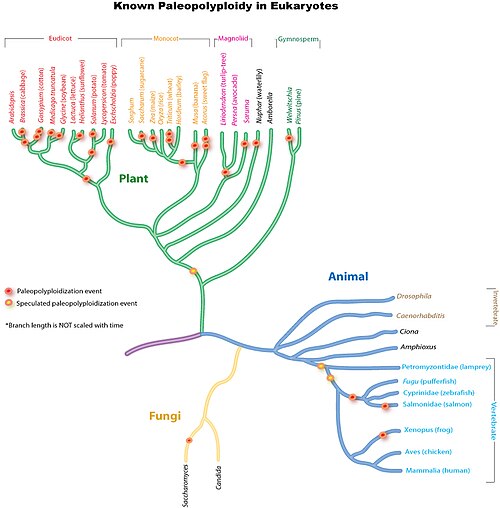
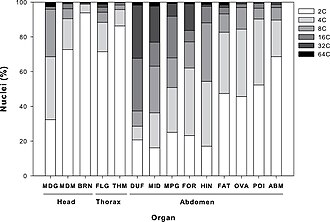
In some organisms, a specific type of polyploidy called endopolyploidy occurs, where certain cells increase their chromosome number without undergoing cell division. This has been observed in various contexts, including the development of certain tissues in insects and even in human cells.
![Schematic phylogeny of the Chromalveolata. Red circles indicate polyploidy, blue squares indicate hybridization. From Albertin and Marullo, 2012[93]](/images/0b/3e/0b3e0c1c83c805b80f4f9bf5c14c941a1f1afc0adc2020e50cc7b301feecebe0.png)
Frequently Asked Questions
What is the difference between diploid and polyploid?
A diploid organism has two complete sets of chromosomes (one from each parent). A polyploid organism has more than two sets, such as tetraploid (four sets) or hexaploid (six sets).
Why is polyploidy so common in plants?
Plants often have life cycles that allow for more flexibility in handling extra chromosome sets, and genome duplication can provide a significant evolutionary advantage, leading to new species and increased vigor in crops.
Can humans be polyploid?
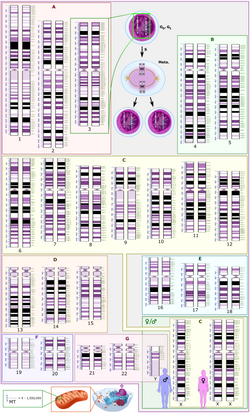
While humans are typically diploid, chromosomal abnormalities can occur. However, standard human somatic cells follow a diploid karyotype, consisting of 22 pairs of homologous chromosomes and one pair of sex chromosomes (XX or XY).
What is the role of colchicine in genetics?
Colchicine is a chemical known to induce chromosome doubling. It is used in plant and cell culture research to create polyploid varieties by interfering with the cell division process.
What is a monoploid organism?
A monoploid organism possesses only one single set of chromosomes. An example includes the males of certain Hymenoptera, such as bees and some ant species.