Zygosity: Understanding Genetic Similarity and Allele Variation
In the complex world of genetics, the term zygosity describes the degree of similarity between the two copies of a chromosome or gene within an organism. Derived from the Greek word zygotos, meaning "yoked," zygosity essentially measures how closely matched the alleles—the different versions of a gene—are at a specific location on a chromosome.
Most eukaryotic organisms are diploid, meaning they possess two matching sets of chromosomes. In these organisms, one set is inherited from the male parent and the other from the female parent. While these homologous chromosomes generally share the same loci (specific positions on a chromosome), the actual DNA sequences at those positions can vary.
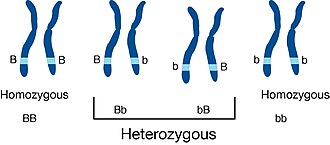
Key Facts
- Homozygous: An organism has two identical alleles at a specific locus.
- Heterozygous: An organism has two different alleles at a specific locus.
- Hemizygous: Only a single copy of a gene is present.
- Nullizygous: Both copies of a gene are entirely missing.
- Diploid: Organisms with two sets of chromosomes.
Core Types of Zygosity
To understand how traits are passed down and expressed, scientists categorize genotypes into several distinct types based on the relationship between alleles.
Homozygous Genotypes
A cell is considered homozygous for a gene when identical alleles are present on both homologous chromosomes. This can be further divided into two categories:
- Homozygous-dominant: The individual carries two copies of the dominant allele (e.g., "PP"). These alleles are typically represented by uppercase letters.
- Homozygous-recessive: The individual carries two copies of the recessive allele (e.g., "pp"). These are typically represented by lowercase letters.
Heterozygous Genotypes
An organism is heterozygous when it possesses two different alleles at a gene locus, such as one wild-type allele and one mutant allele. This is represented by a combination of an uppercase and lowercase letter (e.g., "Rr").
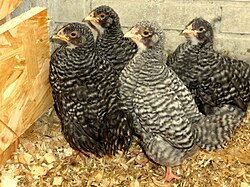
In cases of simple dominance, the organism will only express the dominant trait. However, some genetic scenarios result in a heterozygote advantage, where the heterozygous genotype provides higher relative fitness than either homozygous state.
Hemizygous and Nullizygous States
While most diploid organisms have two copies of a gene, certain conditions result in fewer. A hemizygous state occurs when only one copy of a gene is present. This is common in the heterogametic sex (such as males in humans) for genes located on the X chromosome, as the Y chromosome lacks many of the same genes.
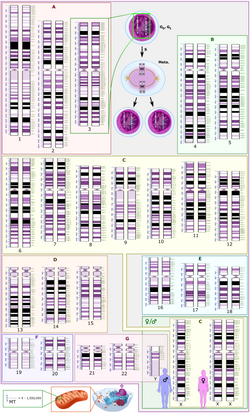
In contrast, a nullizygous organism is one in which both copies of a specific gene are missing entirely. In such cases, the organism carries only complete loss-of-function or "null" alleles.
Origins and Twinship
Autozygous vs. Allozous
Zygosity can also describe the ancestral origin of alleles. When two alleles at a locus come from a common ancestor due to inbreeding, the genotype is autozygous (also known as "identical by descent"). If the alleles come from different sources, the genotype is allozygous ("identical by state").
Monozygotic and Dizygotic Twins
The term zygosity is frequently used to describe the genetic relationship between twins:
- Monozygotic twins: Identical twins that develop from a single zygote that splits into two embryos.
- Dizygotic twins: Fraternal twins that develop from two separate eggs fertilized by two separate sperm.
- Sesquizygotic twins: A rare middle ground where two sperm fertilize a single egg that subsequently splits.
Zygosity in Medicine and Population Genetics
In clinical medicine, zygosity is vital for understanding disease. While many people are healthy carriers of a single mutated allele, some genes require two functional copies to maintain health. This condition is known as haploinsufficiency. For example, a single copy of the Kmt5b gene is insufficient for normal development, leading to skeletal muscle deficits.
In the broader field of population genetics, heterozygosity refers to the fraction of individuals in a population that are heterozygous for a particular locus. This metric is essential for studying admixed populations—groups with ancestry from multiple sources—which often exhibit high levels of genetic variation.
![Heterozygosity values of 51 worldwide human populations.[10] Sub-Saharan Africans have the highest values in the world.](/images/27/ed/27ed6be19ec6e8fa7b68fc8eeafaceadc691dc4b14727c9eec01983dac4896c4.png)
| Term | Allele Count | Description |
|---|---|---|
| Homozygous | 2 | Two identical alleles at a locus. |
| Heterozygous | 2 | Two different alleles at a locus. |
| Hemizygous | 1 | Only one copy of a gene is present. |
| Nullizygous | 0 | Both copies of the gene are missing. |
Frequently Asked Questions
What is the difference between homozygous and heterozygous?
Homozygous means an organism has two identical alleles for a specific gene, while heterozygous means it has two different alleles.
Why are human males considered hemizygous for X-linked genes?
Human males have one X chromosome and one Y chromosome. Because the Y chromosome does not contain the same genes as the X chromosome, males only have a single copy of X-linked genes.
What does haploinsufficiency mean?
Haploinsufficiency occurs when a single functional copy of a gene is not enough to produce sufficient protein for normal biological function, often leading to disease.
How does inbreeding affect zygosity?
Inbreeding can lead to autozygous genotypes, where alleles are "identical by descent" because they originate from a common ancestor.
What are monozygotic twins?
Monozygotic twins are identical twins that originate from a single fertilized egg (zygote) that splits into two separate embryos.