Generalissimo: The Highest Military Rank in History
In the hierarchy of military command, few titles carry as much weight as Generalissimo. Derived from the Italian word generale (general) and the superlative suffix -issimo (meaning "utmost" or "to the highest grade"), the term literally translates to "the highest-ranking of all generals." It represents a military rank of the highest degree, positioned above field marshals and other five-star ranks used in various nations.
While the term is Italian in origin, its influence spread across Europe and the Americas, appearing as generalísimo in Spanish, generalíssimo in Portuguese, généralissime in French, and generalissimus in Latin and Russian.
Key Facts
- Rank Superiority: It is the absolute superlative rank, outranking field marshals and five-star generals.
- Historical Purpose: Typically awarded to officers leading an entire state's armed forces or commanders of multiple allied armies.
- Eligibility: Historically granted to those of imperial blood, heads of state, or supreme commanders during major conflicts.
- First Imperial Use: Albrecht von Wallenstein became the first imperial generalissimo of the Holy Roman Empire in 1632.
The Evolution and Usage of the Rank
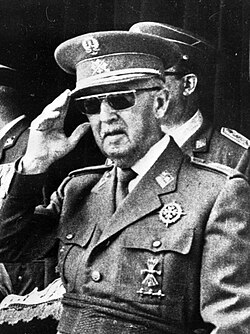
Historically, the rank of Generalissimo was reserved for military officers who held total authority over a state's military, usually reporting only to the sovereign. In many cases, the title was not merely a military promotion but a reflection of political power. For instance, senior military officers who transitioned into heads of government—such as Francisco Franco in Spain or Chiang Kai-shek in the Republic of China—often held the title.
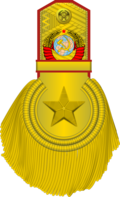
Beyond national command, the title was frequently used for the commander-in-chief of combined allied forces. Notable examples include Ferdinand Foch on the Western Front in 1918 and Joseph Stalin on the Eastern Front in 1945. In some instances, the rank was proposed but declined, as seen with Mao Zedong in the People's Republic of China and Joseph Stalin in the Soviet Union.
Imperial and Royal Appointments
The rank often intersected with royalty. In Sweden, Crown Prince Charles John was named Generalissimo of the Swedish Armed Forces in 1810. He holds the unique distinction of being offered the rank of Generalissimo by four different nations: Sweden, Imperial Russia, Bourbon France, and Napoleonic France, though he only accepted the Swedish appointment.
Notable Generalissimos Throughout History
The use of the title spans centuries and continents, from the Thirty Years' War to the modern era in North Korea. The following table summarizes some of the most prominent figures who held or were referred to by this rank.
| Person | Country/Entity | Era | Context/Notes |
|---|---|---|---|
| Albrecht von Wallenstein | Holy Roman Empire | 1625 | First imperial generalissimo |
| George Washington | United States | 1776 | Referred to as generalissimo by The Virginia Gazette |
| Ferdinand Foch | France / Allies | 1918 | Commanded Allied forces on the Western Front |
| Chiang Kai-shek | Republic of China | 1926–1975 | Leader of the National Revolutionary Army |
| Francisco Franco | Spain | 1936–1975 | Head of the Spanish Armed Forces |
| Kim Il Sung | North Korea | 1992 | Known as Taewonsu |
| Hirohito | Japan | 1926–1945 | Dai-gensui as sovereign ruler |
Frequently Asked Questions
What is the difference between a Field Marshal and a Generalissimo?
A Field Marshal is typically the highest standard rank in many armies, but a Generalissimo is a superlative rank that sits above the Field Marshal, representing the absolute highest level of military authority.
Who was the first person to hold the title of Imperial Generalissimo?
Albrecht von Wallenstein became the first imperial generalissimo of the Holy Roman Empire in 1632.
Did Joseph Stalin actually use the rank of Generalissimo?
While Joseph Stalin was appointed Generalissimo of the Soviet Union in 1945, historical records indicate he declined the actual usage of the title.
Is the rank of Generalissimo still used today?
While rare in most modern professional militaries, the title has been used in more recent history in North Korea, where leaders like Kim Il Sung and Kim Jong Il (posthumously) were awarded the rank of Taewonsu.
Can a non-military leader be a Generalissimo?
The rank is military by nature, but it is often granted to heads of state or government who possess supreme command over their nation's armed forces, effectively merging political and military leadership.