General Relativity: Observational Evidence and Experimental Tests
General relativity, the groundbreaking theory of gravitation proposed by Albert Einstein in 1915, fundamentally changed our understanding of space, time, and gravity. Rather than viewing gravity as a simple force between masses, Einstein described it as the curvature of spacetime caused by mass and energy. To move this theory from a mathematical framework to an established scientific fact, researchers have spent over a century conducting rigorous observational tests.
These tests range from observing the orbits of planets within our own solar system to detecting ripples in the fabric of spacetime from distant cosmic collisions. By comparing theoretical predictions with empirical data, scientists have consistently found that general relativity holds true across a vast array of gravitational environments.
Key Facts
- Classical Tests: Einstein's original three tests involved Mercury's orbit, the bending of light, and gravitational redshift.
- Light Deflection: First confirmed in 1919, proving that gravity can bend the path of light.
- Gravitational Waves: Directly detected by the Advanced LIGO team in 2016, confirming predictions about black hole mergers.
- Strong Field Limits: Binary pulsars and black hole observations provide evidence for relativity in extreme gravitational environments.
- Consistency: To date, no significant deviations from the theory have been observed in any tested limit.
The Classical Tests of General Relativity
In 1915, Albert Einstein proposed three primary tests to validate his theory. These focused on phenomena that Newtonian physics could not fully explain or that were entirely new predictions.
The Perihelion Precession of Mercury
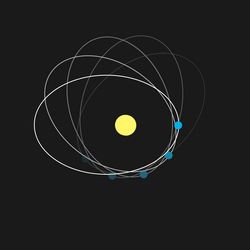
The perihelion (the point in an orbit closest to the Sun) of Mercury's orbit shifts over time. While most of this shift is caused by the gravitational pull of other planets, a small discrepancy remained that Newtonian mechanics could not account for. General relativity accurately predicted this "anomalous" precession.
The Deflection of Light
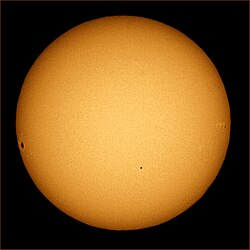
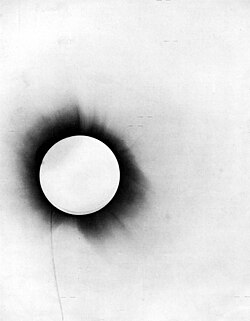
Einstein predicted that gravity would bend the path of light as it passed near a massive object. This was famously tested during a solar eclipse in 1919, where stars appearing near the edge of the Sun were observed to be slightly displaced from their usual positions.
Gravitational Redshift
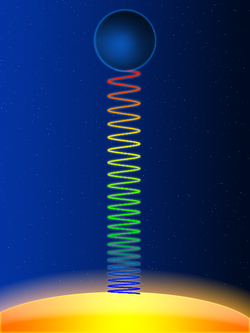
Gravitational redshift occurs when light moving upward against a gravitational field loses energy, causing its wavelength to increase (shift toward the red end of the spectrum). While early claims of measurement were made in 1925, sensitive confirmation was not achieved until 1954.
Evolution of Modern Testing
Following the classical tests, the scientific community developed more sophisticated methods to probe the theory in both weak and strong gravitational fields.
Weak Field Tests
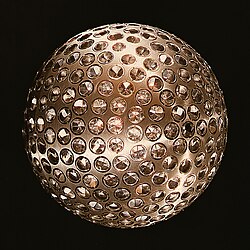
Starting in 1959, researchers began testing the theory in the "weak field limit," such as the environment of our solar system. In the 1970s, Irwin Shapiro measured the relativistic time delay of radar signals traveling near the Sun, further limiting the possibility of deviations from Einstein's predictions.
Strong Field Tests and Binary Pulsars
To test relativity in more extreme conditions, scientists looked toward binary pulsars—pairs of dense, rotating neutron stars. Starting in 1974, researchers including Russell Alan Hulse and Joseph Hooton Taylor Jr. studied these systems, finding that their behavior aligned perfectly with general relativity's predictions for strong gravitational fields.
The Frontier: Gravitational Waves and Black Holes
The most recent and dramatic confirmations of general relativity have come from the study of the most extreme objects in the universe: black holes.
In February 2016, the Advanced LIGO team announced the first direct detection of gravitational waves—ripples in spacetime caused by the merger of two black holes. Subsequent detections in June 2016 and June 2017 have continued to support the theory in the very strong field limit.
Furthermore, direct observations of supermassive black holes, such as M87, have provided visual confirmation of the theory's predictions regarding the shadow and surrounding material of a black hole.
![A bright ring of material surrounding a dark center that marks the shadow of the M87's supermassive black hole. The image also provided a key confirmation of General relativity.[119]](/images/de/eb/deeb2254b003b46e24d86fee60d85c2b2e02afdb889d0a07ecefb659cbd27fef.jpg)
Summary of Mercury's Perihelion Precession
The following table breaks down the various contributors to the observed shift in Mercury's orbit, highlighting the specific contribution of general relativity.
| Cause | Amount (arcsec/Julian century) |
|---|---|
| Gravitational tugs of other solar bodies | 532.3035 |
| Oblateness of the Sun (quadrupole moment) | 0.0286 |
| Gravitoelectric effects (General Relativity) | 42.9799 |
| Lense–Thirring precession | −0.0020 |
| Total Predicted | 575.31 |
| Observed | 574.10 ± 0.65 |
Frequently Asked Questions
What was the first successful test of general relativity?
The first major observational confirmation was the 1919 solar eclipse experiment, which demonstrated that the Sun's gravity bends light from distant stars, as predicted by Einstein.
What is the perihelion precession of Mercury?
It is the gradual rotation of the orbit's closest point to the Sun. While other planets cause most of this shift, general relativity explains a specific remaining portion (about 43 arcseconds per century) that Newtonian physics could not.
What are gravitational waves?
Gravitational waves are ripples in the curvature of spacetime that propagate as waves, typically generated by massive accelerating objects, such as merging black holes.
How do binary pulsars help test relativity?
Binary pulsars involve extremely dense objects in close orbit, creating much stronger gravitational fields than those found in our solar system. This allows scientists to test the theory's accuracy in "strong field" environments.
What is gravitational redshift?
Gravitational redshift is the phenomenon where light escaping a gravitational field is shifted toward longer, redder wavelengths because it loses energy as it moves away from the mass.