General Officer Ranks in the United States Armed Forces
In the United States uniformed services, a general officer is a commissioned officer of high military rank. These officers sit above the field officer ranks—the highest of which is colonel in the Army, Marine Corps, Air Force, and Space Force, and captain in the Navy, Coast Guard, Public Health Service Commissioned Corps (PHSCC), and National Oceanic and Atmospheric Administration Commissioned Corps (NOAACC).
The progression of these ranks reflects the evolving needs of the U.S. military, from the small forces of the Revolutionary War to the global requirements of World War II and the modern era.
Key Facts
- General officers are commissioned officers above the rank of colonel or captain.
- The current standard hierarchy includes one-star (Brigadier General/Rear Admiral LH), two-star (Major General/Rear Admiral), three-star (Lieutenant General/Vice Admiral), and four-star (General/Admiral) ranks.
- The General of the Army (five-star) rank was created in 1944 to provide parity with British field marshals.
- General of the Armies is the highest possible rank, held by only four individuals in history.
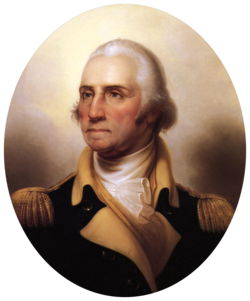
- George Washington was posthumously promoted to General of the Armies in 1976 to ensure no officer ever outranks him.
The Hierarchy of General Officers
One-Star Ranks
The entry-level general officer rank is the one-star. In the Army, Marine Corps, Air Force, and Space Force, this is the brigadier general. In the Navy, Coast Guard, PHSCC, and NOAACC, the equivalent is the rear admiral (lower half). These officers often serve as deputy commanders of divisions or command large operational wings in the Air Force.
Two-Star Ranks
The major general (or rear admiral) typically commands division-sized units consisting of 10,000 to 20,000 soldiers. They may also serve as branch chiefs or commandants of service schools.
Three-Star Ranks
A lieutenant general (or vice admiral) generally commands corps-sized units of 20,000 to 45,000 soldiers. They also occupy high-level staff positions at the Pentagon and serve as superintendents of U.S. service academies.
Four-Star Ranks
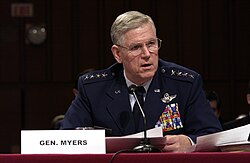
The rank of general (or admiral) is the highest standard active-duty rank. Historically, this rank was often unique to the Chief of Staff of the Army to ensure parity with the Chief of Naval Operations.
Historical Evolution of Ranks
The Revolutionary and Civil War Eras
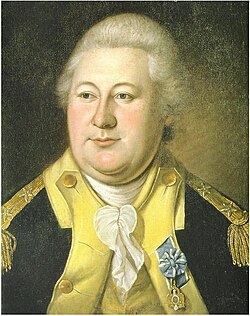
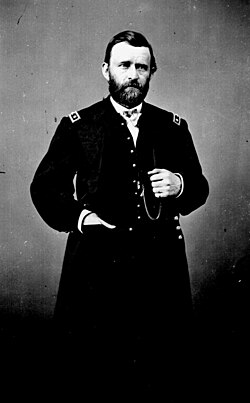
Following the Revolutionary War, the U.S. Army initially had no active-duty general officers. When they were reintroduced, the highest rank was major general. During the Civil War, the rank of lieutenant general was created in 1855 for Winfield Scott. In 1866, Congress established the rank of General of the Army of the United States specifically for Ulysses S. Grant, which was a four-star rank at the time.
Grant's rank was later held by William T. Sherman and Philip H. Sheridan. However, the rank ceased to exist upon Sheridan's death in 1888, returning the highest rank to major general for several decades.
World War I and the Rise of the Six-Star Concept
World War I saw the temporary reauthorization of three- and four-star ranks. In 1919, John J. Pershing was granted the rank of General of the Armies of the United States. To distinguish himself, Pershing wore four gold stars instead of the silver stars used by other generals.
World War II and the Five-Star Rank
To ensure American commanders had equal standing with British field marshals, the 1944 version of General of the Army (five-star) was created. This rank featured five stars in a pentagonal pattern. Five men held this rank: George C. Marshall, Douglas MacArthur, Dwight D. Eisenhower, Henry H. Arnold, and Omar Bradley.
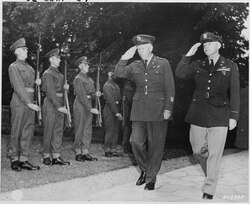
Henry H. Arnold was later appointed the only General of the Air Force in 1949. Dwight Eisenhower, after serving as President, was returned to active duty in 1961 at the grade of General of the Army.
The Highest Honors: General of the Armies
The rank of General of the Armies (sometimes called a six-star rank, though no six-star insignia was ever used) is the most senior grade in U.S. history. It has been held by John J. Pershing, George Washington (posthumously), and Ulysses S. Grant (promoted in the 2020s). George Washington's 1976 appointment ensures his precedence over all other grades, past or present.
Summary of General Officer Roles
| Rank | Typical Command/Role | Approximate Unit Size |
|---|---|---|
| Brigadier General | Deputy Division Commander / Wing Commander | 4,000 - 6,000 (Brigade) |
| Major General | Division Commander / Branch Chief | 10,000 - 20,000 |
| Lieutenant General | Corps Commander / Pentagon Dept Head | 20,000 - 45,000 |
| General | Highest standard active rank / Service Chief | Multiple Corps / Entire Service |
| General of the Army | Five-star rank (WWII era) | Theater-level Command |
Frequently Asked Questions
Who is the highest-ranking officer in U.S. history?
George Washington holds the highest rank, having been posthumously appointed General of the Armies of the United States in 1976, with precedence over all other grades, past or present.
What is the difference between a General of the Army and a General of the Armies?
General of the Army is a five-star rank created in 1944 for WWII commanders. General of the Armies is a more senior rank (sometimes referred to as six-star) held by only a few individuals, including Pershing and Washington.
Why was the five-star rank created during World War II?
It was established to give senior American commanders parity with their British counterparts, who held the rank of field marshal.
Can a modern officer be promoted to a five-star rank?
While not impossible, it is highly unlikely unless the United States enters a major war on the scale of World War II. There are currently no congressional plans to promote modern officers to this grade.
What insignia did John J. Pershing use for General of the Armies?
Pershing chose to wear four gold stars, which distinguished him from other four-star generals who wore silver stars.