General of the Armies: The Highest Rank in the United States Army
In the hierarchy of the United States military, few titles carry as much weight as General of the Armies. This unique grade, designed to recognize extraordinary service and leadership, stands above all other Army ranks. While often confused with the five-star rank of General of the Army, the General of the Armies is a distinct office with a complex history spanning from the founding of the nation to the modern era.
Key Facts
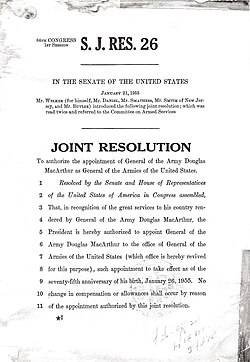
- John J. Pershing was the only person to hold the rank during his own lifetime.
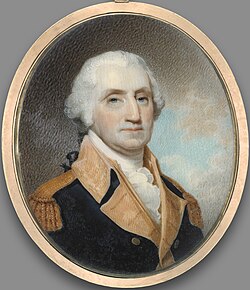
- The rank was originally created for George Washington in 1799, though he was not officially appointed until 1976.
- Ulysses S. Grant was posthumously promoted to the rank in 2024.
- The rank is superior to the five-star grade of General of the Army.
- The Navy equivalent is the unique grade of Admiral of the Navy, held by George Dewey.
The Evolution of the Rank
The office of General of the Armies has been created and revived multiple times throughout American history. It first appeared in 1799, intended for George Washington. Later, in 1866, a similar grade titled "General of the Army of the United States" was revived for Ulysses S. Grant, and subsequently held by William T. Sherman and Philip H. Sheridan. By 1924, the Comptroller General ruled that these various iterations were essentially the same office.
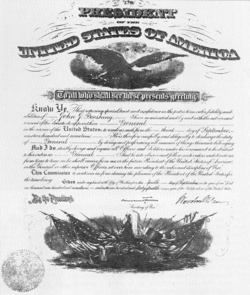
The rank returned to prominence on September 3, 1919, when President Woodrow Wilson signed Public Law 66-45 to promote John J. Pershing. This appointment was intended to distinguish Pershing from other generals and the Army's chief of staff.
The Pershing Era
John J. Pershing held the rank from 1919 until his death in 1948. His status was so elevated that in 1928, Secretary of War Dwight F. Davis increased his authorized salute to 19 guns, matching the honors given to European field marshals.
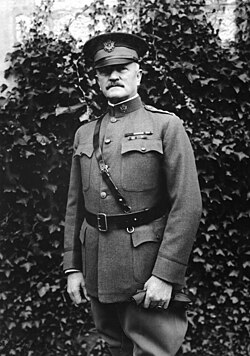
Despite the prestige, the appointment process was not without errors. President Wilson initially accidentally commissioned Pershing as a general rather than a General of the Armies, a mistake that required correction to ensure his unique status was preserved.
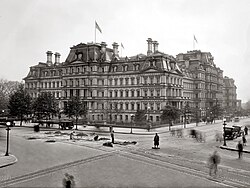
During his tenure, Pershing maintained a spacious office in the old State, War, and Navy Building, which he occupied until 1947.
World War II and the Five-Star Grade
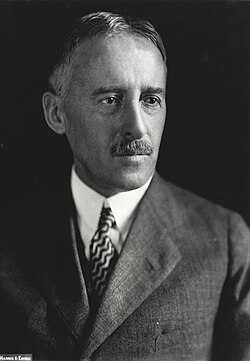
As the United States entered World War II, the need for a higher rank to command massive forces became apparent. In September 1944, the War Department approved a five-star grade, but Secretary of War Henry L. Stimson insisted it be called General of the Army. This was a deliberate choice to ensure that Pershing's title, General of the Armies, remained the highest and most exclusive rank.
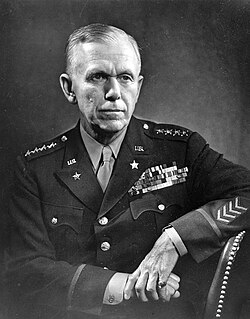
George C. Marshall, a protégé of Pershing, resisted being promoted to General of the Armies while Pershing was still alive to maintain the seniority and honor of his mentor.
The Six-Star Debate
There was significant discussion regarding whether Pershing should wear six stars to visually distinguish him from the new five-star generals. However, Pershing never wore more than four stars during his life. By the time the five-star grade was established in 1944, he was too infirm to update his insignia. Upon his death in 1948, the Army rejected a proposal to bury him in a six-star uniform, opting instead for the four stars he had always worn.

Posthumous Appointments and Legacy
The rank has seen several posthumous applications to correct historical oversights. In the 1950s, it was noted that George Washington, having never been formally appointed to the rank in 1799, was technically outranked by dozens of other generals. This led to a bill that President Gerald Ford signed in 1976.
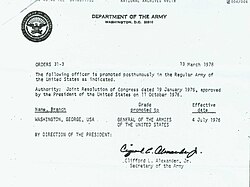
The actual promotion of Washington was delayed until 1978, triggered by a question from a military driver to General Donn A. Starry. The Department of the Army eventually issued orders promoting Washington effective July 4, 1976.
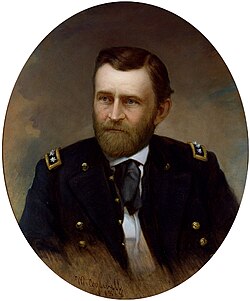
More recently, in 2024, Ulysses S. Grant was posthumously promoted to General of the Armies. This action followed arguments that the 1976 promotion of Washington had effectively lowered the precedence of the rank Grant had held since 1866.
Insignia and Privileges
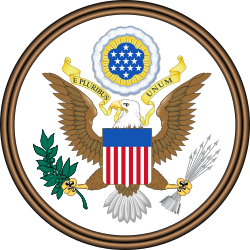
Because the General of the Armies was permitted to design their own uniform, Pershing opted for a unique touch. Instead of the standard bronze "U.S." collar insignia, he wore a gold eagle representing the Great Seal of the United States.
Financially, the rank was highly lucrative. Pershing received an annual pay of $13,500 (approximately $250,696 in 2025) plus $8,000 in allowances (approximately $148,560 in 2025).
Comparative Ranks
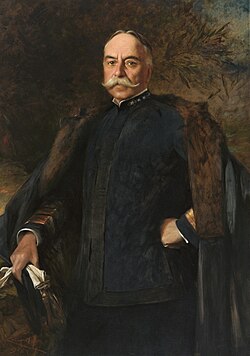
The U.S. Navy has a similar unique grade: Admiral of the Navy. Created in 1899 for George Dewey following the Battle of Manila Bay, it is treated as the naval equivalent of the General of the Armies. Like the Army's highest rank, only one person ever held this title.
| Rank Title | Service | Notable Holders | Precedence |
|---|---|---|---|
| General of the Armies | Army | Washington, Pershing, Grant | Highest (Above 5-Star) |
| General of the Army | Army | Marshall, MacArthur | Five-Star |
| Admiral of the Navy | Navy | George Dewey | Highest Naval Equivalent |
Frequently Asked Questions
Who is the only person to hold the rank of General of the Armies during their lifetime?
General John J. Pershing was the only individual to hold the rank of General of the Armies while he was alive, serving from September 3, 1919, until his death in 1948.
How does General of the Armies differ from General of the Army?
General of the Armies is a higher, more exclusive rank than General of the Army. While General of the Army is a five-star rank, General of the Armies was designed to have precedence over all other grades in the Army, past or present.
Why was George Washington promoted in 1976?
Washington was promoted posthumously because, although the rank was created for him in 1799, he was never formally appointed. This left him technically outranked by many subsequent generals, a discrepancy Congress sought to correct.
Did General Pershing wear six stars?
No. Despite the existence of the five-star rank and proposals for a six-star insignia, Pershing continued to wear four stars throughout his life and was buried in a four-star uniform.
What is the Navy equivalent of the General of the Armies?
The equivalent rank in the U.S. Navy is Admiral of the Navy, a unique grade held only by George Dewey.