General-in-Chief: The Evolution of a Global Military Rank
The title of general-in-chief has served as a prestigious military rank or designation across various global armed forces. While its specific meaning varies by nation and era, it generally denotes a senior officer with overarching command authority over multiple forces or an entire army.
Key Facts
- France: Used as an informal title for lieutenant-generals and later as a formal rank for divisional generals during the Revolutionary era.
- Russia: Established by Peter the Great in 1698 as the second-highest rank in the Imperial Russian Army.
- United States: Formerly the title for the Army's senior-most officer until the creation of the Chief of Staff in 1903.
- Venezuela: The most senior officer rank since the independence war, currently represented by four suns.
- Confederate States: A short-lived position created in 1865 and held by Robert E. Lee.
The French Tradition: From Revolution to Empire
In the Kingdom of France, général en chef began as an informal title. It was typically assigned to lieutenant-generals who commanded other lieutenant-generals, or to marshals overseeing a field army.
The French Revolution transformed the title into a formal designation for divisional generals of the French Revolutionary Army who commanded a field army. To distinguish their status, these generals-in-chief wore four stars on their shoulder boards, whereas divisional generals wore three.
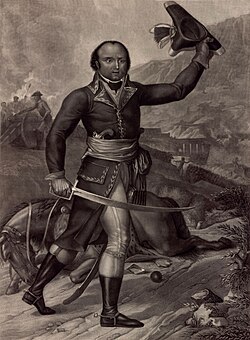
This system persisted as the Revolutionary Army evolved into the French Imperial Army in 1804. Although the rank was abolished in 1812, it was briefly restored following the Bourbon Restoration in 1815 before its final abolition in 1848.
Imperial Russia and the Table of Ranks
Russia adopted the title generál-anshéf, derived from the French term. Created by Peter the Great in 1698, it served as a full general rank and was the second-highest position in the Imperial Russian Army, surpassed only by the marshal. It occupied the 2nd grade of the Russian Table of Ranks.
By 1798, the Russian military refined this structure by dividing the rank into three equivalent specialized roles: general of the infantry, general of the cavalry, and general of the artillery.
The United States and the Path to Chief of Staff
In the United States, "General in Chief" referred to the senior-most officer and commanding general of the U.S. Army. Notable figures who held this title include George Washington, Winfield Scott, Henry Halleck, George McClellan, and Ulysses S. Grant. It is noted that Washington's title during the American Revolution was commander-in-chief, and he was referred to as the "Senior Officer of the Army" after his presidency in the late 1790s.
The position was abolished in 1903 with the establishment of the Chief of Staff. While the Chief of Staff is the modern equivalent, the role differs significantly; unlike the 19th-century generals-in-chief, the current Chief of Staff is not responsible for commanding forces directly in the field.
Additionally, the rank of "General of the Armies of the United States" was created by Congress for General John J. Pershing in 1919. In 1975, George Washington was posthumously granted this rank, with a retroactive date of 1799 to ensure he remains the senior-ranking general in U.S. history.
The Confederate States of America
During the final stages of the American Civil War, the 2nd Confederate States Congress established the position of "General in Chief of the Armies of the Confederate States" on January 31, 1865. Robert E. Lee was appointed to this role on February 6, maintaining his command of the Army of Northern Virginia until his parole as a prisoner of war on April 12.
Venezuela: The General en Jefe
Since the independence war, Venezuela's most senior officer has been designated as General en Jefe (General-in-Chief). Originally represented by three suns (equivalent to a three-star rank), the insignia was updated to four suns (four-star rank) in 2008 following the creation of the major general rank.
The rank saw a period of dormancy from the 1940s until 2001, when Lucas Rincón Romero became the first active officer promoted to the rank in six decades. Since then, 18 officers have achieved this rank or its naval equivalent, including several posthumous appointments.
| Name | Component | Year | Note |
|---|---|---|---|
| Lucas Rincón Romero | Army | 2001 | First active officer promoted since the 1940s |
| Luis Acevedo Quintero | Air Force | 2002 | First and only Air Force General in Chief (Posthumous) |
| Gustavo Rangel Briceño | Army | 2007 | First four-sun promotion |
| Diego Alfredo Molero Bellavia | Navy | 2012 | First Navy four-sun officer appointed Minister of Defense |
| Carmen Meléndez | Navy | 2013 | First woman Admiral in Chief and Minister of Defense |
| Francisco de Miranda | Navy | 2016 | Posthumous promotion for bicentennial of death |
Frequently Asked Questions
How did the French Revolutionary Army distinguish generals-in-chief?
Generals-in-chief in the French Revolutionary Army were distinguished by wearing four stars on their shoulder boards, whereas divisional generals wore only three.
Who is the highest-ranking general in United States history?
George Washington is the senior-ranking general of the U.S. Army, having been posthumously promoted to General of the Armies of the United States with a retroactive date of rank of 1799.
What is the modern equivalent of the U.S. General-in-Chief?
The modern equivalent is the Chief of Staff of the United States Army, though the current role does not involve commanding military forces in the field as the 19th-century position did.
How has the Venezuelan General en Jefe insignia changed?
The rank was originally represented by three suns. However, since the creation of the major general rank in 2008, the General en Jefe is represented by four suns.
What was the role of the General-in-Chief in Imperial Russia?
In Imperial Russia, the general-in-chief (generál-anshéf) was a full general rank and the second-highest rank in the army, positioned just below the marshal.