Commanding Officers: Roles, Responsibilities, and Global Military Structures
In any organized military force, the commanding officer (CO)—or commander—serves as the central authority of a military unit. Whether leading a small detachment or a massive division, the CO holds ultimate responsibility for the unit's operational success and the welfare of its personnel. While the specific titles and ranks vary by nation and branch, the core essence of the role remains the same: exercising lawful authority to achieve a mission.
A commanding officer is typically granted wide latitude to manage their unit as they see fit, provided they operate within the boundaries of military law. This authority carries immense weight, encompassing the legal use of force, financial management, equipment oversight, and strict adherence to the Geneva Conventions. Simultaneously, the CO owes a duty of care to their personnel and must remain accountable to higher authorities.
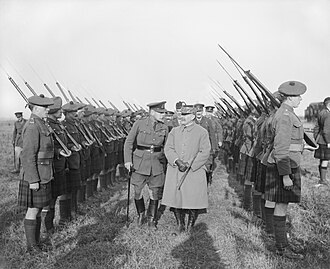
Key Facts
- Ultimate Authority: The CO has final say over unit operations, discipline, and resource management.
- Rank vs. Appointment: In many systems, "Commanding Officer" is an appointment (a job) rather than a rank.
- Career Progression: Time spent in command is often a critical requirement for promotion to higher ranks.
- Legal Powers: COs often possess statutory powers to award punishments or promote soldiers.
- Terminology: Titles vary by service; for example, naval COs are often addressed as "the Captain" regardless of their actual rank.
Theoretical Debates in Military Command
The nature of command is not merely a matter of regulation but also a subject of academic and professional debate. Two primary discussions dominate the field: the collective command thesis and civil-military relations.
The Collective Command Thesis
This debate questions whether command is an individual act or a collective process. In his 2019 book Command, British sociologist Anthony King suggested that Western military forces have shifted toward a "command collective." However, this theory is contested. Critics argue that it romanticizes the process and that commanders do not view their roles this way. Furthermore, some argue that collective decision-making is less effective in active combat. U.S. Marine Corps General James Mattis famously disagreed with King's thesis, noting that decision-making by boards allows the enemy to "dance around you."
Civil-Military Relations
This discourse focuses on the paradox of the military's existence: the institution must be powerful enough to protect the state, yet that same power could potentially threaten the society it serves. This tension is most evident during military coups. The fundamental principle of civil-military control is that the military must accept and implement policy decisions from civilian leadership, even when the military disagrees with those decisions.
Command Structures in the Commonwealth
In the British Army, Royal Marines, and various Commonwealth forces, the role of CO is an appointment. This specific title is reserved for commanders of major units, such as regiments or battalions.
Army and Royal Marines
While most COs hold the rank of lieutenant colonel and are referred to as "the colonel," the rank and the appointment are separate. Not every lieutenant colonel is a CO, and not every CO must be a lieutenant colonel. For smaller sub-units (companies, squadrons, or batteries), the leader is called the officer commanding (OC), typically a major.
Higher formations, such as brigades or divisions, are led by a commander or a general officer commanding (GOC). Area commands are led by a commander-in-chief. At the lowest levels (platoons or sections), leaders are simply called the platoon commander or section leader.
Royal Air Force and Royal Navy
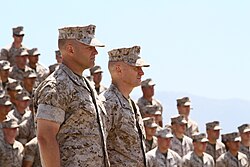
In the Royal Air Force (RAF), the CO title is reserved for station commanders or commanders of independent units, including flying squadrons. Lesser units are led by an OC.
In the Royal Navy, the CO is the official title for the commander of any ship, unit, or installation. Regardless of their actual rank, they are customarily addressed as "the captain," or informally as "skipper" or "boss."
Command Structures in the United States
In the U.S. military, the status of commanding officer applies to all commissioned officers with lawful command over a unit, ship, or installation.
U.S. Army and Marine Corps
In both the Army and Marine Corps, company-level leaders (usually captains) are called company commanders. Battalion leaders are typically lieutenant colonels. At the brigade level, the leader is a colonel. Once the command reaches the division level or higher, the title shifts to commanding general because these officers hold general officer ranks.
In the U.S. Army, warrant officers may occasionally hold command in specialty units like Army Aviation or Special Forces, though they typically serve as executive officers (2IC) when a commissioned officer is present.
U.S. Navy and Coast Guard
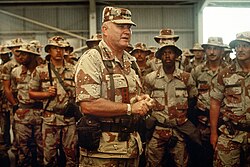
The CO is the official title for the commander of a vessel. By naval custom, any officer commanding a ship or submarine is addressed as "captain" while aboard, regardless of their actual rank. A prospective commanding officer (PCO) is an officer selected for command who has not yet assumed the role.
If an enlisted member is placed in charge of a unit, they are referred to as the officer in charge rather than the commanding officer. This is common in the Coast Guard, where chief petty officers may command smaller cutters.
U.S. Air Force
The USAF uses the term unit commander. This includes squadron commanders (usually majors or lieutenant colonels), group commanders (usually colonels), and wing commanders (colonels or generals).
Summary of Command Titles
| Service/Region | Major Unit Leader | Sub-Unit Leader | Common Address |
|---|---|---|---|
| British Army | Commanding Officer (CO) | Officer Commanding (OC) | "The Colonel" |
| Royal Navy | Commanding Officer (CO) | N/A | "The Captain" / "Skipper" |
| U.S. Army | Commanding General (Div+) | Company Commander | By Rank |
| U.S. Navy | Commanding Officer (CO) | N/A | "The Captain" |
| U.S. Air Force | Wing Commander | Squadron Commander | By Rank |
Frequently Asked Questions
Is a Commanding Officer always a Colonel?
No. While many COs in the British Army hold the rank of lieutenant colonel, the CO role is an appointment. In the U.S. military, a company commander is typically a captain, and a squadron commander in the Air Force may be a major.
What is the difference between a CO and an OC?
In Commonwealth systems, a Commanding Officer (CO) leads a major unit (like a battalion), while an Officer Commanding (OC) leads a smaller sub-unit (like a company or squadron).
Can an enlisted person be a Commanding Officer?
Generally, no. In the U.S. Navy and Coast Guard, if an enlisted member is in charge, they are titled the "officer in charge" rather than the "commanding officer."
What is a Prospective Commanding Officer (PCO)?
A PCO is a U.S. Navy officer who has been selected for command but has not yet officially assumed the duties of that position.
What is the "collective command" theory?
Proposed by Anthony King, this theory suggests that modern military command is becoming a collective effort rather than the act of a single individual, though this is debated by practitioners like General James Mattis.