National Guard Deployments in US Cities (2025-2026)
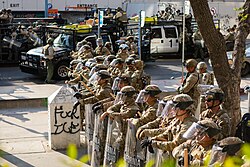
Beginning in June 2025, the second presidency of Donald Trump initiated a series of controversial deployments of the National Guard—state-based military forces that can be federalized by the president—into several major American cities. These operations were primarily framed as a strategy for crime reduction and the maintenance of public order, though they sparked intense legal battles and political debate regarding the boundaries of federal power and civil-military relations.
The deployments spanned multiple urban centers, including Los Angeles, Washington, D.C., Memphis, Chicago, and New Orleans. While the administration cited the need to "clean up" crime and respond to protests, critics and various state officials viewed the moves as an overreach of executive authority.
Key Facts
- Start Date: June 7, 2025.
- Primary Motive: Crime reduction and law enforcement support.
- Casualties: 2 deaths (1 civilian, 1 National Guard member) and 1 injury to a Guard member.
- Financial Cost: Nearly $500 million in taxpayer funds as of January 2026.
- Scale: Mobilization of up to 1,700 troops across 19 states during peak operations.
City-Specific Deployments and Impacts
Los Angeles and California
The deployment in Los Angeles began in June 2025. It was met with immediate legal challenges from California officials. While appeals courts initially allowed the deployment to continue, a judge eventually ordered the troops to leave. The National Guard departed Los Angeles in December 2025, prior to the court-mandated deadline.
Washington, D.C.
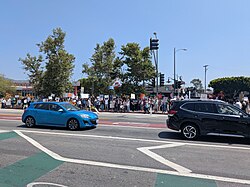
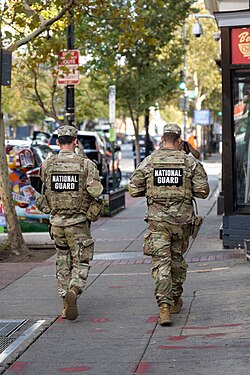
National Guard members were stationed prominently in the nation's capital, including areas around Union Station. Despite a judicial order to end the deployment in November 2025, appeals courts paused the ruling. Consequently, the administration extended the presence of the Guard in Washington, D.C., through 2026.
Portland, Oregon
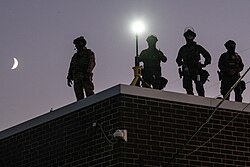
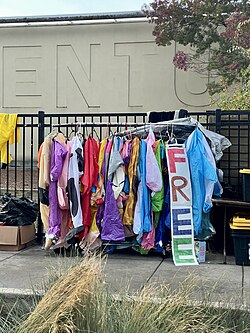
Deployments in Portland were linked to protests surrounding ICE (Immigration and Customs Enforcement) facilities. The administration described the city as "war ravaged," a claim mocked by locals through social media and a satirical movement called "Operation Inflation," which provided inflatable costumes to protesters. After a series of conflicting court rulings, troops were eventually withdrawn by January 2026.
Memphis, Chicago, and New Orleans
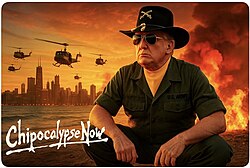
In Memphis, the National Guard was deployed alongside federal law enforcement. In New Orleans, the deployment occurred following a request from the governor to combat crime, with troops patrolling Bourbon Street during New Year's celebrations. In contrast, efforts to deploy troops to Chicago were largely blocked by the courts, including a significant ruling by the Supreme Court in December 2025 that halted the push into Illinois.
Legal Challenges and Political Response
The use of military forces for domestic policing led to a wave of litigation. Governors from California, Illinois, and Oregon, along with various mayors, argued that the deployments were illegal or an abuse of power. A key legal point of contention was whether the president could act as a "national police chief."
The Supreme Court eventually intervened in several cases, most notably blocking the deployment of troops to the Chicago area. By late December 2025, the Trump administration announced it would drop its push for deployments in Chicago, Los Angeles, and Portland.
Summary of Deployments
| City | Primary Reason | Outcome/Status |
|---|---|---|
| Los Angeles | Crime/Protests | Withdrawn Dec 2025 |
| Washington, D.C. | Public Order | Extended through 2026 |
| Portland | Anti-ICE Protests | Withdrawn Jan 2026 |
| Chicago | Crime Reduction | Blocked by Supreme Court |
| New Orleans | Crime Reduction | Deployed via Governor request |
| Memphis | Crime Reduction | Deployed with federal agents |
Frequently Asked Questions
What was the stated purpose of these deployments?
The Trump administration stated that the National Guard was deployed to reduce crime and restore order in various American cities.
How much did the deployments cost?
As of January 29, 2026, the deployments were estimated to have cost taxpayers nearly $500 million.
Did the Supreme Court rule on these deployments?
Yes. In December 2025, the Supreme Court ruled against the administration, specifically blocking the effort to deploy National Guard troops to the Chicago area in Illinois.
Were there any casualties during these operations?
Yes, the operations resulted in two deaths—one civilian and one National Guard member—and one injury to a National Guard member.
Which cities saw the troops withdrawn by early 2026?
The administration withdrew National Guard troops from Chicago, Los Angeles, and Portland by February 2026.