Gallipoli Campaign: The Strategic Struggle of the First World War

Gallipoli Campaign: The Strategic Struggle of the First World War

The Gallipoli campaign was one of the most ambitious and costly operations of the First World War. Spanning from February 19, 1915, to January 9, 1916, this conflict saw the Allied Powers attempt to seize the Dardanelles straits to open a supply route to Russia and knock the Ottoman Empire out of the war. What began as a naval venture evolved into a grueling land campaign characterized by brutal trench warfare and high casualties on both sides.

The campaign is remembered not only for its strategic failure but for the profound national identities it forged, particularly for Australia and New Zealand, whose troops—known as ANZACs—fought with legendary tenacity against a determined Ottoman defense.
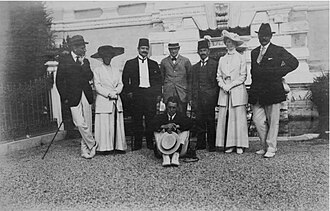
Winston Churchill between Talaat Bey and Cavid Bey (both wearing fezzes) during his private stay in Istanbul in July 1910

Key Facts

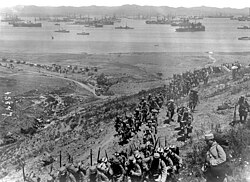
French troops land at Lemnos, 1915.
  • Duration: 10 months, 3 weeks, and 2 days.
  • Outcome: Decisive Ottoman victory.
  • Allied Forces: British Empire (UK, India, Australia, New Zealand, Newfoundland), France, Tunisia, and West Africa.
  • Central Powers: Ottoman Empire, supported by Germany and Austria-Hungary.
  • Total Casualties: Approximately 540,000 to 590,000 combined across all belligerents.

Strategic Objectives and Naval Operations
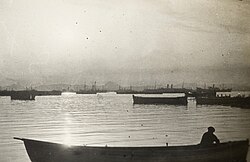
Australian troops, Port Mudros, Greece, 20 April 1915

The Entente strategy focused on the Dardanelles, the narrow strait connecting the Aegean Sea to the Sea of Marmara. By forcing a passage through these waters, the Allies hoped to capture Constantinople (now Istanbul) and provide a lifeline to their ally, Russia.

Initial efforts were purely naval. However, the Ottoman defenses, bolstered by German military missions and sophisticated minefields, proved formidable. The naval assault reached a crisis point on March 18, 1915, when several Allied battleships were sunk or severely damaged, leading the command to conclude that a land invasion was necessary to neutralize the coastal batteries.
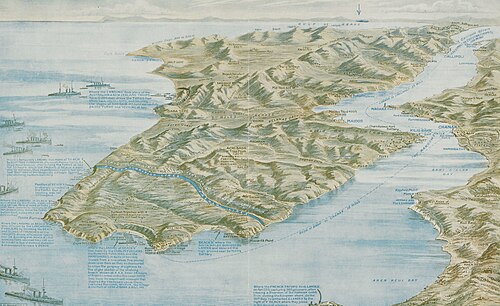

The map highlights the narrowest part of the peninsula between Gaba Tepe (south of ANZAC) and Maidos and "The Narrows" of the Dardanelles between Kilid Bahr and Chanak.
Graphic map of the Dardanelles and Gallipoli, showing the Entente bridgeheads at Cape Helles and ANZAC Cove before the Suvla Bay landing

Panoramic view of the Entente fleet in the Dardanelles

The Land Invasion: Landings and Stalemate
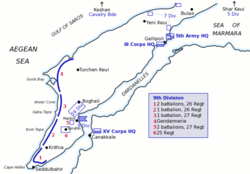
Dispositions of the Ottoman 5th Army

The land campaign began with simultaneous landings at two primary locations: Cape Helles at the southern tip of the peninsula and ANZAC Cove to the north.

The ANZAC Landing

On April 25, 1915, the Australian and New Zealand Army Corps (ANZAC) landed at a location that proved far more rugged than anticipated. They faced steep cliffs and a fierce defense led by Ottoman commanders, including Mustafa Kemal Pasha. The troops quickly dug in, beginning a period of static warfare where gains were measured in yards.
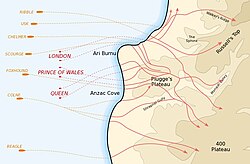
Landing of the covering force from battleships (red) and destroyers (orange) at Anzac Cove, 25 April 1915

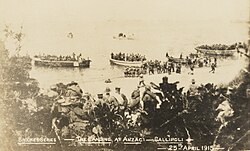
The landing of Australian troops at ANZAC Cove, Gallipoli, Turkey, 25 April 1915

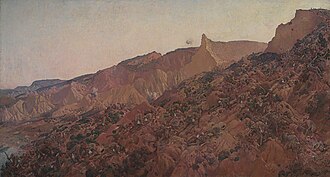
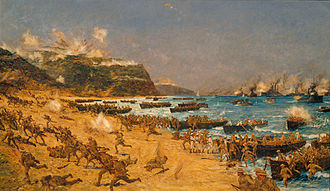
Anzac, the landing 1915 by George Lambert, 1922 shows the landing at Anzac Cove, 25 April 1915.

The Cape Helles Front

At Cape Helles, British and French forces, including the 29th Indian Brigade, attempted to establish a bridgehead. Despite heavy artillery support and multiple assaults, the Ottoman 5th Army maintained a strong defensive line, turning the peninsula into a landscape of deep trenches and barbed wire.
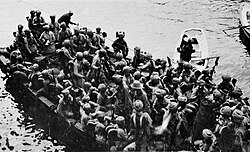
Troops of the 29th Indian Brigade landing at Cape Helles

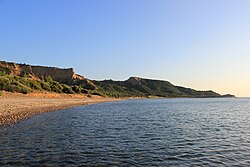
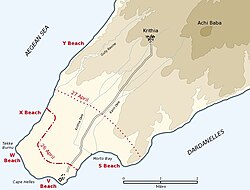
Cape Helles landing beaches

The War of Attrition

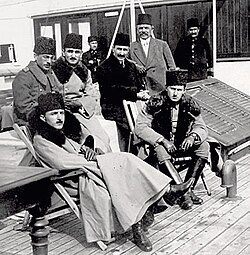
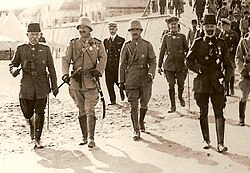
Şehzade Ömer Faruk and Enver Pasha on board a ship to the Gallipoli front

By May and June 1915, the campaign had devolved into a stalemate. The Third Battle of Krithia on June 4 saw the Entente attempt another breakthrough, but the attack was repulsed. Casualties were staggering; in some sectors, 25 percent of the attacking force became casualties. The environment further exacerbated the suffering, with soldiers battling disease, extreme weather, and constant sniper fire.
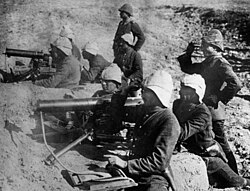
Ottoman machine-gun crews equipped with MG 08s

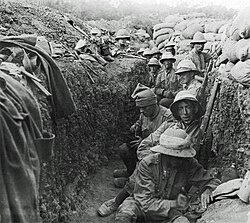
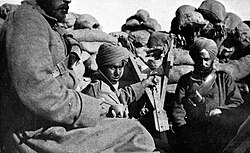
Troops of the 29th Indian Brigade in trenches at Gallipoli, 1915

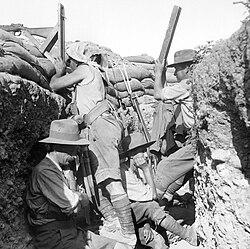
Australian light horseman using a periscope rifle

The August Offensive and Evacuation

A final attempt to break the deadlock occurred in August 1915, but it failed to achieve a decisive result. Recognizing the impossibility of victory and the mounting loss of life, the Allied command ordered a full evacuation. The withdrawal, completed by January 9, 1916, was the most successful part of the entire campaign, executed with minimal losses.
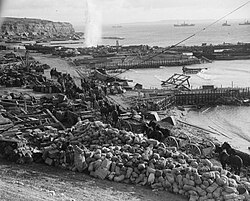
W Beach, Helles, on 7 January 1916, just prior to the final evacuation

Casualties and Human Cost

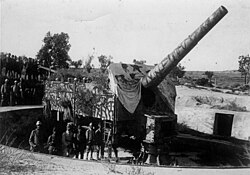
Heavy artillery from the German inland gun emplacement, 1915

The human cost of the Gallipoli campaign was immense. The Ottoman Empire suffered slightly higher total casualties, but the loss of life was devastating for all involved. The following table summarizes the losses by nation:

Country Dead Wounded Missing/POW Total
Ottoman Empire 56,643 97,007 11,178 164,828
United Kingdom 34,072 78,520 7,654 120,246
France 9,798 17,371 27,169
Australia 8,709 19,441 28,150
New Zealand 2,721 4,752 7,473
British India 1,358 3,421 4,779
Newfoundland 49 93 142

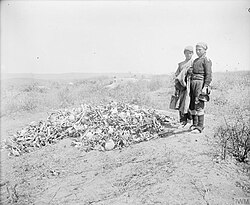
Greek children standing by the bones of soldiers they have collected, who died during the 1915 Gallipoli campaign, on Hill 60, Anzac Cove in 1919

Legacy and Aftermath

Landing at Gallipoli, April 1915

The failure at Gallipoli had significant political repercussions, contributing to the fall of several leaders and altering the course of the Middle Eastern theatre. Following the war, the region saw further conflict during the Turkish War of Independence, eventually leading to the Treaty of Lausanne in 1923.

Today, Gallipoli is a site of pilgrimage. The Respect to Mehmetçik Monument symbolizes the eventual reconciliation and mutual respect between the former enemies, particularly the Australians and Turks.
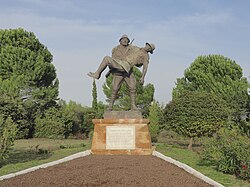
Respect to Mehmetçik Monument (Anzac soldier injured in the arms of Ottoman troops)

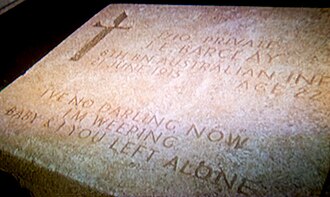
Gallipoli campaign epitaph at Lone Pine Cemetery

Frequently Asked Questions
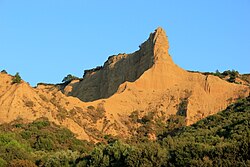
North Beach (north of Anzac Cove) looking south, Gallipoli
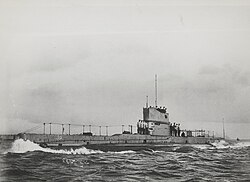
HMAS AE2
HMAS AE2
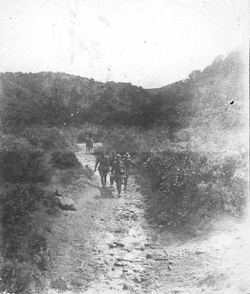
Field Ambulance crew carries a wounded soldier down a path.
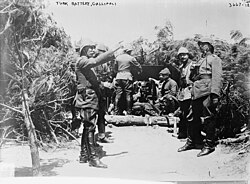
Esat Pasha delivering orders to the batteries at Anzac Cove
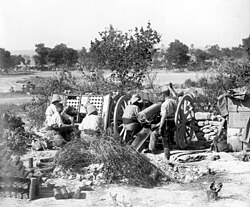
French gunners with a 75 mm gun near Seddülbahir, 1915
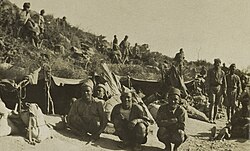
Gurkha Rifles of the 29th Indian Brigade in bivouacs, Gallipoli, 1915
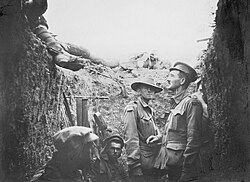
Captain Leslie Morshead in a trench at Lone Pine after the battle, looking at Australian and Ottoman dead on the parapet
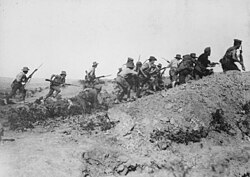
Australian troops charging an Ottoman trench, just before the evacuation at Anzac
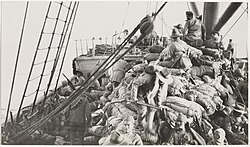
Indian soldiers on their way to ANZAC cove from Lemnos, Gallipoli, October 1915
Troops from the Royal Irish Fusiliers serving in Gallipoli in Autumn 1915
The Sphinx, one of the battlefield's most distinctive physical landmarks
Wilhelm II and Enver Pasha in Gallipoli, October 1917
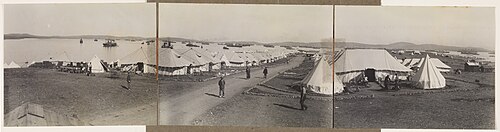
Third Australian General Tent Hospital, Lemnos, 1915
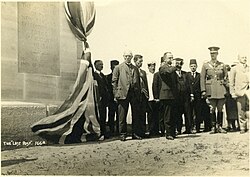
12 May 1925 – Unveiling of Chunuk Bair Memorial

Who won the Gallipoli campaign?

The campaign resulted in an Ottoman victory, as they successfully defended the peninsula and forced the Allied Powers to evacuate.

What was the purpose of the ANZAC forces?

The Australian and New Zealand Army Corps (ANZAC) were part of the Allied effort to seize the Dardanelles and capture Constantinople to support Russia and weaken the Ottoman Empire.

Why did the Allies fail at Gallipoli?

The failure is attributed to a combination of poor intelligence regarding the terrain, strong Ottoman defensive positions led by commanders like Mustafa Kemal, and the inability of the naval forces to clear the straits.

What is the significance of ANZAC Day?

ANZAC Day commemorates the soldiers who fought at Gallipoli and in other campaigns, serving as a cornerstone of national identity and remembrance for Australia and New Zealand.

How did the campaign end?

The campaign ended with a strategic evacuation of all Allied troops from the peninsula, completed by January 9, 1916.

References

  1. 198,340 British casualties (31,389 killed),[15][16] 47,798 French casualties (9,798 killed or missing),[15] 27,209 Australian casualties (8,709 killed), 7,521 New Zealand casualties (3,431 killed), 4,779 Indian casualties (1,358 killed) and 142 Newfoundland casualties (49 killed).
  2. Battleships: Royal Navy (British)HMS Ocean (1898) sunkHMS Irresistible (1898) sunkHMS Majestic (1895) sunkHMS Goliath (1898) sunkHMS Triumph (1903) sunkFrench NavyFrench battleship Bouvet sunkFrench battleship Masséna scuttledSubmarines: Royal Navy (British)HMS E20 sunkHMS E15 destroyed by shellingHMS E7 scuttledFrench NavyFrench sumbarine Joule sunkFrench submarine Saphire (1908) sunkFrench submarine Mariotte scuttledFrench submarine Turquoise (1908) capturedAustralian NavyHMAS AE2 scuttledDestroyer: Royal Navy (British)HMS Louis (1913) destroyed by shellingTroop transports: Royal Navy (British)HMT Royal Edward sunkSS Vaderland (1900) heavily damagedAircraft: Royal Naval Air Service (British)Two aircraft shot down over Helles by German fighters on 7 January 1916Armée de l'Air (French)One reconnaissance aircraft shot down over Kaba TepeArtillery pieces: 4 French artillery captured also 6 were destroyed to prevent capture, 15 British artillery were destroyed to prevent capture(2,535 Allied sailors and troops killed)
  3. Lower estimate of deaths are based on the Ottoman archives and the higher estimate of 87,000 on modern, western sources.
  4. (295 sailors killed).
  5. The operation would be complicated by having only five divisions, the rugged terrain of the peninsula, the small number of landing beaches and great difficulty in providing supplies.[54] Later on, the MEF was supported by about 2,000 civilian labourers from the Egyptian and Maltese Labour Corps.[5]