Furniture History: From Ancient Artifacts to Modern Design
Furniture encompasses the objects we use to support nearly every human activity, from seating and eating to working and sleeping. While we often view these items through the lens of utility—such as tables for horizontal work surfaces or cupboards for storage—furniture is also a profound form of decorative art. Beyond function, these pieces often carry symbolic or religious significance and reflect the cultural identity of the people who created them through their choice of materials and woodworking joints.
From the rudimentary use of tree stumps and rocks in early human settlements to the precision of contemporary ecodesign, the evolution of furniture mirrors the progression of human civilization itself.
Key Facts
- Earliest Evidence: Constructed furniture dates back approximately 30,000 years, evidenced by figurines depicting thrones.
- First Extant Pieces: The stone cupboards and beds of Skara Brae in Scotland are among the oldest surviving physical examples.
- Material Diversity: Historically crafted from wood, stone, and animal bone; modern pieces utilize metal, plastic, and sustainable composites.
- Cultural Influence: Styles have shifted from the heavy oak of the Middle Ages to the opulent gilding of the Baroque era and the minimalism of Modernism.
- Standardization: Modern furniture is governed by safety and durability standards, such as EN 1728:2014 for seating.
The Dawn of Furniture: Prehistory and Antiquity
For millennia, humans relied on natural objects like moss for bedding and rocks for tables. However, archaeological evidence suggests that by the late Paleolithic or early Neolithic period (around 30,000 years ago), humans began carving their own furniture. A Venus figurine found in Russia provides early visual evidence of a goddess seated on a throne, suggesting that constructed seating was already a recognized concept.
The settlement of Skara Brae in Scotland offers some of the first surviving physical examples of furniture, where dressers, cupboards, and beds were meticulously constructed from stone.
Ancient Egypt, Greece, and Rome
Complex joinery—the process of connecting pieces of wood—emerged during the early dynastic period of ancient Egypt. Egyptian furniture, such as stools and tables, often featured luxury materials like ivory and precious metals. The Throne of Tutankhamun is a prime example, utilizing gold, silver, and semi-precious stones.
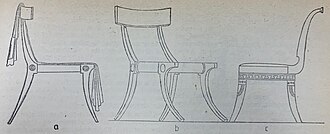
In ancient Greece and Rome, furniture design evolved to support social customs. The klismos (a graceful curved chair) and the klinai (multipurpose couches used for eating, relaxing, and sleeping) became staples of the household. Much of what we know about Roman furniture comes from the excavations of Pompeii and Herculaneum, where the eruption of Mount Vesuvius preserved pieces in ash.
The Evolution of European Styles: Middle Ages to the 18th Century
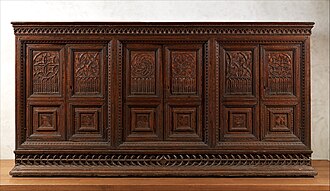
Furniture in the Middle Ages was characterized by its durability and weight, typically crafted from oak and heavily ornamented. As Europe moved into the Italian Renaissance of the 14th and 15th centuries, design expanded in complexity and artistic ambition.
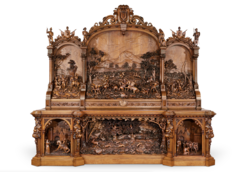
The 17th century ushered in the Baroque period, defined by opulence, heavy gilding, and the use of exotic materials like lapis lazuli and porphyry. This transitioned into the Rococo style by mid-century, which favored graceful curves, intricate marquetry (inlaid patterns), and shining ormolu (gilded bronze mounts).
By 1770, the severe, straight lines of Neoclassicism emerged, drawing direct inspiration from the architecture of ancient Greece and Rome. This era also saw the birth of the mass market for furniture, highlighted by Thomas Chippendale's 1754 trade catalogue, The Gentleman and Cabinet Maker's Director.
The 19th Century and the Path to Modernism
The 19th century was an era of Revivalism, where designers looked back to previous styles—such as Gothic or Egyptian—and reimagined them for a new age. The Empire style, associated with Napoleon, emphasized mahogany and gilded bronze to project power and prestige.
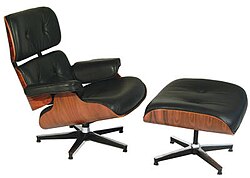
As the 20th century approached, Art Nouveau introduced organic, flowing lines inspired by nature, followed by the geometric rigor of Art Deco. The first three-quarters of the 1900s were marked by a steady march toward Modernism, prioritizing function over ornament. This eventually led to Mid-Century Modern designs, such as the iconic Eames Lounge chair, and later, Postmodernism, which reintroduced playful, non-traditional shapes through movements like the Memphis group.
Global Perspectives and Contemporary Design
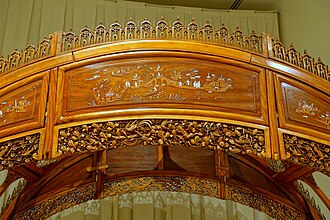
Furniture history is not limited to Europe. In East Asia, Chinese and Japanese traditions emphasized different materials and philosophies. Chinese furniture often utilized huanghuali (yellow flowering pear wood) and brass fittings, while Japanese design frequently employed exquisite lacquerware and silver fittings.
Today, the focus has shifted toward Ecodesign—the practice of creating furniture that minimizes environmental impact. This includes the use of FSC-certified woods and recycled metals to ensure sustainability.

Summary of Historical Furniture Styles
| Era/Style | Key Characteristics | Common Materials |
|---|---|---|
| Prehistoric | Rudimentary, carved natural forms | Stone, bone, wood |
| Ancient Egyptian | Early joinery, symbolic luxury | Ebony, ivory, gold |
| Middle Ages | Heavy, sturdy, ornamented | Oak |
| Baroque | Opulent, gilded, dramatic | Gilded wood, marble, lapis lazuli |
| Rococo | Curvilinear, intricate marquetry | Ormolu, exotic veneers |
| Empire/Revival | Neoclassical, historical references | Mahogany, bronze |
| Modernism | Functional, minimalist, industrial | Steel, plastic, molded plywood |
| Contemporary | Sustainable, eclectic, ecodesign | FSC wood, recycled metals |
Frequently Asked Questions
What is the oldest known furniture?
While humans used natural objects since the beginning of civilization, the first constructed furniture is evidenced by figurines from 30,000 years ago. The oldest surviving physical furniture consists of stone beds and cupboards found in the settlement of Skara Brae, Scotland.
What is the difference between Baroque and Rococo styles?
Baroque furniture is characterized by grandeur, opulence, and heavy gilding. Rococo is a later evolution that is more lighthearted, featuring asymmetrical curves, intricate marquetry, and a more delicate aesthetic.
What are the most common materials used in historical furniture?
Wood has been the primary material throughout history, with specific preferences changing by era (e.g., oak in the Middle Ages, mahogany in the Empire period). Other common materials include stone, ivory, gold, bronze, and more recently, plastics and stainless steel.
What is ecodesign in the context of furniture?
Ecodesign refers to the integration of environmental considerations into the product design process. In furniture, this often involves using sustainably sourced materials, such as FSC-certified Teca wood, and designing for longevity and recyclability.
How did the 19th century influence furniture design?
The 19th century was dominated by Revivalism, where designers recreated styles from the Gothic, Egyptian, and Rococo periods. It also saw the rise of the mass market through the publication of trade catalogues, making high-style design accessible to more people.