Fungivory: How Animals, Plants, and Microbes Consume Fungi
Fungivory, also known as mycophagy, is the biological process where organisms consume fungi to gain energy. This dietary habit spans an incredible range of life, from microscopic bacteria and amoebas to complex mammals and even plants. While some organisms are specialized fungivores (mycophages) that rely exclusively on fungi, many others are omnivores that incorporate fungi as a supplemental part of their diet.
Key Facts
- Fungivory occurs across almost all kingdoms of life, including animals, plants, bacteria, and other fungi.
- Some primates, such as the Yunnan snub-nosed monkey, spend up to 95% of their feeding time eating lichens.
- Certain plants, called myco-heterotrophs, have evolved to steal sugars from fungi rather than producing them via photosynthesis.
- Beetles, ants, and termites independently evolved complex fungal farming systems 40 to 60 million years ago.
- Bacterial mycophagy involves bacteria actively gaining nutrition from living fungal hyphae (the branching filaments of a fungus).
Animal Fungivores
Mammals
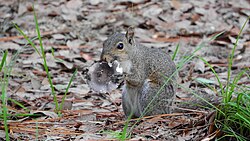
Most mammals are opportunistic feeders. At least 22 primate species, including humans, gorillas, and lemurs, consume fungi. For most, this makes up less than 5% of their diet. However, some show higher dependency: buffy-tufted marmosets spend up to 12% of their feeding time on sporocarps (fruiting bodies), and Goeldi’s monkeys spend up to 63%. The Yunnan snub-nosed monkey is the most extreme, spending up to 95% of its feeding time on lichens.
Insects and Mollusks
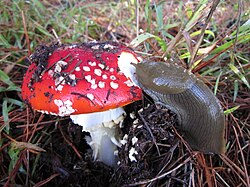
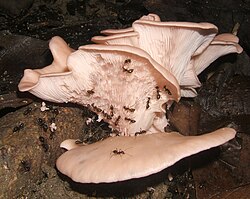
Insects exhibit diverse mycophagous strategies. The ant Euprenolepis procera from Southeast Asia is unique for harvesting mushrooms as its primary food source. Various beetle families, such as Erotylidae and Endomychidae, are fungi specialists. For insects that eat dead wood, consuming fungi is essential to obtain nutrients missing from the wood itself.
Birds
The southern cassowary of Australia relies heavily on fungi, with bracket fungi frequently found in its droppings. Other birds, such as emus and brush turkeys, have been observed eating fungi like Lycoperdon, Bovista, and Mycena, suggesting opportunistic feeding habits among the Megapodiidae family.
Microbial and Fungal Interactions
Mycoparasitism and Bacteria
Mycoparasitism occurs when one fungus feeds on another. For example, Collybia species grow on dead mushrooms. In the bacterial world, bacterial mycophagy describes bacteria that actively extract nutrition from living fungal hyphae, rather than simply feeding on dead material or secretions.
Ciliates
The ciliate Grossglockneria acuta feeds exclusively on fungi. It uses a feeding tube to penetrate the fungal cell wall, creating a small hole (approximately 2 μm in diameter) to ingest the fungus's cytoplasm via endocytosis. This process likely involves enzymes such as chitinases and cellulases to break down the cell wall.
Plants and Myco-heterotrophy
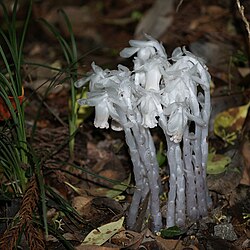
While 90% of land plants have a symbiotic relationship with mycorrhizal fungi (exchanging sugars for soil nutrients), some have evolved to manipulate this bond. Myco-heterotrophs gain sugars from fungi without providing any in return.
- Mixotrophs: Plants that both photosynthesize and gain sugars from fungi, allowing them to survive in deep forest shade (e.g., certain Epipactis orchids).
- Full Myco-heterotrophs: Plants that have lost the ability to photosynthesize and are totally dependent on fungi (e.g., Monotropastrum humile).
The Evolution of Fungal Farming
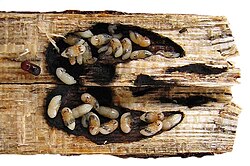
Between 40 and 60 million years ago, beetles, ants, and termites independently developed agricultural systems. These insects inoculate substrates with fungi, regulate the environment to protect the crop from pests, and harvest the mature fungus for food.
Specialized Farmers
- Ambrosia Beetles: Farm ambrosia fungi inside trees using specialized organs called mycangia to carry spores.
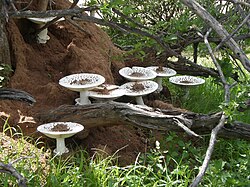
- Termites: Macrotermitinae termites cultivate Termitomyces in fungus cones within their nests, feeding on the protein-rich immature mushrooms.
- Attini Ants: New World ants that raise their larvae exclusively on farmed fungi from the Lepiotaceae and Pterulaceae families.
Gastropod Farming
The marine snail Littoraria irrorata practices a form of farming by wounding salt marsh grass to encourage the growth of Phaeosphaeria and Mycosphaerella fungi, which it then consumes. Nitrogen-rich faeces further stimulate fungal growth.
Summary of Fungivory Types
| Organism Group | Strategy | Example | Dependency |
|---|---|---|---|
| Primates | Opportunistic | Yunnan snub-nosed monkey | Low to High (up to 95%) |
| Insects | Farming | Attini Ants | Obligate (for larvae) |
| Plants | Myco-heterotrophy | Monotropastrum humile | Total (Non-photosynthetic) |
| Ciliates | Predatory | Grossglockneria acuta | Exclusive |
| Gastropods | Induced Growth | Littoraria irrorata | High (Critical for growth) |
Frequently Asked Questions
What is the difference between a fungivore and an omnivore?
A fungivore (or mycophage) is an organism that feeds exclusively on fungi, whereas an omnivore consumes fungi as only one part of a more diverse diet.
How do myco-heterotrophic plants survive without photosynthesis?
These plants manipulate symbiotic mycorrhizal fungi to obtain sugars. Because the fungi get those sugars from other photosynthetic plants, myco-heterotrophs are considered indirect parasites of those plants.
How do fungus-farming insects maintain their crops?
They inoculate a substrate with spores, regulate the growing environment to optimize growth, protect the fungi from diseases and pests, and harvest the fungus once it reaches maturity.
What is bacterial mycophagy?
It is the ability of certain bacteria to actively gain nutrition by growing at the expense of living fungal hyphae, as opposed to simply feeding on dead fungal remains.
Do all birds eat fungi?
No, but several species do. The southern cassowary relies on them significantly, while others, like emus and brush turkeys, appear to eat them opportunistically.