Fritz Haber: The Chemist Who Fed the World and Fueled Warfare
Fritz Haber was a towering figure in the field of physical chemistry whose work fundamentally altered the course of human history. Known for a legacy of stark contradictions, Haber developed the technology that allowed for the mass production of food, while simultaneously pioneering the use of chemical weapons in war. His scientific brilliance earned him the Nobel Prize in Chemistry, yet his life ended in exile, marked by the tragedy of a man caught between his national identity and his heritage.
Key Facts
- Major Achievement: Invented the Haber process for synthesizing ammonia from nitrogen and hydrogen gas.
- Global Impact: His work supports nearly half of the world's population through synthetic fertilizers.
- Nobel Prize: Awarded the Nobel Prize in Chemistry in 1918.
- Controversy: A primary architect of chemical warfare during World War I.
- Academic Legacy: Proposed the Born–Haber cycle for evaluating ionic solid lattice energy.
Early Life and Academic Foundation
Born on December 9, 1868, in Breslau, Prussia, Fritz Haber displayed an early aptitude for science. Despite his father's wish for him to enter the dye industry as an apprentice, Haber pursued a formal education in chemistry. He studied at the Friedrich Wilhelm University in Berlin under A. W. Hofmann and spent a summer semester at Heidelberg University under the tutelage of Robert Bunsen.
Haber's academic journey continued at the Technische Hochschule in Charlottenburg (now Technische Universität Berlin), where he eventually earned his PhD. His early career was marked by a drive for academic advancement, leading him to work as an assistant to Ludwig Knorr at the University of Jena and later to Hans Bunte at the University of Karlsruhe.
The Haber Process and Global Food Security
Haber's most significant contribution to science was the development of the Haber process. This method allows for the industrial synthesis of ammonia by combining nitrogen gas from the air with hydrogen gas. This breakthrough was critical because it enabled the large-scale production of synthetic fertilizers and explosives.
The impact of this discovery cannot be overstated. It is estimated that one-third of annual global food production relies on ammonia derived from the Haber–Bosch process, providing the nutritional foundation for nearly half of the current human population. For this achievement, Haber was recognized as one of the most influential industrial chemists in history.
Scientific Contributions Beyond Ammonia
While the Haber process is his most famous work, Haber's research spanned several domains of physical chemistry. He conducted extensive research on combustion reactions, electrochemistry, free radical research, and the separation of gold from seawater. He also collaborated with Max Born to propose the Born–Haber cycle, a thermodynamic method used to determine the lattice energy of ionic solids.
From 1911 to 1933, Haber led much of his research at the Kaiser Wilhelm Institute for Physical Chemistry and Electrochemistry in Berlin-Dahlem, an institution that was later renamed in his honor in 1953.
The Duality of War and Science
Haber's legacy is deeply complicated by his role in World War I. He applied his chemical expertise to develop chemical warfare, leading to the deployment of poisonous gases on the battlefield. This work earned him the Iron Cross in 1915, but it also cast a permanent shadow over his scientific achievements.
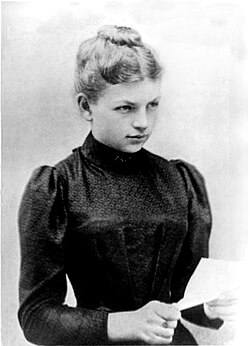
This period of his life created immense tension within his personal life. His first wife, Clara Immerwahr, was herself a pioneering chemist and the first woman to earn a PhD in chemistry from the University of Breslau.
Final Years and Exile
The rise of the Nazi party in 1933 forced Haber to resign from his positions. Despite his contributions to Germany, his Jewish heritage made him a target of the regime. In poor health, he traveled through several countries before accepting an invitation from Chaim Weizmann to direct the Sieff Research Institute (now the Weizmann Institute) in Mandatory Palestine.
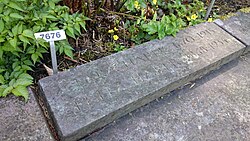
Haber never reached his destination. He died of heart failure on January 29, 1934, at a hotel in Basel, Switzerland, at the age of 65. He was later buried in Basel's Hörnli Cemetery, where his wife Clara's remains were eventually re-interred beside him.
Summary of Fritz Haber's Life and Work
| Category | Details |
|---|---|
| Lifespan | 1868–1934 |
| Primary Field | Physical Chemistry |
| Key Invention | Haber Process (Ammonia Synthesis) |
| Major Award | Nobel Prize in Chemistry (1918) |
| Key Theories | Born–Haber cycle, Haber's rule, Haber–Weiss reaction |
| Notable Institutions | University of Berlin, ETH Zürich, Kaiser Wilhelm Institute |
Frequently Asked Questions
What is the Haber process?
The Haber process is an industrial method used to synthesize ammonia from nitrogen gas and hydrogen gas. It is the foundation for the production of synthetic fertilizers, which are essential for global food security.
Why is Fritz Haber a controversial figure?
Haber is controversial because he is viewed as both a savior and a destroyer. While his work on fertilizers saved billions from starvation, he also pioneered the use of chemical weapons during World War I.
What is the Born–Haber cycle?
The Born–Haber cycle is a thermodynamic cycle proposed by Fritz Haber and Max Born. It is used to calculate the lattice energy of an ionic solid by combining various energy changes, such as ionization energy and electron affinity.
How did Fritz Haber die?
Fritz Haber died of heart failure on January 29, 1934, while staying at a hotel in Basel, Switzerland, during his journey to take over the directorship of the Sieff Research Institute in Mandatory Palestine.
Who was Clara Immerwahr?
Clara Immerwahr was Haber's first wife and a distinguished chemist in her own right. She was the first woman to earn a PhD in chemistry from the University of Breslau.