Frigates of the Age of Sail: Evolution, Design, and Naval Role
The frigate was the versatile workhorse of the Age of Sail, bridging the gap between small, agile sloops and the massive, lumbering ships-of-the-line. Known for their speed, endurance, and independent operation, these vessels defined naval warfare from the late 16th century through the mid-19th century. From their humble origins as light Mediterranean galleys to the super-heavy behemoths of the Napoleonic era, the frigate evolved to meet the shifting demands of global empire and maritime conflict.
Origins and Early Development
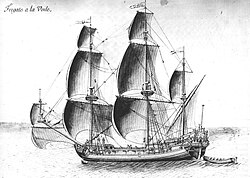
The term frigate first appeared in the Mediterranean in the late 16th century. Initially, it described a light, galley-type warship equipped with both oars and sails, designed for high maneuverability. Early records from 1562 credit Alonso Pérez, Duke of Medina Sidonia, with the invention of fragatas, though other sources attribute the design to Álvaro de Bazán, Marquis of Santa Cruz. These early versions were largely impractical and soon retired.
A more successful iteration emerged during the Eighty Years' War (1568–1648). Privateers known as "Dunkirkers," operating from occupied ports in the southern Netherlands, developed small, fast sailing vessels to attack Dutch shipping. Their success forced other navies to adapt. The Dutch Republic eventually became the first to build larger, ocean-going frigates around 1600 in Hoorn, Holland. These ships were designed to protect merchant trade, blockade ports, and fight Spanish fleets, typically weighing around 300 tons and carrying approximately 40 guns.
The English Adaptation
By the 1650s, the Commonwealth of England adopted the frigate design, including "great frigates" of the third rate that carried up to 60 guns. During this era, the term was used loosely to describe any long-hulled ship designed for speed. This hull design was critical for the development of broadside tactics—the practice of firing all guns on one side of a ship simultaneously.
In the late 17th century, some designs reintroduced oars, creating "galley frigates" like the HMS Charles Galley (1676), which could move even when the wind failed. By the mid-18th century, the Royal Navy standardized the term, restricting "frigate" primarily to single-decked ships of the fifth rate.
The Classic "True Frigate" Design
The iconic sailing frigate associated with the Napoleonic Wars emerged from French innovation in the early 18th century, with the Médée (1740) serving as a primary example. The "true frigate" featured a square rig and carried all its main armament on a single continuous upper deck.
Crucially, the lower deck (the gun deck) was moved below the waterline and used as a berth deck for the crew. This design lowered the hull's upperworks, significantly improving sailing qualities. Because the guns were positioned higher above the waterline, frigates could continue firing their full battery in rough seas that would force larger two-decker ships to close their lower gunports.
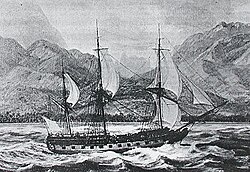
The British Royal Navy, impressed by the handling of captured French vessels, began building their own versions in 1747. These evolved from 28-gun ships to fifth-rate vessels carrying 32 or 36 guns. While "post ships" (those with fewer than 28 guns) were often called frigates in casual conversation, they were technically a separate class.
The Rise of Heavy and Super-Heavy Frigates
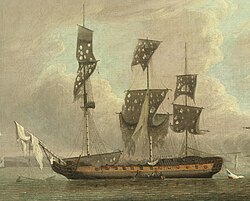
As naval conflicts intensified, the need for greater firepower led to the heavy frigate. In 1778, the British Admiralty introduced ships armed with 18-pounder long guns to counter French and Spanish threats. The French responded in 1781 with their own 18-pounder frigates, which became the standard for the Napoleonic Wars.
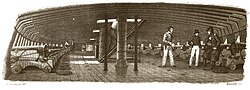
Firepower was further revolutionized by the carronade, a short-barrelled, large-calibre cannon produced by the Carron Iron Company of Scotland. Though it had a shorter range and less accuracy than long guns, the carronade was light and quick to reload, allowing frigates to mount them on the forecastle and quarterdeck to increase the total "weight of metal" fired in a broadside.
Super-Heavy Variants and the American 44s
The 1780s saw the birth of "super-heavy" frigates. Sweden's Bellona class used 24-pounder guns to allow them to stand in a battle line if necessary. The French created rasées—older ships-of-the-line that had their upper decks removed to create a single, powerful gun deck. The British responded by creating their own rasées, such as the Indefatigable.
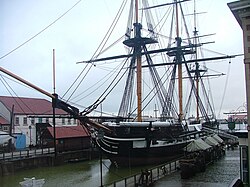
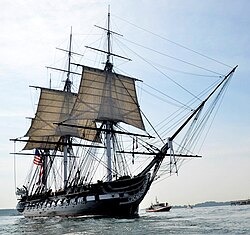
The United States Navy took this concept further with the Naval Act of 1794. These 44-gun frigates, including the USS Constitution, were massive (around 1,500 tons) and built from durable American live oak. They carried 24-pounder long guns and heavy carronades, making them so powerful that the British Admiralty eventually ordered its frigates not to engage them without at least a 2:1 numerical advantage.
Strategic Role and Naval Utility
Frigates were the most active warships of the era. Because they could carry six months of supplies and operate independently, they were used for tasks that were too risky or too menial for the valuable ships-of-the-line. Their primary roles included:
- Scouting: Acting as the "eyes of the fleet" to locate enemy movements.
- Commerce Raiding: Attacking enemy merchant shipping and privateering.
- Communication: Conveying dignitaries and urgent messages.
- Repeating Frigates: Stationed outside the main line of battle, they repeated signals from the flagship to the rest of the fleet, ensuring orders were seen through the smoke of combat.
For naval officers, a frigate posting was highly coveted due to the increased opportunities for glory, promotion, and prize money earned from captured enemy ships. Unlike larger ships, which were often laid up in "ordinary" (reserve) during peacetime, frigates remained active to maintain crew experience.
Summary of Frigate Evolution
| Type | Key Characteristic | Typical Armament | Primary Role |
|---|---|---|---|
| Early Frigate | Oars and sails; light hull | Light armament | Coastal raiding/Maneuverability |
| True Frigate | Single continuous gun deck | 9 to 12-pounder guns | Cruising and scouting |
| Heavy Frigate | Increased hull size | 18-pounder long guns | Force projection/Combat |
| Super-Heavy | Massive hulls (e.g., US 44s) | 24-pounder long guns | Battle line support/Heavy raiding |
Key Facts
- Origin: Emerged in the late 16th century as light Mediterranean vessels.
- Design Shift: The "true frigate" moved the crew's berth deck below the waterline to improve sailing.
- Firepower: The carronade increased short-range firepower without adding excessive weight.
- US Innovation: The USS Constitution used American live oak to create a super-heavy frigate.
- Tactical Use: "Repeating frigates" were essential for communicating signals during fleet battles.
- Legacy: The role of the frigate was eventually succeeded by the protected cruiser and light cruiser.
Frequently Asked Questions
What is the difference between a frigate and a ship-of-the-line?
Ships-of-the-line were much larger, multi-decked vessels designed to fight in a formal line of battle. Frigates were smaller, typically single-decked, and designed for speed, independent cruising, and scouting rather than fleet engagements.
What was a "rasée"?
A rasée was a ship-of-the-line that had its upper decks removed (cut down) to transform it into a heavy frigate, improving its stability and sailing qualities while retaining significant firepower.
Why were American frigates so feared by the British?
American frigates like the USS Constitution were significantly larger (around 1,500 tons) and more heavily armed with 24-pounder guns than standard British frigates, often making them nearly as powerful as smaller ships-of-the-line.
What was the purpose of a "repeating frigate"?
Because smoke and chaos often obscured the flagship during battle, repeating frigates stayed on the periphery of the fleet to observe the commander's signals and repeat them clearly to the other ships.
How did the carronade change frigate combat?
The carronade provided a massive increase in short-range firepower (weight of metal) because it was light enough to be mounted on the upper decks (forecastle and quarterdeck) without compromising the ship's stability.