French Overseas Departments and Regions
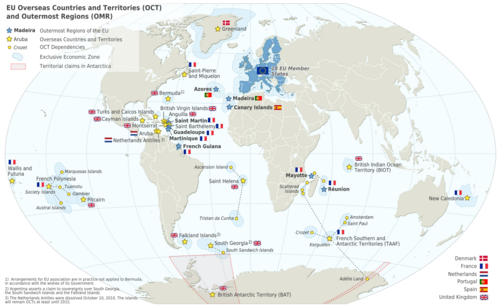
The French Republic extends far beyond the borders of Europe. While most people associate France with its mainland territory, known as Metropolitan France, the nation also includes five overseas departments and regions (départements et régions d'outre-mer, or DROM). These territories are not colonies or semi-autonomous dependencies; they are integral parts of the French Republic with the same legal status as departments located within Europe.
Under the French Constitution, laws and regulations—including the civil code, penal code, administrative, social, and tax laws—apply to these regions just as they do in the mainland. However, the government allows for these laws to be adapted to meet the specific local needs of each territory. Because they are fully integrated, local administrations cannot pass their own independent laws, though referendums are occasionally held to gauge local sentiment regarding their status.
Key Facts
- Equal Status: DROMs have the same legal and administrative status as departments in Metropolitan France.
- EU Integration: As part of France, these territories are part of the European Union and use the euro.
- Political Representation: Residents vote for members of the National Assembly, the Senate, and the European Parliament.
- Five Territories: The DROMs include French Guiana, Guadeloupe, Martinique, Mayotte, and Réunion.
- Governance: Some territories use a single government for both regional and departmental duties, while others maintain separate councils.
The Five Overseas Departments and Regions
Since March 2011, France has maintained five official overseas departments and regions, distributed across the globe:
- French Guiana: Located in South America as part of The Guianas.
- Guadeloupe: Located in the Caribbean Sea within the Leeward Islands of the Lesser Antilles.
- Martinique: Located in the Caribbean Sea within the Windward Islands of the Lesser Antilles.
- Mayotte: Located in the Mozambique Channel as part of the Comoro Islands.
- Réunion: Located in the Indian Ocean as part of the Mascarene Islands.
Administrative Structures
While all five share the same status, their internal governance varies. French Guiana, Martinique, and Mayotte are single territorial collectivities, meaning one government handles both regional and departmental responsibilities. In contrast, Guadeloupe and Réunion maintain separate regional and departmental governments for the same territory.
Historical Evolution
France's history with overseas departments began with short-lived attempts in 1797 following Napoleon's conquest of the Republic of Venice, where the Ionian Islands were briefly organized as departments. However, these were not revived after Russian forces evicted the French in 1798.
The modern framework was established under the 1946 constitution of the Fourth Republic. At that time, Guadeloupe, Martinique, French Guiana, and Réunion were defined as overseas departments, joining Algeria (which had been departmentalized in 1848).
A significant shift occurred in 1982 through a policy of decentralization, which granted overseas departments elected regional councils. A 2003 constitutional revision formally introduced the term "overseas regions," though the term "overseas department" (DOM) remains the most common phrasing in the media.
Not all territories followed this path. For example, Saint Pierre and Miquelon served as an overseas department from 1976 to 1985 but was transitioned to an overseas collectivity due to its small population (approximately 6,000 people). More recently, Mayotte transitioned to a department on March 31, 2011, after 95% of voters supported the move in a 2009 referendum.
Geography and Demographics
Because these territories are integral parts of the European Union, they maintain strong political ties to Europe. However, their geographic isolation often leads them to participate in regional economic organizations. For instance, Martinique and Guadeloupe are members of the Organisation of Eastern Caribbean States (OECS) and the Association of Caribbean States (ACS).
The population of these regions has grown steadily over the last several decades, as shown in the table below.
| Year | Population | Growth (%) |
|---|---|---|
| 1950 | 720,000 | — |
| 1960 | 949,000 | +31.8% |
| 1970 | 1,194,000 | +25.8% |
| 1980 | 1,286,000 | +7.7% |
| 1990 | 1,566,000 | +21.8% |
| 2000 | 1,865,000 | +19.1% |
| 2010 | 2,148,000 | +15.2% |
| 2020 | 2,165,749 | +0.8% |
Frequently Asked Questions
What is the difference between an overseas department and an overseas collectivity?
Overseas departments (DROM) are integral parts of France and the EU with the same status as mainland departments. Overseas collectivities have a semi-autonomous status and more local autonomy.
Do people in the DROMs vote in French national elections?
Yes. Residents of the overseas departments and regions are represented in the National Assembly, the Senate, and the Economic and Social Council, and they elect members of the European Parliament.
What currency is used in the French overseas departments?
Because they are integral parts of France and the European Union, all overseas departments and regions use the euro.
Why are some DROMs called "regions" and others "departments"?
Since 2003, they are officially both. Each department is the sole department within its own overseas region. In some cases, the two levels of government are consolidated into one body, while in others, they remain separate.
How did Mayotte become an overseas department?
Mayotte became an overseas department on March 31, 2011, following a referendum on March 29, 2009, in which 95% of the population voted in favor of the change.