Cayenne: The Vibrant Capital of French Guiana
Cayenne serves as the capital city, prefecture, and primary commune of French Guiana. Situated on the Atlantic coast, this unique city blends French administration with a rich Caribbean and South American cultural tapestry. From its colonial fortifications to its lush botanical gardens, Cayenne is a hub of political and social life in the overseas department.
The city is located on the estuary of the Cayenne River, occupying a portion of Cayenne Island. It maintains strategic proximity to other key locations, sitting 64 kilometers from Kourou and 268 kilometers from Saint-Laurent-du-Maroni.
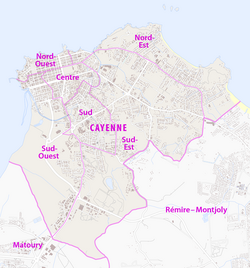
Key Facts
- Population: 62,675 in the commune; 153,884 in the metropolitan area (2023).
- Administration: Governed by a mayor and municipal council; currently led by Mayor Sandra Trochimara.
- Geography: Located on the Atlantic Ocean at 4°56′14″N 52°19′34″W.
- Climate: Tropical, characterized by high annual rainfall (averaging over 3,000 mm).
- Key Landmarks: Saint-Sauveur Cathedral, Fort Cépérou, and Place des Palmistes.
History and Evolution
The history of Cayenne is marked by repeated attempts at colonization. While Spanish explorers initially found the region too hot for settlement, the French established their first settlement in 1604. This early attempt was destroyed by the Portuguese to enforce the Treaty of Tordesillas. After another failed attempt in 1643 due to conflict with Indigenous Amerindian populations, France finally established a permanent settlement in 1664.
Throughout the 17th and 18th centuries, the colony frequently changed hands between the French, Dutch, and English. Cayenne became a municipality in 1790. In 1809, it was captured by an Anglo-Portuguese force and administered from Brazil until 1817. Notably, from 1854 to 1938, the area served as a French penal colony.
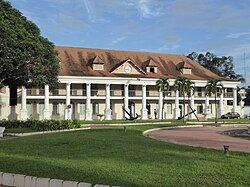
Administration and Demographics
Cayenne is a commune of the French Republic. Because the commune's boundaries do not cover the entire urban area, the communauté d'agglomération du Centre Littoral was created to group Cayenne with five suburban communes. Since November 2020, this intercommunal authority has been presided over by Serge Smock.
The population of the metropolitan area has grown steadily, reaching 153,884 by 2023. The demographic makeup is diverse; as of 2012, 56.5% of residents were born in French Guiana, while 12% were born in Metropolitan France. Significant immigrant populations include individuals born in Haiti, Brazil, Suriname, and Guyana.
Climate and Environment
Cayenne experiences a tropical climate with significant precipitation. Annual rainfall is substantially higher than the French national average, often exceeding 3,400 mm. The city sees high sunshine hours, averaging around 2,000 hours per year, with temperatures remaining warm year-round.
| City | Sunshine (hrs/yr) | Rain (mm/yr) | Snow (days/yr) | Storm (days/yr) |
|---|---|---|---|---|
| Cayenne | 2,072 | 3,515.6 | 0 | 39.7 |
| Paris | 1,661 | 637 | 12 | 18 |
| Nice | 2,724 | 767 | 1 | 29 |
| Strasbourg | 1,693 | 665 | 29 | 56 |
Cultural Heritage and Landmarks
Saint-Sauveur Cathedral
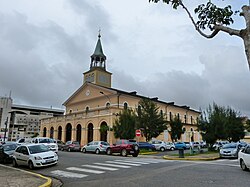
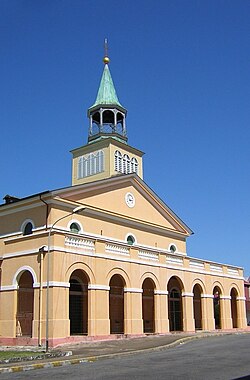
The Cathédrale Saint-Sauveur is the seat of the Roman Catholic Diocese of Cayenne. Construction began in 1825 to replace the old church of Saint Nicolas and was completed in 1833. It was officially inaugurated in 1861 and later declared a cathedral in 1933. The building is registered as a French monument historique.
Fort Cépérou
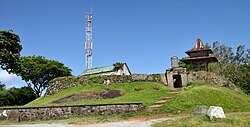
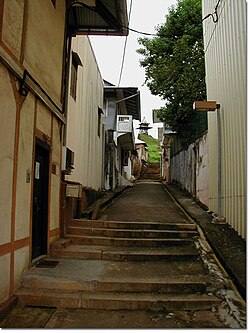
Originally known as Fort Saint-Michel, Fort Cépérou is a 17th-century fortification located on Mount Cépérou. The site is named after the Amerindian chief who sold the rock to Charles Poncet de Brétigny in 1643.
Place des Palmistes and Botanical Garden
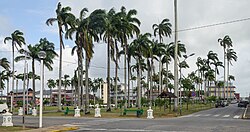
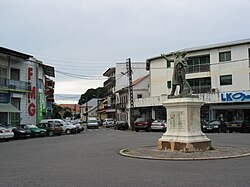
Place des Palmistes was created after the city walls were demolished in 1810. Originally called Place de la Savane, it was renamed after the royal palms planted there. Today, it is a social hub featuring the Merlet fountain and a statue of Félix Éboué, where residents enjoy local street foods like bami and lassi.
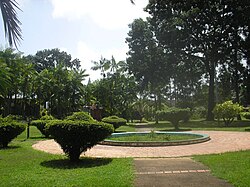
Nearby, the Botanical Garden covers three hectares. Established in 1786 by Louis XVI as the "King's Garden," it served as a nursery for exotic plants including nutmeg, rattan, and black pepper. A statue of Gaston Monnerville stands at its center.
The Market and Place du Coq
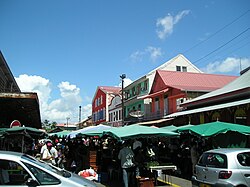
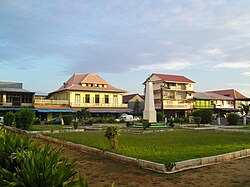
The covered market, established in its current form in 1907, is a central point of commerce. The adjacent Place du Coq is named for the rooster that surmounts the First World War memorial inaugurated there in 1920.
City Life and Culture
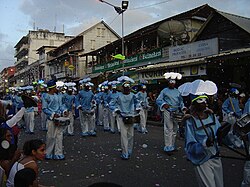
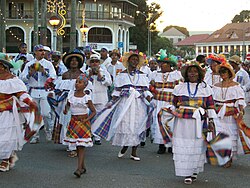
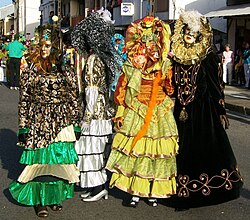
Cayenne is renowned for its vibrant Carnival, a major cultural institution. The celebrations include street parades featuring groups such as Kassialata and Reno Band, as well as masked balls and family-oriented events.
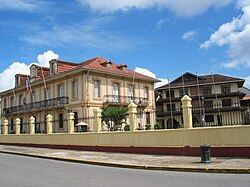
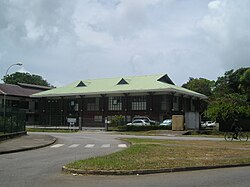
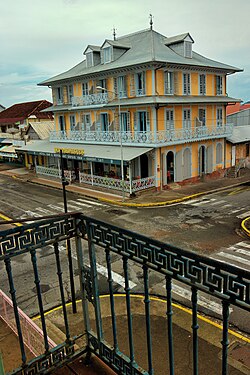
The city's architecture is a mix of administrative buildings and historic Creole houses, some of which have been restored for commercial use.
Frequently Asked Questions
What is the population of Cayenne?
As of 2023, the commune of Cayenne has 62,675 inhabitants, while the wider metropolitan area has a population of 153,884.
Who is the current mayor of Cayenne?
The current mayor is Sandra Trochimara, who took office in October 2020.
What is the significance of Fort Cépérou?
Fort Cépérou is a 17th-century fortification built on a rock purchased from an Amerindian chief, serving as a key historical military site for the city.
What is the weather like in Cayenne?
Cayenne has a tropical climate with high humidity and significant rainfall, averaging over 3,000 mm annually, and no snowfall.
What are some traditional foods found at Place des Palmistes?
Visitors can find French fries, sandwiches, and local juices, as well as Javanese delicacies like bami and lassi, which were introduced via Suriname.