Frances Perkins: The Architect of the American Social Safety Net
Frances Perkins was a trailblazing figure in American governance, best known as the first woman to serve as a member of the presidential cabinet. Beyond breaking the glass ceiling of executive power, Perkins was the driving force behind the social safety net—the collection of government programs designed to protect citizens from economic hardship.
Her career was defined by a commitment to the working class and a relentless pursuit of systemic reform. From establishing basic labor protections to facilitating the rescue of refugees, Perkins's influence continues to shape the economic and social landscape of the United States today.
Key Facts
- First Woman Cabinet Member: Broke historical barriers by joining the presidential cabinet.
- Policy Architect: Instrumental in creating Social Security, unemployment insurance, the federal minimum wage, and child labor regulations.
- Humanitarian Efforts: Facilitated the immigration of thousands of Jews escaping Nazi persecution in the 1930s.
- National Recognition: Inducted into the National Women's Hall of Fame (1982) and the Government Hall of Fame (2019).
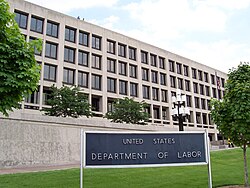
- Lasting Memorials: The U.S. Department of Labor headquarters is named the Frances Perkins Building.
Policy Accomplishments and Humanitarian Work
Perkins's legacy is rooted in her sweeping legislative achievements. She championed the creation of Social Security and unemployment insurance, providing a critical cushion for elderly and unemployed Americans. She also fought for the implementation of a federal minimum wage and the passage of laws to regulate and restrict child labor.
Her advocacy extended beyond domestic labor issues to international human rights. During the 1930s, Perkins worked to facilitate the immigration of thousands of Jews fleeing Nazi persecution in Germany and other European nations. This included the rescue of hundreds of Jewish children through collaboration with the German Jewish Children's Aid, a feat achieved despite a restrictive immigration system and prevailing American antisemitism.
Leadership and Character
Navigating a male-dominated political environment required Perkins to maintain a high standard of professionalism and political skill. While she was often perceived as aloof or cool in personality, she possessed a fierce determination when defending workers' rights.
This intensity was famously displayed during a United Auto Workers strike, when Perkins phoned Alfred P. Sloan, the chairman of General Motors, in the middle of the night. She called him a "scoundrel" and a "skunk" for refusing to meet union demands, telling him he did not deserve to be counted among decent men. While her conservative upbringing often kept her from showing personal affection, her actions demonstrated a profound devotion to lower-class groups and the labor force.
Memorials, Monuments, and Honors
The United States has honored Perkins through various landmarks and official designations. In 1980, President Jimmy Carter renamed the U.S. Department of Labor headquarters the Frances Perkins Building.
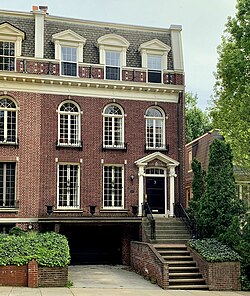
Several of her residences are recognized for their historical significance. Her home in Washington, D.C. (occupied from 1937 to 1940) and her family home in Maine are both designated National Historic Landmarks.
The Frances Perkins Homestead in Newcastle, Maine, serves as the site for the Frances Perkins Center, a nonprofit organization. In December 2024, President Joe Biden officially designated this site as a National Monument. Other tributes include a historical marker in Homestead, Pennsylvania, and a plaque in Greenwich Village, New York.

The Maine Department of Labor Mural Controversy
Perkins's legacy has occasionally faced political friction. In 2011, Maine Governor Paul LePage ordered the removal of a mural depicting Perkins from the Maine Department of Labor headquarters, citing complaints that the artwork was reminiscent of North Korean propaganda. He also renamed several conference rooms, including one named after Perkins. Following a lawsuit to preserve the art, the mural was moved to the Maine State Museum in 2013.
Academic and Cultural Influence
Perkins's impact extends into education and the arts. Mount Holyoke College maintains the Frances Perkins Program, which enables "women of non-traditional age" (those 24 or older) to earn a bachelor of arts degree, supporting approximately 140 scholars annually.
In popular culture, she appears as a character in the musical Annie and is the namesake for the lead character in the film Dirty Dancing. Her life has also been chronicled in David Brooks's book The Road to Character and the 2024 historical novel Becoming Madam Secretary by Stephanie Dray. Additionally, the Episcopal Church added her to its liturgical calendar in 2022, with a feast day on May 13.
| Category | Key Contributions / Honors |
|---|---|
| Major Policies | Social Security, Minimum Wage, Unemployment Insurance, Child Labor Laws |
| Firsts | First female member of the U.S. Presidential Cabinet |
| Humanitarianism | Facilitated immigration for Jews escaping Nazi persecution |
| Key Landmarks | Frances Perkins Building (DC), Perkins Homestead (Maine National Monument) |
| Academic Legacy | Frances Perkins Program at Mount Holyoke College |
Frequently Asked Questions
What were the most significant policies championed by Frances Perkins?
Frances Perkins was instrumental in the creation of the U.S. social safety net, specifically the establishment of Social Security, unemployment insurance, the federal minimum wage, and laws regulating child labor.
How did Frances Perkins help refugees during the 1930s?
She used her position as cabinet secretary to facilitate the immigration of thousands of Jews fleeing Nazi persecution in Europe, including hundreds of children through the German Jewish Children's Aid.
What is the Frances Perkins Program at Mount Holyoke College?
It is an academic program that allows women of non-traditional age (24 years or older) to complete their bachelor of arts degree, typically supporting around 140 scholars per year.
Which buildings are named after Frances Perkins?
The headquarters of the United States Department of Labor in Washington, D.C., is named the Frances Perkins Building.
What is the significance of the Frances Perkins Homestead in Maine?
The homestead is a National Historic Landmark and was designated as a National Monument by President Joe Biden in December 2024. It also houses the Frances Perkins Center, a nonprofit organization.