Federal Writers' Project: Documenting the American Spirit During the Great Depression
Launched in 1935, the Federal Writers' Project (FWP) was a bold initiative designed to tackle two crises at once: the devastating unemployment of the Great Depression and the lack of a comprehensive, inclusive record of American life. As part of the Works Progress Administration (WPA)—a cornerstone of President Franklin D. Roosevelt's New Deal—the FWP provided a lifeline to thousands of out-of-work writers, historians, and researchers.
The project was more than a relief program; it was an ambitious attempt to create a "self-portrait of America." By documenting the geography, culture, and personal histories of the United States across various jurisdictions, the FWP captured the essence of a nation in transition.
Key Facts
- Established: July 27, 1935, under the Emergency Relief Appropriation Act.
- Parent Agency: Works Progress Administration (WPA), as part of "Federal Project Number One."
- Employment: Approximately 10,000 people, including writers, librarians, editors, and researchers.
- Budget: Roughly $27 million (0.002% of all WPA appropriations).
- Major Output: The American Guide Series, the Slave Narrative Collection, and various life histories.
- Dissolution: Ended in 1943 as funds were diverted to World War II.
The History and Leadership of the FWP
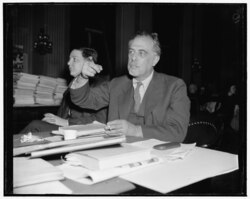
The FWP was directed from 1935 to 1939 by Henry Alsberg, a multi-talented lawyer, journalist, and human-rights activist. Under his leadership, the project expanded beyond simple guidebooks to include deep ethnographies and oral histories. However, the project's inclusive nature eventually made it a target for political opposition.
In 1939, federal funding was slashed, and Alsberg was eventually fired. The project transitioned to state sponsorship under John D. Newsom before finally dissolving in 1943 when the United States entered World War II.
The American Guide Series and Major Publications
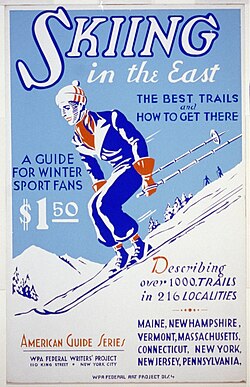
The most enduring legacy of the FWP is the American Guide Series. This collection featured detailed guides for the 48 states of the time, the Alaska Territory, Puerto Rico, and Washington, D.C. These volumes were uniform in format, offering histories, maps, travel routes, and descriptions of every town and city.
What set these guides apart was their unprecedented inclusion of essays on diverse cultures, including the experiences of immigrants and African Americans. Beyond the state guides, the FWP produced the Life In America series and bestsellers like New England Hurricane: A Factual, Pictorial Record.
The Slave Narrative Collection and Oral Histories
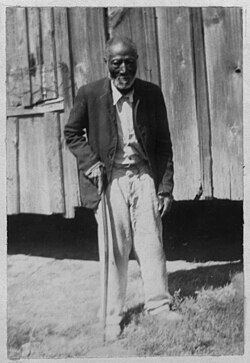
One of the most scientifically and historically significant achievements was the Slave Narrative Collection. This project gathered over 2,300 first-person accounts of slavery, accompanied by 500 photographs. These records, preserved largely through the efforts of folklorist Benjamin A. Botkin, continue to be a vital resource for historians and authors today.
Cultural and Regional Studies
The FWP also launched several specialized initiatives to capture the American experience:
- Life History and Folklore Projects: Interviews with people of various ethnicities and occupations, documenting everything from pioneer journeys to factory work.
- Virginia Negro Studies Project: A collaboration involving 16 African-American writers that resulted in the 1940 publication The Negro in Virginia.
- America Eats: An ambitious but unfinished attempt to document regional foodways across five U.S. regions.
Political Controversy and the HUAC
The FWP's commitment to documenting the "real" America—including labor strikes and racial injustice—drew fierce criticism from conservatives. The House Un-American Activities Committee (HUAC), led by Congressman Martin Dies Jr., targeted the project with accusations of communist influence.
Writers like Richard Wright were specifically targeted, and the committee used aggressive tactics to discredit the project's leadership. These political pressures led to the 1939 budget cuts and the eventual termination of federal sponsorship.
Summary of Federal Writers' Project Impact
| Category | Details |
|---|---|
| Primary Goal | Employment for writers and a comprehensive cultural record of the U.S. |
| Key Publications | American Guide Series, Slave Narrative Collection, Life In America. |
| Notable Participants | Ralph Ellison, Zora Neale Hurston, Richard Wright, Studs Terkel. |
| Total Cost | ~$27,000,000 |
| Reason for End | Political opposition (HUAC) and WWII funding diversion. |
Modern Legacy and Proposals
The influence of the FWP persists in modern media and academia. The Smithsonian Channel's documentary Soul of a People: Writing America's Story and Tim Robbins' film Cradle Will Rock have highlighted the project's cultural importance and the political battles it faced.
In 2021, following the economic disruptions of the COVID-19 pandemic, Congressman Ted Lieu and Congresswoman Teresa Leger Fernandez introduced legislation to create a new Federal Writers' Project to support unemployed writers in the 21st century.
Frequently Asked Questions
What was the main purpose of the Federal Writers' Project?
The FWP was created to provide jobs for unemployed writers, researchers, and editors during the Great Depression while simultaneously developing a comprehensive history and cultural overview of the United States.
What is the American Guide Series?
It was a collection of detailed guidebooks for the 48 states, Alaska, Puerto Rico, and Washington, D.C., featuring histories, geography, and unprecedented essays on the diverse cultures of the American people.
Who were some of the famous writers employed by the FWP?
The project employed many future literary giants, including Ralph Ellison, Zora Neale Hurston, Richard Wright, Nelson Algren, and Studs Terkel.
Why was the project controversial?
The FWP faced attacks from conservatives and the House Un-American Activities Committee (HUAC), who accused the project of promoting communist agendas due to its coverage of labor issues and racial minorities.
What happened to the "America Eats" project?
The project intended to document regional American foodways but was never completed or published as a book due to the loss of funding when the U.S. entered World War II in 1943.