Fossils and the Science of Paleontology
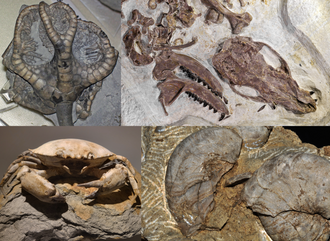
A fossil—derived from the Classical Latin fossilis, meaning "obtained by digging"—is any preserved remain, impression, or trace of an organism from a past geological age. While many people immediately think of dinosaur bones, fossils encompass a vast array of biological evidence, including shells, exoskeletons, hair, petrified wood, DNA remnants, and even stone imprints of microbes.
The totality of these remains is known as the fossil record. Although this record is incomplete, it provides scientists with a comprehensive understanding of how life has diversified and evolved on Earth over billions of years.
Key Facts
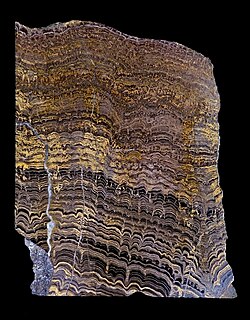
- Age Range: The oldest known fossils date back between 3.48 billion and 4.1 billion years.
- Definition: Specimens are generally classified as fossils if they are older than 10,000 years.
- Paleontology: The scientific study of fossils, focusing on their age, formation, and evolutionary significance.
- Dating Methods: Scientists use stratigraphy for relative dating and radiometric dating for absolute age measurement.
The Science of Dating and Stratigraphy
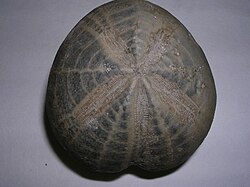
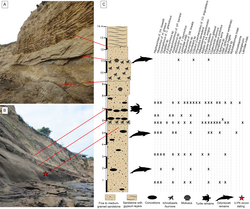
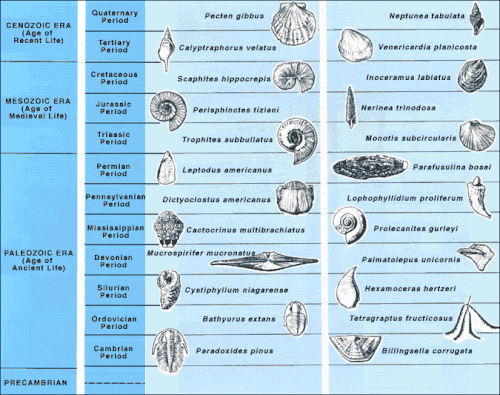
Determining the age of a fossil is critical to understanding the history of life. In the 19th century, researchers observed that specific fossils were consistently associated with certain rock layers, or strata. This led to the development of the geological timescale.
Stratigraphy
Stratigraphy is the branch of geology that studies successive layers of rock. By analyzing these layers and their fossiliferous content, paleontologists can determine the relative age of a specimen compared to others.
Radiometric Dating
While stratigraphy provides a relative sequence, the development of radiometric dating in the early 20th century allowed scientists to quantitatively measure the absolute age of rocks and the fossils contained within them.
Fossilization Processes
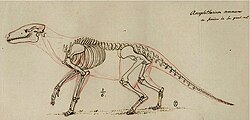
Fossilization is the process by which organic remains are preserved. This is a rare occurrence, as most organic matter decomposes. Several distinct chemical and physical processes can lead to preservation:
- Permineralization: Occurs when mineral-rich water fills the pores of organic tissues, depositing minerals that turn the remain into stone.
- Replacement and Recrystallization: Original minerals are replaced by others (such as silica or pyrite) or change their crystalline structure (such as aragonite turning into calcite).
- Casts and Molds: A mold is an impression left by an organism; a cast is formed when that mold is filled with sediment.
- Carbonization: The volatile components of an organism are removed, leaving behind a thin film of carbon.
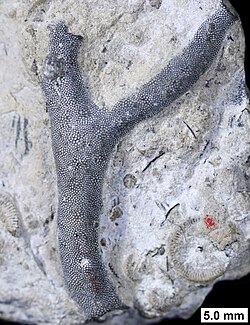
- Bioimmuration: A process where a soft-bodied organism is preserved by being overgrown by another organism's skeleton.
Specialized Preservation
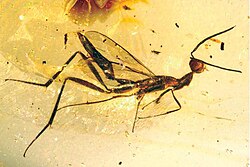
Some fossils are preserved in unique mediums. Resin (amber) can trap insects and small organisms in near-perfect detail, while adpression involves the compression of organic material into a flat film.
Types of Fossils
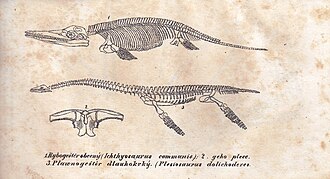
Fossils are categorized based on what they represent and how they were formed:
Index and Trace Fossils
Index fossils are specimens used to define and identify geologic periods. Trace fossils, such as coprolites (fossilized feces) or footprints, record the behavior and activity of an organism rather than its physical body.
Microfossils and Subfossils
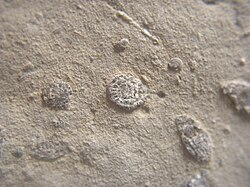
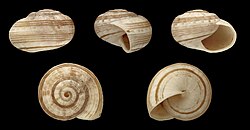
Microfossils are remains so small they require a microscope for study. Subfossils are remains that have not yet undergone full mineralization, often found in more recent geological contexts.
Pseudofossils
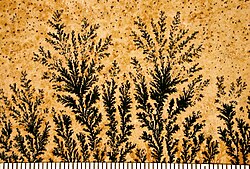
Not everything that looks like a fossil is one. Pseudofossils are inorganic geological structures—such as manganese dendrites—that mimic the appearance of organic remains.
Summary of Fossil Characteristics
| Category | Example | Primary Characteristic |
|---|---|---|
| Body Fossil | Dinosaur Bone | Preserved physical remains of the organism. |
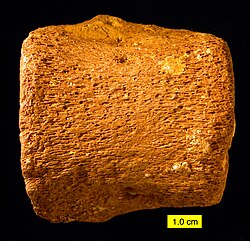
| Trace Fossil | Coprolite | Evidence of biological activity or behavior. |
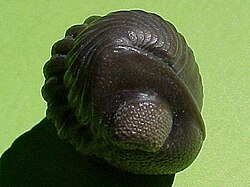
| Index Fossil | Trilobites | Used to date the rock layer in which they are found. |
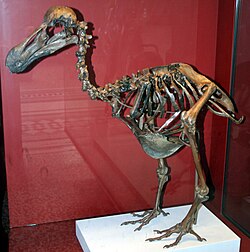
| Subfossil | Dodo Skeleton | Partially fossilized; typically more recent. |
| Pseudofossil | Dendrites | Inorganic structures resembling fossils. |
Frequently Asked Questions
![The star-shaped holes (Catellocaula vallata) in this Upper Ordovician bryozoan represent a soft-bodied organism preserved by bioimmuration in the bryozoan skeleton.[93]](/images/59/6f/596fb17131eb880cdff7b6da406557c85427c9a817802f56a98df18e81b4fd78.jpg)
What is the difference between a fossil and a subfossil?
A fossil has typically undergone significant mineralization over a long period. A subfossil is a remain that has not yet completely mineralized, often because it is from a more recent geological era.
How do scientists know the absolute age of a fossil?
While stratigraphy provides a relative age based on rock layers, scientists use radiometric dating to measure the decay of radioactive isotopes, providing a quantitative absolute age.
What is a trace fossil?
A trace fossil is not a part of the organism's body, but rather a record of its existence, such as a footprint, a burrow, or fossilized waste (coprolites).
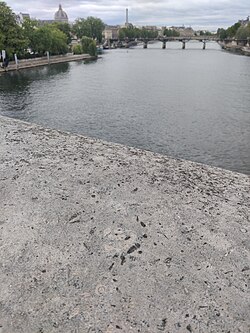
Can fossils be found in man-made structures?
Yes. Quarried stone used for building can contain small fossils, as seen in historical structures like the Pont Neuf in Paris.
What are stromatolites?
Stromatolites are layered rocks formed by the trapping, binding, and cementation of sedimentary grains by microorganisms, representing some of the oldest evidence of life on Earth.